<h1>The Battle for Jantar Mantar: <a href="/article/why-jharkhand-students-are-protesting-a-deep-dive-into-education-rights-government-response-and-the-" title="Why Jharkhand Students Are Protesting: A Deep Dive into Education Rights, Government Response, and the Role of Public Figures like Rahul Gandhi" class="internal-link">A Deep Dive into</a> India's Iconic Protest Ground and Its Role in Democracy</h1>
<p><figure class="my-8 overflow-hidden rounded-3xl shadow-xl">
<img src="https://s.yimg.com/lo/mysterio/api/146a0356f9c89203a8bc53868dfa8e294a0a73f9e485b305300e9291e8a8ae7c/lightyear_networkapi/resizefill_w866_h488;quality_80;format_webp/https:%2F%2Fmedia.zenfs.com%2Fen%2Fbbc_us_articles_995%2Fceadcd74e9f74f9062c889c8317c27e2" alt="Wangchuk" class="w-full h-[400px] object-cover" />
</figure></p>
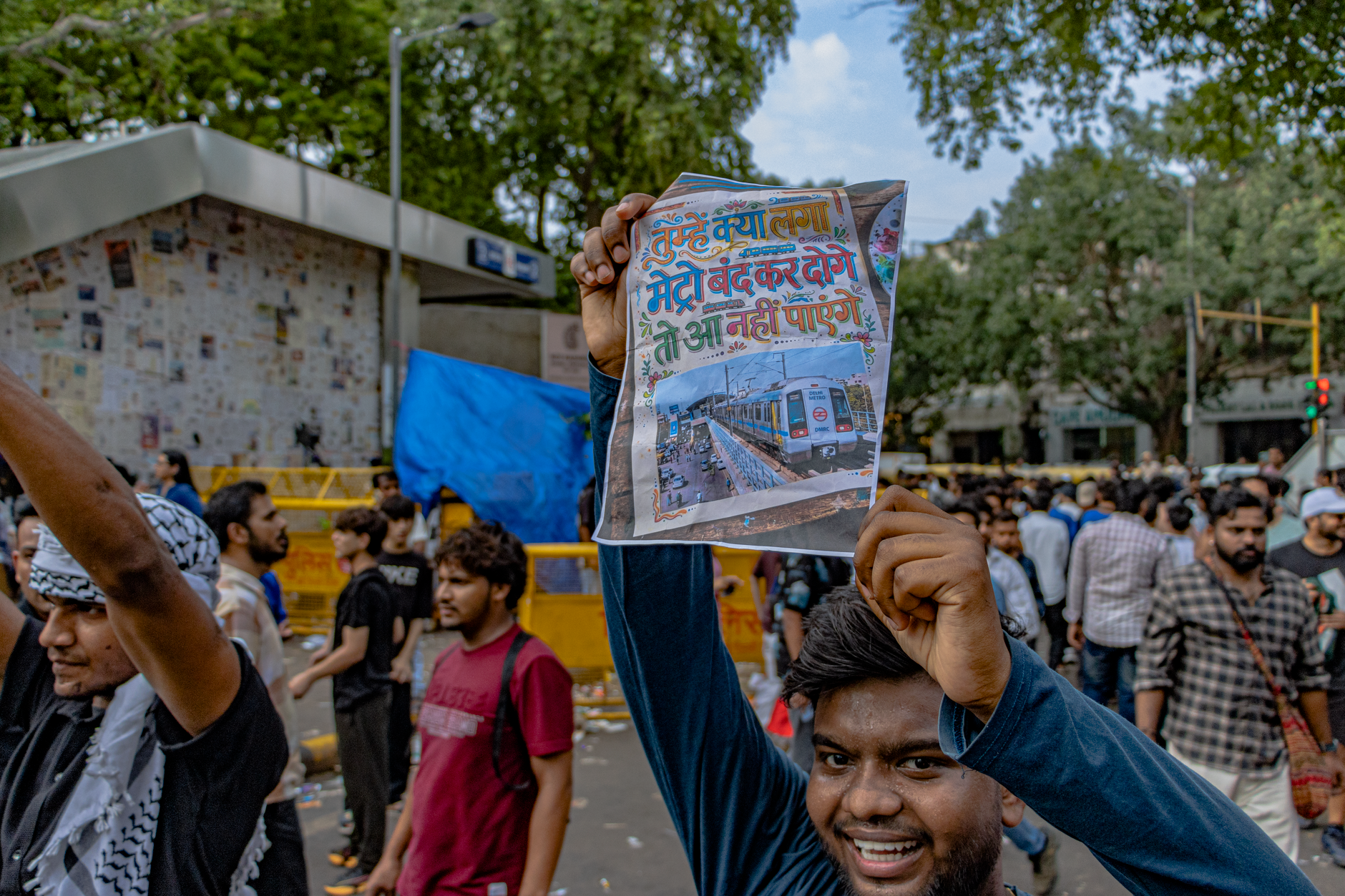
<p>The recent removal of activist Wangchuk from Jantar Mantar has reignited a national conversation about the sanctity of protest spaces <a href="/article/social-norms-and-behavioral-change-how-culture-shapes-our-daily-choices-in-india" title="Social Norms and Behavioral Change: How Culture Shapes Our Daily Choices in India" class="internal-link">in India</a>. Jantar Mantar, situated in the heart of Delhi, is more than a historical observatory; it is a living emblem of democratic dissent where citizens have gathered for over a century to voice grievances and demand change. This article explores the origins, cultural weight, and legal frameworks that shape Jantar Mantar’s role as India’s most prominent protest site, while examining the current controversy and its broader implications for civil society.</p>
<h2>Historical Origins: From Astronomical Observatory to Protest Arena</h2>
<p>Constructed in 1724 by Maharaja Jai Singh II of Jaipur, Jantar Mantar originally served as a sophisticated astronomical observatory. Its massive stone instruments measured celestial movements with remarkable precision for the time. However, the space’s open layout and central location in the capital gradually transformed it into a natural gathering ground.</p>
Advertisement
Loading partner content...
<p><b>The shift began in the early 20th century</b> when Indian nationalists used the site to stage symbolic protests against British rule. The colonial administration’s tolerance of public assemblies near the observatory allowed early activists to test the limits of free expression. Post-independence, the area became a default venue for labor unions, student groups, and social movements seeking visibility.</p>
<ul>
<li><b>1947:</b> Immediate post‑partition rallies demanding relief for displaced persons.</li>
<li><b>1960s:</b> Student protests against educational reforms.</li>
<li><b>1970s:</b> The Naxalite movement’s clandestine meetings.</li>
<li><b>1990‑2000s:</b> Rise of anti‑corruption and environmental campaigns.</li>
</ul>
<p>These milestones illustrate how Jantar Mantar evolved from a scientific enclave to a democratic forum, embodying the nation’s ongoing struggle for voice and representation.</p>
<h2>Jantar Mantar as a Democratic Symbol</h2>
<p>The site’s reputation as a protest hub solidified during landmark movements that defined modern Indian democracy.</p>
Advertisement
Loading partner content...
<h3>Anna Hazare’s Anti‑Corruption Movement (2011)</h3>
<p>Anna Hazare’s hunger strike at Jantar Mantar mobilized millions across the country. The protest forced the government to enact the Lokpal Bill, establishing an independent anti‑corruption ombudsman. The sheer scale of participation underscored Jantar Mantar’s power to amplify grassroots demands.</p>
<h3>The Nirbhaya Case Protests (2012)</h2>
<p>After the brutal Delhi gang‑rape, survivors and women’s rights activists convened at Jantar Mantar to demand stricter rape laws. Their sustained demonstrations contributed to the enactment of the Criminal Law (Amendment) Act, 2013, which introduced harsher penalties for sexual offenses.</p>
<h3>Farmers’ Agitations (2017‑2021)</h3>
Advertisement
Loading partner content...
<p>Jantar Mantar became the epicenter of the farmers’ protest against the three agricultural bills of 2020. For over a year, thousands of farmers camped in the premises, drawing global attention to agrarian distress. Their eventual repeal of the bills highlighted the site’s capacity to influence national policy.</p>
<p><figure class="my-8 overflow-hidden rounded-3xl shadow-xl">
<img src="https://images.pexels.com/photos/29111169/pexels-photo-29111169.jpeg?auto=compress&cs=tinysrgb&dpr=2&h=650&w=940" alt="Jantar Mantar Delhi" class="w-full h-[400px] object-cover" />
</figure></p>
<p>Each of these movements leveraged Jantar Mantar’s historic backdrop to lend moral weight to their causes, reinforcing its status as a symbolic threshold between protest and policy.</p>
<h2>The Right to Protest in India: Constitutional Guarantees vs. Recent Restrictions</h2>
<p>India’s Constitution enshrines the right to assemble peacefully under Article 19(1)(a). This provision, however, is subject to “reasonable restrictions” imposed by the state for grounds such as public order, decency, and morality. Over the decades, courts have interpreted these safeguards broadly, protecting peaceful dissent.</p>
Advertisement
Loading partner content...
<table border="1" cellpadding="5" cellspacing="0" style="border-collapse:collapse;">
<thead>
<tr>
<th>Year</th>
<th>Key Legal Landmark</th>
<th>Impact on Protests</th>
</tr>
</thead>
<tbody>
<tr>
<td>1950</td>
<td>Constitution came into force (Article 19)</td>
<td>Established fundamental right to peaceful assembly</td>
</tr>
<tr>
<td>1973</td>
<td>Passenger’s Protection Act (Freedom of Speech)</td>
<td>Expanded scope of permissible protest slogans</td>
</tr>
<tr>
<td>2003</td>
<td>Delhi Police Guidelines (Section 144)</td>
<td>Introduced pre‑event permission requirements</td>
</tr>
<tr>
<td>2015‑2020</td>
<td>Supreme Court rulings (e.g., <i>Union of India v. Pradip Kumar Biswas</i>)</td>
<td>Stressed “reasonable” nature of restrictions</td>
</tr>
<tr>
<td>2022</td>
<td>Urban Services Labour Act amendments</td>
<td>Heightened scrutiny on protest permits in Delhi</td>
</tr>
</tbody>
</table>
<p>Recent years have witnessed an uptick in administrative measures that curtail spontaneous protests. The Delhi Police’s increased reliance on Section 144 and the requirement for prior permission for “public gatherings” have been criticized as chilling effects on free speech. While the judiciary continues to uphold the core right, the practical reality often forces activists to navigate a complex approval maze.</p>
<h2>Case Study: Wangchuk’s Protest</h2>
<p>Wangchuk, a relatively unknown environmental activist from Sikkim, staged a sit‑in at Jantar Mantar demanding stronger climate action and protection of Himalayan glaciers. His protest began on March 15, 2026, with a pledge to remain until the Ministry of Environment issued a detailed action plan.</p>
<p><b>The specifics of the incident</b> include a 12‑day sit‑in, daily hunger strikes, and a series of public lectures on climate vulnerability. On April 2, 2026, Wangchuk was escorted from the premises by Delhi police, citing “overcrowding” and “public inconvenience.” The Congress party promptly accused the ruling government of suppressing dissent and undermining democratic freedoms.</p>
Advertisement
Loading partner content...
<blockquote>
“Jantar Mantar is not merely a piece of heritage; it is a constitutional altar where citizens offer their grievances to the state. Removing a protester from this space without due process erodes the very foundation of our democracy,” said legal scholar Prof. Amit Sharma.
</blockquote>
<p>The Congress alleged that the government’s “silencing tactics” were part of a broader pattern targeting environmental and social activists across India. Conversely, government officials defended the action as necessary to maintain public order and ensure the site’s accessibility to all citizens.</p>
<h2>Broader Implications: Civil Society, Press Freedom, and Democratic Institutions</h2>
<p>The Wangchuk episode reflects deeper tensions within Indian civil society. Civil society organizations have reported a growing climate of self‑censorship among journalists and activists, fearing arbitrary removal or legal repercussions. The incident has sparked debates about the role of media in covering protest movements and the extent to which state authorities can regulate public spaces.</p>
<ul>
<li><b>Press Freedom:</b> Surveys indicate a 22% decline in journalist safety ratings since 2023, with protest coverage being a high‑risk beat.</li>
<li><b>Judicial Response:</b> The Supreme Court’s recent docket includes a case challenging the blanket use of Section 144 at Jantar Mantar.</li>
<li><b>International Perception:</b> Human Rights Watch’s 2026 report cites India’s “increasing restrictions on peaceful assembly” as a cause for concern.</li>
</ul>
Advertisement
Loading partner content...
<p>These trends suggest a gradual erosion of the open‑air democratic forum that Jantar Mantar has historically represented. The balance between maintaining public order and preserving the right to dissent is increasingly precarious.</p>
<h2>Expert Voices: Perspectives from Legal Scholars, Historians, and Activists</h2>
<blockquote>
“The architecture of Jantar Mantar—vast, unobstructed, and centrally located—offers a physical manifestation of the Enlightenment ideal that power resides with the people. Protecting this space is akin to protecting the very idea of India’s democratic experiment,” remarked historian Dr. Meera Nair.
</blockquote>
<p>Legal expert Adv. Rajiv Singh emphasizes that courts have repeatedly affirmed the necessity of “clear, precise, and narrowly tailored” restrictions. He warns that vague notions of “public inconvenience” can be weaponized to silence legitimate dissent.</p>
<blockquote>
“Our movement is not about the removal of a single protester; it is about safeguarding a centuries‑old tradition of peaceful assembly. Jantar Mantar belongs to every citizen, irrespective of their cause,” stated environmental activist Leela Devi, a long‑time participant in <a href="/article/the-pulse-of-youth-how-the-jantar-mantar-protests-are-redefining-environmental-activism-in-india" title="The Pulse of Youth: How the Jantar Mantar Protests Are Redefining Environmental Activism in India" class="internal-link">Jantar Mantar protests</a>.
</blockquote>
Advertisement
Loading partner content...
<p>These voices collectively underscore the imperative to preserve Jantar Mantar as a neutral ground where diverse voices can converge without fear.</p>
<h2>Future Outlook: Shaping Protest Movements and Needed Reforms</h2>
<p>As India navigates the complexities of rapid urbanization and digital transformation, <a href="/article/how-the-blanket-telegram-ban-is-reshaping-social-media-legal-battles-user-impact-and-the-future-of-m" title="How the Blanket Telegram Ban is Reshaping Social Media: Legal Battles, User Impact, and the Future of Messaging Apps" class="internal-link">the future of</a> protest spaces like Jantar Mantar hinges on legislative and societal choices. Potential reforms include:</p>
<ol>
<li>Streamlining protest permit procedures to reduce bureaucratic hurdles.</li>
<li>Establishing a dedicated “Protest Rights Committee” comprising judiciary, civil society, and police representatives to review restrictions.</li>
<li>Enacting clear guidelines on the use of Section 144, limiting it to genuine public safety concerns.</li>
<li>Investing in alternative public squares and digital platforms for expression, ensuring physical spaces remain accessible.</li>
</ol>
<p>Moreover, fostering a culture of dialogue between state actors and civil society can mitigate confrontations. The evolution of protest movements may also shift towards hybrid models—combining physical sit‑ins with online campaigns—to circumvent potential restrictions on traditional venues.</p>
Advertisement
Loading partner content...
<p><figure class="my-8 overflow-hidden rounded-3xl shadow-xl">
<img src="https://images.unsplash.com/photo-1738854710710-4d3714df5186?crop=entropy&cs=tinysrgb&fit=max&fm=jpg&ixid=M3w4NjI1Nzh8MHwxfHNlYXJjaHwxfHxwZWFjZWZ1bCUyMHByb3Rlc3QlMjBJbmRpYXxlbnwwfDB8fHwxNzg0MzkzODU2fDA&ixlib=rb-4.1.0&q=80&w=1080" alt="peaceful protest India" class="w-full h-[400px] object-cover" />
</figure></p>
<p>If these reforms are not pursued, the symbolic <a href="/article/unlocking-the-power-of-social-media-marketing-tactics" title="Unlocking the Power of Social Media Marketing Tactics" class="internal-link">power of</a> Jantar Mantar may dim, leaving a void in India’s democratic narrative.</p>
<h2>Conclusion: Jantar Mantar—Living Symbol of Resistance</h2>
<p>From its origins as an astronomical marvel to its current role as a crucible of democratic dissent, Jantar Mantar embodies India’s enduring commitment to freedom of expression. The recent removal of Wangchuk highlights the persistent tension between state authority and citizens’ right to protest, a tension that defines the health of any democracy.</p>
<p><b>Preserving Jantar Mantar as a protected protest ground is not merely about safeguarding a historic site; it is about protecting the constitutional right to assemble, speak, and demand change.</b> As India moves forward, ensuring that spaces like Jantar Mantar remain open, inclusive, and respected will be crucial for nurturing a vibrant civil society and upholding the principles of Indian democracy.</p>
Advertisement
Loading partner content...
<p>The battle for Jantar Mantar continues—not with weapons, but with ideas, voices, and the unwavering belief that a protest ground can be the very heart of a nation’s conscience.</p></b></b></b></h3></i></i></i>