<h1>The Citizens for Justice and Peace (CJP): History, Mission, Major Protests, and Its Role in Shaping <a href="/article/mastering-social-media-strategy-in-india-a-comprehensive-guide" title="Mastering Social Media Strategy in India: A Comprehensive Guide" class="internal-link">India</a>'s Civil Society</h1>
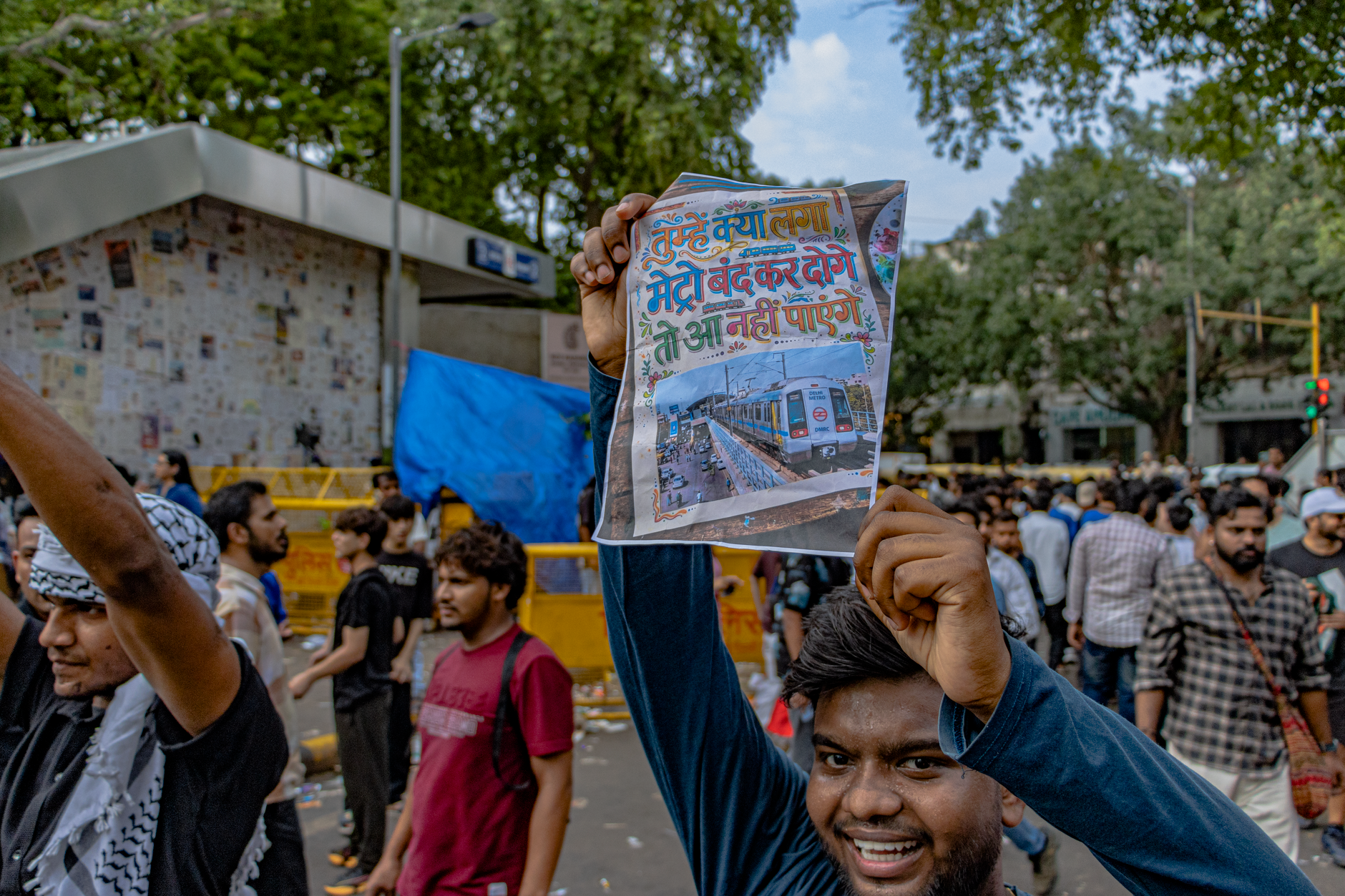
<p>In the crisp winter air of <b>January 2026</b>, the historic grounds of Jantar Mantar in New Delhi witnessed a familiar yet potent spectacle. Hundreds of citizens, students, and veteran activists gathered under the banner of <b>Citizens for Justice and Peace (CJP)</b> to "reclaim" the protest site after prolonged restrictions had rendered it a shadow of its democratic self. This <b>Jantar Mantar protest</b> was not merely a demonstration; it was a symbolic assertion that the space for dissent remains non-negotiable in the world's largest democracy. It served as a powerful reminder of <b>CJP India's</b> enduring role as a sentinel of constitutional morality.</p>
<p>For over two decades, this organization has navigated the turbulent waters of <b>civil society India</b>, evolving from a response mechanism for communal violence into a structural pillar of <b>social activism India</b>.</p>
<figure class="my-8 overflow-hidden rounded-3xl shadow-xl">
<img src="https://images.pexels.com/photos/11572425/pexels-photo-11572425.jpeg?auto=compress&cs=tinysrgb&dpr=2&h=650&w=940" alt="protest activism India democracy" class="w-full h-[400px] object-cover" />
</figure>
Advertisement
Loading partner content...
<h2>Origins and Founding: Born from the Ashes of 2002</h2>
<p>The genesis of <b>Citizens for Justice and Peace</b> is inextricably linked to the Gujarat pogrom of 2002. In the aftermath of the Godhra train burning <a href="/article/why-jharkhand-students-are-protesting-a-deep-dive-into-education-rights-government-response-and-the-" title="Why Jharkhand Students Are Protesting: A Deep Dive into Education Rights, Government Response, and the Role of Public Figures like Rahul Gandhi" class="internal-link">and the</a> subsequent state-wide violence that claimed over a thousand lives—predominantly Muslim—a vacuum of institutional accountability emerged. The state machinery appeared complicit, and the legal system seemed paralyzed by political pressure. It was in this crucible that <b>Teesta Setalvad</b>, a veteran journalist and activist, alongside <b>Javed Anand</b> and a cohort of concerned citizens, formalized CJP in <b>April 2002</b>.</p>
<p>The socio-political context was dire. Major political parties were polarized, the National Human Rights Commission (NHRC) had intervened unprecedentedly to move the Supreme Court, and victims were displaced in relief camps without hope for justice. CJP was not conceived as a generic NGO; it was designed as a <b>citizens' intervention</b>. The founders envisioned a platform that could bridge the gap between victim testimony and the highest courts of the land.</p>
<p>They focused on <b>legal empowerment</b>, ensuring that survivors were not just witnesses but protagonists in their own fight for justice.</p>
Advertisement
Loading partner content...
<blockquote>
"We realized very early that charity is not enough. The victims of 2002 needed the Constitution to work for them. CJP was built to make the Constitution work." — <b>Teesta Setalvad</b>, Founder Secretary, CJP (From a 2023 retrospective interview).
</blockquote>
<h2>Core Mission and Objectives: The Constitutional Compass</h2>
<p>Over the years, CJP’s mandate has expanded <a href="/article/beyond-the-headlines-a-comprehensive-guide-to-india-s-dowry-death-laws-high-profile-cases-and-how-th" title="Beyond the Headlines: A Comprehensive Guide to India’s Dowry Death Laws, High‑Profile Cases, and How They Shape Society" class="internal-link">beyond the</a> immediate aftermath of 2002, yet its core philosophy remains anchored in the <b>Preamble of the Indian Constitution</b>. The organization operates on four interconnected pillars that define its strategic interventions.</p>
<ul>
<li><b>Secularism and Communal Harmony:</b> Active monitoring of hate speech, early warning systems for communal tension, and grassroots peace-building initiatives in sensitive districts.</li>
<li><b>Access to Justice:</b> Providing pro-bono legal aid to victims of state excesses, communal violence, and caste atrocities. This includes filing Public Interest Litigations (PILs) and supporting Special Investigation Teams (SITs).</li>
<li><b>Human Rights Defense:</b> Advocacy against draconian laws like UAPA, sedition, and preventive detention acts. CJP documents custodial deaths, encounter killings, and the targeting of dissenters.</li>
<li><b>Institutional Accountability:</b> Demanding transparency from police, bureaucracy, and the judiciary through RTI applications, court monitoring, and policy submissions.</li>
</ul>
Advertisement
Loading partner content...
<p>Unlike many organizations that pivot to service delivery, CJP has steadfastly remained a <b>rights-based advocacy group</b>. They refuse government funding, relying entirely on individual donations and institutional grants from international philanthropies vetted for independence. This financial model is central to their claim of political non-partisanship, even as they remain fiercely political in their demands for accountability.</p>
<h2>Key Campaigns and Protests: A Chronicle of Resistance</h2>
<p>The trajectory of CJP can be mapped through its major campaigns. Each reflects a response to a specific democratic deficit.</p>
<h3>The Gujarat Justice Campaign (2002–Present)</h3>
<p>This remains the organization’s bedrock. CJP provided legal support in landmark cases like the <b>Gulbarg Society massacre</b>, <b>Naroda Patiya</b>, and the <b>Best Bakery case</b>. Their intervention led to the Supreme Court ordering retrials outside Gujarat and the conviction of high-profile perpetrators, including a former state minister. The campaign pioneered the concept of <b>"victim-centric prosecution"</b>, where lawyers worked closely with survivors to prevent hostile witnesses—a common tactic used to derail justice.</p>
Advertisement
Loading partner content...
<h3>Campaign Against Communal Violence Bill (2011–2014)</h3>
<p>CJP played a pivotal role in drafting and advocating for the <b>Prevention of Communal and Targeted Violence (Access to Justice and Reparations) Bill</b>. They mobilized civil society consultations across states, arguing for command responsibility for public servants. Though the bill lapsed, the draft remains the gold standard for anti-communal violence legislation in academic and policy circles.</p>
<h3>Dissent Against CAA/NRC and the Shaheen Bagh Solidarity (2019–2020)</h3>
<p>When the Citizenship Amendment Act (CAA) triggered nationwide protests, CJP established <b>legal aid kiosks</b> at protest sites, including Shaheen Bagh. They documented police brutality, filed habeas corpus petitions for detained students, and challenged the constitutional validity of the Act in the Supreme Court. Their "Know Your Rights" pamphlets, translated into 12 languages, became essential tools for protesters.</p>
<h3><a href="/article/the-pulse-of-youth-how-the-jantar-mantar-protests-are-redefining-environmental-activism-in-india" title="The Pulse of Youth: How the Jantar Mantar Protests Are Redefining Environmental Activism in India" class="internal-link">The Jantar Mantar</a> Reclamation (2025–2026)</h3>
<p>The most recent chapter unfolded in late 2025. Following years of Section 144 impositions and bureaucratic hurdles that effectively banned protests at the historic site, CJP launched the <b>"Reclaim Jantar Mantar"</b> campaign. The strategy combined legal petitions in the Delhi High Court with mass civil disobedience. On <b>January 15, 2026</b>, a coordinated sit-in defied the ban.</p>
<p>The Delhi Police, facing a court directive to frame guidelines rather than impose blanket bans, eventually stood down. The protest re-established Jantar Mantar as the <b>designated democratic space</b> for the capital, a victory celebrated across the <b>civil society India</b> spectrum.</p>
Advertisement
Loading partner content...
<table>
<thead>
<tr>
<th>Campaign</th>
<th>Period</th>
<th>Key Outcome</th>
</tr>
</thead>
<tbody>
<tr>
<td>Gujarat Justice Campaign</td>
<td>2002–Present</td>
<td>Convictions in 9 major cases; Supreme Court precedent on victim protection.</td>
</tr>
<tr>
<td>Communal Violence Bill Advocacy</td>
<td>2011–2014</td>
<td>Drafted model legislation; shifted national discourse on command responsibility.</td>
</tr>
<tr>
<td>CAA/NRC Legal Aid</td>
<td>2019–2020</td>
<td>500+ detainees released; Constitutional challenge pending in SC.</td>
</tr>
<tr>
<td>Reclaim Jantar Mantar</td>
<td>2025–2026</td>
<td>Restoration of protest rights at Delhi's primary democratic space.</td>
</tr>
</tbody>
</table>
<figure class="my-8 overflow-hidden rounded-3xl shadow-xl">
<img src="https://images.unsplash.com/photo-1593115057322-e94b77572f20?crop=entropy&cs=tinysrgb&fit=max&fm=jpg&ixid=M3w4NjI1Nzh8MHwxfHNlYXJjaHwxfHxsZWdhbCUyMGp1c3RpY2UlMjBnYXZlbCUyMGNvbnN0aXR1dGlvbnxlbnwwfDB8fHwxNzg0NTcwNTg1fDA&ixlib=rb-4.1.0&q=80&w=1080" alt="legal justice gavel constitution" class="w-full h-[400px] object-cover" />
</figure>
<h2>Leadership and Notable Figures: The Architects of Accountability</h2>
Advertisement
Loading partner content...
<p>While CJP functions as a collective, certain individuals have become synonymous with its moral authority and operational rigor.</p>
<h3>Teesta Setalvad: The Relentless Archivist</h3>
<p>A journalist-turned-activist, Setalvad is the public face of CJP. Her meticulous documentation of the 2002 riots—often at great personal risk—created the evidentiary backbone for prosecutions. In <b>2022</b>, she was arrested by the Gujarat Anti-Terrorism Squad (ATS) on charges of fabricating evidence, a move widely condemned by <b>Amnesty International</b> and the <b>UN Human Rights Council</b> as reprisal for her human rights work. Granted interim bail by the Supreme Court in 2023, she continues to lead the organization, embodying the risks inherent in <b>social activism India</b>.</p>
<h3>Javed Anand: The Strategic Navigator</h3>
<p>Co-founder and the organizational brain behind CJP, Anand manages the complex intersection of law, media, and fundraising. His background in journalism (formerly with <i>The Daily</i> and <i>Business India</i>) ensures CJP’s narratives are media-savvy. He has steered the organization through the <b>FCRA (Foreign Contribution Regulation Act) cancellation</b> in 2021 and the subsequent legal battle to restore funding channels.</p>
<h3>The Legal Brigade: Advocates of the Margins</h3>
<p>CJP’s strength lies in its network of lawyers—<b>Mihir Desai</b>, <b>I.H. Syed</b>, <b>Grozny D'Souza</b>, and younger associates like <b>Nadeem Khan</b>. They operate on a "brief-less" model for the poorest clients, funded by CJP’s legal defense fund. This brigade has argued cases ranging from the <b>Hashimpura massacre</b> (1987) convictions in 2018 to the recent defense of student activists under UAPA.</p>
Advertisement
Loading partner content...
<h3>Grassroots Coordinators: The Silent Force</h3>
<p>Beyond the metros, CJP relies on district-level coordinators in Gujarat, Maharashtra, Uttar Pradesh, and Assam. These volunteers run <b>"Peace Centers"</b>—physical spaces offering legal counseling, psychosocial support, and communal harmony workshops. They are the early warning system against lynching and hate crimes.</p>
<h2><a href="/article/how-the-blanket-telegram-ban-is-reshaping-social-media-legal-battles-user-impact-and-the-future-of-m" title="How the Blanket Telegram Ban is Reshaping Social Media: Legal Battles, User Impact, and the Future of Messaging Apps" class="internal-link">Impact and</a> Influence: Shaping the Discourse</h2>
<p>Assessing the impact of an advocacy group is notoriously difficult, but CJP’s fingerprints are visible on several layers of India’s democratic fabric.</p>
<ul>
<li><b>Judicial Precedents:</b> The <b>Zahira Sheikh vs State of Gujarat</b> judgment (2004), where the SC ordered a retrial citing "witness protection failure," was a direct result of CJP’s petitioning. This established the state’s duty to protect witnesses.</li>
<li><b>Policy Influence:</b> The <b>Model Witness Protection Scheme, 2018</b> (later adopted by the Centre) drew heavily from CJP’s submissions to the Law Commission.</li>
<li><b>Civil Society Capacity Building:</b> CJP’s "Legal Aid Handbook for Activists" and "Digital Security Toolkit" are standard training materials for new collectives. They have mentored organizations like the <b>Association for Protection of Democratic Rights (APDR)</b> and newer youth collectives.</li>
<li><b>International Advocacy:</b> CJP’s shadow reports to the <b>UN Universal Periodic Review (UPR)</b> and the <b>Committee on the Elimination of Racial Discrimination (CERD)</b> have forced the Indian state to respond on record regarding minority rights and custodial violence.</li>
</ul>
Advertisement
Loading partner content...
<p>However, influence is a double-edged sword. The government’s increasing hostility—evidenced by the FCRA cancellation, Enforcement Directorate (ED) raids, and the use of UAPA against its founders—is arguably a <b>testament to CJP's effectiveness</b>. As a senior diplomat noted off-record in 2024, "They are targeted because they win cases that embarrass the establishment."</p>
<h2>Challenges and Controversies: Walking the Tightrope</h2>
<p>No history of CJP is complete without addressing the fierce headwinds it faces. The organization operates in an environment where the space for <b>civil society India</b> has structurally shrunk since 201</b></p></i></i>