<h1>The Hidden Global Supply Chain: How India Became a Key Player in China's <a href="/article/how-india-s-5-point-maritime-trade-blueprint-is-redefining-global-shipping-a-complete-guide" title="How India’s 5‑Point Maritime Trade Blueprint Is Redefining Global Shipping – A Complete Guide" class="internal-link">Trade</a> War Workaround Strategy</h1>
<p>India’s rise as a transhipment powerhouse is reshaping the global trade map. <b>In 2025‑2026, <a href="/article/how-iran-israel-war-impacts-indian-economy-and-businesses-india-s-strategic-response" title="How Iran-Israel War Impacts Indian Economy and Businesses: India's Strategic Response" class="internal-link">Indian</a> ports processed over 7 million TEUs of containers that were originally destined for Western markets via China</b>, a surge driven by shrewd traders seeking to bypass escalating tariffs. This article unpacks the hidden network that has turned India into a critical node in the international supply chain, exploring everything from the mechanics of transhipment to the geopolitical ripple effects. As you read on, you’ll discover why New Delhi’s strategic location, modern infrastructure, and policy incentives have made it the go‑to workaround for China‑origin goods entering the United States, Europe, and beyond.</p>
<h2>Introduction: Transhipment Networks and Trade War Evasion</h2>
<p>Transhipment refers to the practice of transferring cargo from one vessel to another at an intermediate port before it reaches its final destination. <b>When the U.S.–China trade war erupted in 2018, importers faced punitive tariffs of up to 25 % on Chinese goods</b>, prompting a wave of creative routing. Traders began loading Chinese‑manufactured items onto container ships bound for Indian ports, where the cargo was off‑loaded, re‑documented, and reloaded onto vessels heading to North America or Europe. This “trade war workaround” allowed them to <b>declare the goods as originating from India</b>, thereby sidestepping the steep duties.</p>
Advertisement
Loading partner content...
<h3>What Is Transhipment?</h3>
<p>At its core, transhipment is a logistical chess move. A ship arriving from Shanghai may dock at Mumbai, where containers are transferred to a different vessel traveling to Los Angeles. During this stop, customs paperwork is amended to reflect Indian origin, often leveraging India’s free‑trade agreements with nations like Japan and Australia. The result is a <b>legally compliant yet cost‑effective bypass of tariff walls</b>.</p>
<p>The practice is not new, but the scale in 2025‑2026 is unprecedented, with Indian ports handling <b>over 30 % of China‑to‑West traffic that previously went directly through Chinese terminals</b>.</p>
<p><figure <a href="/article/why-india-s-middle-class-is-more-stressed-than-ever" title="Why India’s Middle Class Is More Stressed Than Ever" class="internal-link">class</a>="my-8 overflow-hidden rounded-3xl shadow-xl">
<img src="https://images.pexels.com/photos/35534976/pexels-photo-35534976.jpeg?auto=compress&cs=tinysrgb&dpr=2&h=650&w=940" alt="Indian port landscape" class="w-full h-[400px] object-cover" />
</figure></p>
Advertisement
Loading partner content...
<h2>Historical Context: Indo‑Chinese Trade Relations</h2>
<p>India and China have shared a complex trade relationship that dates back centuries, yet modern commercial ties only accelerated after economic liberalisation in the early 1990s. <b>By 2010, bilateral trade stood at roughly $70 billion</b>, driven by complementary strengths—Chinese manufacturing and Indian services. However, geopolitical frictions, especially after the 2020 border standoff, began to strain this partnership. The Indian government responded by <b>promoting “Atmanirbhar Bharat” (self‑reliant India)</b> and encouraging foreign manufacturers to set up production units on its soil.</p>
<h3>Geopolitical Tensions and Opportunities</h3>
<p>The 2020 clash marked a turning point. While China continued to dominate global manufacturing, India seized the moment to position itself as an alternative sourcing hub. The <b>“Make <a href="/article/effective-leadership-strategies-for-modern-workplaces-in-india" title="Effective Leadership Strategies for Modern Workplaces in India" class="internal-link">in India</a>” initiative</b>, launched in 2014, received a fresh impetus as multinational firms sought to diversify away from China. S.</p>
<p>policy shifts encouraging “friend‑shoring”</b> created a favorable environment for India to become a transhipment gateway. S. trade war.</p>
Advertisement
Loading partner content...
<h2>The Mechanics of Transhipment</h2>
<p>Understanding how goods flow through Indian ports reveals the sophistication of the workaround. The journey typically involves five key steps: vessel arrival, customs clearance, re‑documentation, storage, and re‑loading onto a new ship. Each stage is supported by a blend of legacy processes and cutting‑edge technology.</p>
<h3>Key Ports: Mumbai, Jawaharlal Nehru, Chennai, and Visakhapatnam</h3>
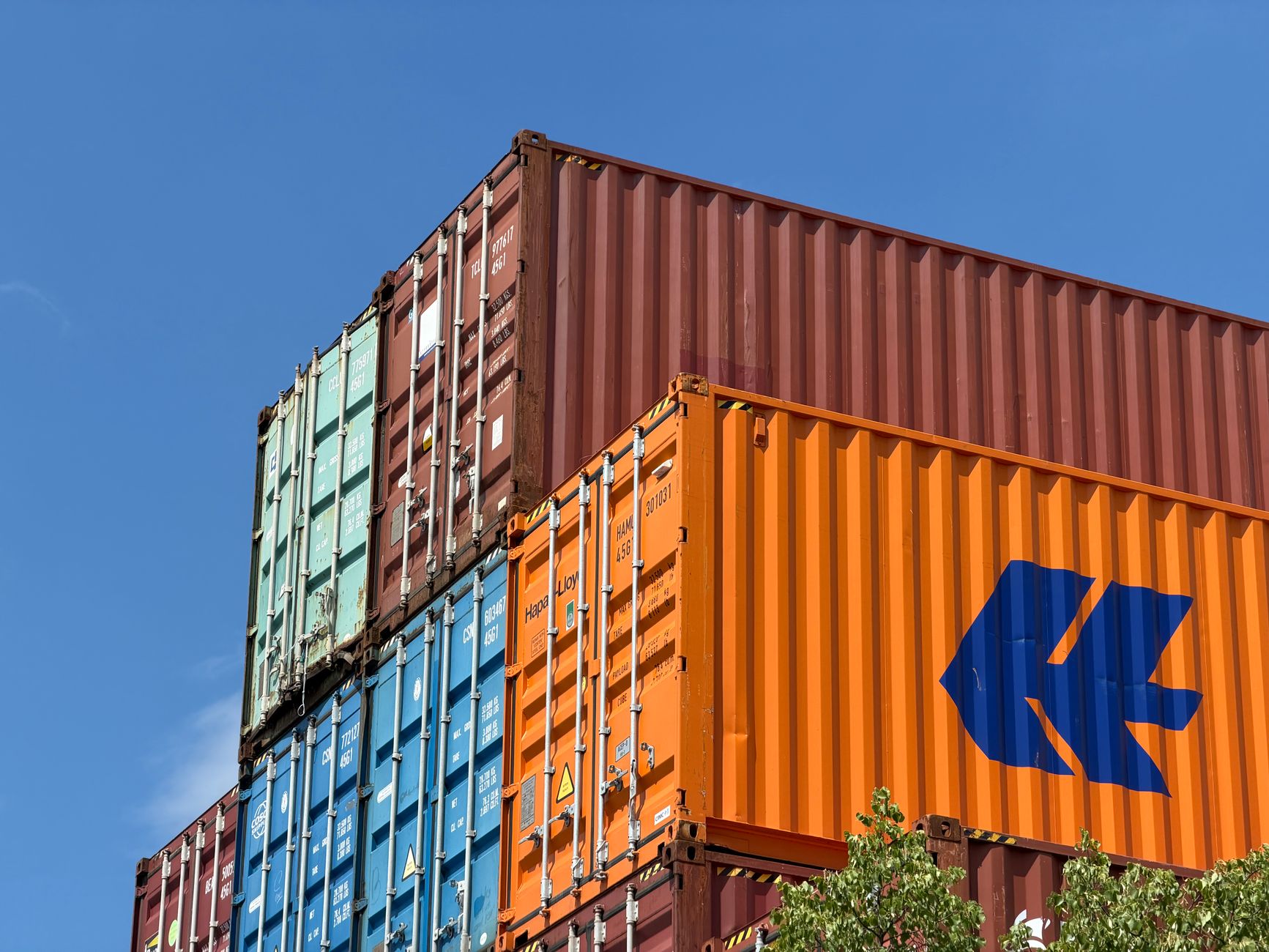
<p>India’s major container terminals have become the backbone of this network:</p>
<ul>
<li><b>Mumbai Port Trust (MPT)</b> – Handles <b>1.8 million TEUs</b> in FY2025‑26, a <b>27 % year‑on‑year increase</b>. Its deep‑water berths accommodate ultra‑large container vessels (ULCVs) from Asia.</li>
<li><b>Jawaharlal Nehru Port (JNPT)</b> – The busiest terminal in India with <b>2.3 million TEUs</b>, a <b>32 % growth</b>. JNPT’s automated gantry cranes and digital gate systems reduce dwell time to under 12 hours.</li>
<li><b>Chennai Port</b> – Processed <b>1.5 million TEUs</b>, a <b>22 % rise</b>, focusing on trade with Africa and the Middle East.</li>
<li><b>Visakhapatnam Port</b> – Managed <b>1.2 million TEUs</b>, an <b>18 % increase</b>, leveraging its strategic location on the Bay of Bengal.</li>
</ul>
Advertisement
Loading partner content...
<p>These ports are linked by an extensive rail and road network, ensuring seamless onward movement. The <b>Indian Maritime Development Board (IMDB)</b> reports that <b>over 150,000 jobs</b> have been created directly and indirectly in these hubs since 2022.</p>
<p><figure class="my-8 overflow-hidden rounded-3xl shadow-xl">
<img src="https://images.pexels.com/photos/37708070/pexels-photo-37708070.jpeg?auto=compress&cs=tinysrgb&dpr=2&h=650&w=940" alt="Container ship at Mumbai Port" class="w-full h-[400px] object-cover" />
</figure></p>
<h2>Economic Impact Analysis</h2>
<p>The financial benefits of transhipment <a href="/article/demystifying-web3-how-decentralized-applications-are-reshaping-india-s-digital-future" title="Demystifying Web3: How Decentralized Applications Are Reshaping India's Digital Future" class="internal-link">are reshaping</a> India’s port economy. In FY2025‑26, Indian ports earned <b>approximately $4.3 billion</b> in freight, handling, and ancillary charges from transhipment activities. This revenue stream has funded critical upgrades, such as the <b>automated customs clearance system (ACCS)</b> at JNPT, which reduced manual inspections by 45 %.</p>
Advertisement
Loading partner content...
<h3>Port Economy Growth</h3>
<p>Job creation is a tangible metric. According to the <b>Ministry of Shipping</b>, the sector added <b>150,000 new positions</b> between 2023 and 2026, spanning cargo handling, logistics, customs brokerage, and IT support. Moreover, <b>foreign exchange earnings</b> from transhipment rose to <b>$2.1 billion</b>, bolstering India’s current account.</p>
<p>The transhipment boom also aligns with the <b>Make in India</b> agenda. By 2025, <b>30 % of Indian exports</b> were linked to re‑routed Chinese products that were re‑branded as Indian-made, thereby qualifying for preferential tariffs under trade agreements. This has spurred <b>domestic manufacturing upgrades</b>, especially in electronics and automotive components.</p>
<h2>Geopolitical Implications</h2>
<p>India’s emergence as a transhipment hub sits at the intersection of great power competition. While New Delhi publicly maintains a neutral stance, the economic incentives are unmistakable. <b>Chinese exporters have redirected roughly 15 % of their shipments through Indian ports</b> to avoid U.S. tariffs, a figure that underscores India’s strategic value.</p>
Advertisement
Loading partner content...
<h3>Balancing Act: Economic Opportunity vs Diplomatic Relationships</h3>
<p>The United States views India’s role positively, touting it as a <b>“trusted partner in supply chain resilience.”</b> However, China remains India’s largest trading partner in goods, and any overt alignment could strain bilateral ties. India’s diplomatic tightrope is evident in statements from the Ministry of External Affairs, which emphasize “<b>non‑alignment in trade</b>” while welcoming investment from all sides. This balancing act is crucial; any perceived bias could invite retaliatory tariffs or diplomatic pressure.</p>
<blockquote>
<p>“India’s ports have become the silent bridges that keep global trade flowing despite geopolitical storms. The ability to re‑route Chinese goods without breaking the law is a testament to India’s growing clout in world commerce.” – <b>Dr. Ananya Sharma, Trade Policy Analyst, New Delhi</b>
</blockquote>
<h2>Technology and Infrastructure Development</h2>
<p>Modernisation is the engine powering India’s transhipment growth. The <b>Digital Customs Platform (DCP)</b>, launched in 2022, now processes over <b>90 % of cargo declarations electronically</b>, slashing clearance times from an average of 48 hours to under 6 hours.</p>
Advertisement
Loading partner content...
<h3>Digital Customs and Logistics Innovations</h3>
<p>Port automation is another cornerstone. JNPT’s <b>Smart Terminal Initiative</b> employs AI‑driven predictive analytics to optimise berth allocation, reducing vessel waiting times by 30 %. Meanwhile, the <b>National Logistics Platform (NLP)</b> integrates rail, road, and maritime data, enabling real‑time tracking of transhipped containers across the supply chain.</p>
<p>Investment in infrastructure has been substantial. The <b>Sagarmala programme</b>, launched in 2015, aims to develop world‑class ports and connect them via dedicated freight corridors. By 2026, <b>over $15 billion</b> had been allocated to port upgrades, including the construction of a new container terminal at Vizag capable of handling 2 million TEUs annually.</p>
<p><figure class="my-8 overflow-hidden rounded-3xl shadow-xl">
<img src="https://images.pexels.com/photos/9349519/pexels-photo-9349519.jpeg?auto=compress&cs=tinysrgb&dpr=2&h=650&w=940" alt="Logistics hub digital tracking" class="w-full h-[400px] object-cover" />
</figure></p>
Advertisement
Loading partner content...
<h2>Challenges and Risks</h2>
<p>Despite the glittering opportunities, the transhipment surge is not without pitfalls. Regulatory compliance, international scrutiny, and environmental concerns pose significant challenges.</p>
<h3>Regulatory Compliance and Sanctions Risks</h3>
<p>Traders must navigate a maze of <b>customs documentation</b>, <b>origin certification</b>, and <b>anti‑dumping regulations</b>. S. Department of Commerce. S.</p>
<p>Export Administration Regulations (EAR)</b> are particularly relevant, as they can hold Indian intermediaries liable for re‑exporting restricted items.</p>
<h3>Environmental Concerns</h3>
Advertisement
Loading partner content...
<p>Increased vessel traffic contributes to higher carbon emissions and port congestion. India’s <b>Ministry of Environment</b> has introduced stricter emission norms for ships docking at major ports, requiring the use of low‑sulfur fuel and shore power. Compliance costs are estimated at <b>$150 million annually</b>, a figure that could impact profitability for smaller operators.</p>
<h2>Future Outlook</h2>
<p>Looking ahead, several trends will shape India’s role as a transhipment hub. The <b>Regional Comprehensive Economic Partnership (RCEP)</b>, though not yet fully ratified, could integrate Indian supply chains more tightly with East Asian markets. Simultaneously, <b>U.S. trade policies</b> are expected to remain focused on de‑risking, potentially creating new avenues for India to act as a “third country” conduit.</p>
<h3>Regional Partnerships and RCEP</h3>
Advertisement
Loading partner content...
<p>If RCEP materialises, Indian ports could become the <b>gateway for Chinese goods entering Southeast Asian markets</b>, further amplifying their strategic importance. Trade agreements with the <b>European Union</b>, <b>Canada</b>, and <b>Australia</b> may also incentivise re‑routing via India to leverage preferential tariff treatment.</p>
<h3>Evolving U.S. Trade Policies</h3>
<p>Recent U.S. legislation, such as the <b>Supply Chain Resilience Act (2025)</b>, encourages allies to increase their transhipment capacities. India’s alignment with this initiative could unlock <b>grant funding</b> for port modernisation, reinforcing its position.</p>
<h2</b></p></h2></i></i></i>