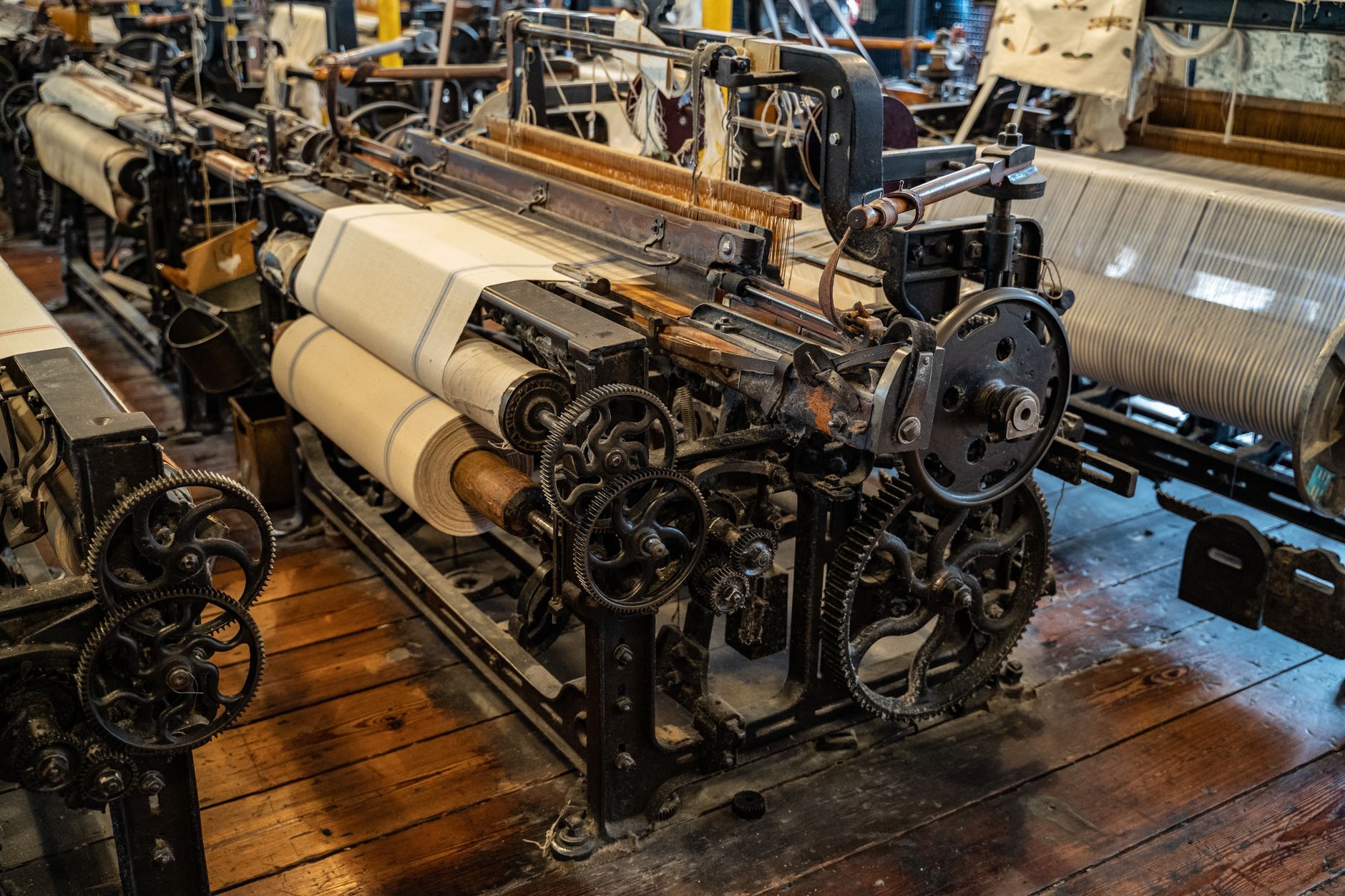

<h1>The Industrial Revolution and Global Transformation: How Steam and Steel Reshaped Humanity</h1>
<p>The Industrial Revolution was not merely a series of technical inventions; it was a <b>fundamental rupture in the human experience</b>. For millennia, human productivity was limited by the strength of muscles—animal or human—and the unpredictability of wind and water. When <a href="/article/india-s-private-space-race-how-the-first-private-orbital-rocket-is-transforming-the-nation-s-aerospa" title="India's Private Space Race: How the First Private Orbital Rocket Is Transforming the Nation's Aerospace Industry" class="internal-link">the first</a> steam engines began to hiss in the English countryside, they didn't just power looms; they <b>redefined the concept of time, labor, and global power</b>.</p>
<p>This era marked the transition from agrarian, handicraft economies to ones dominated by machine manufacturing and the factory system. While we often view it as a British phenomenon, the ripple effects were global, <b>altering the destiny of continents</b> from Asia to the Americas. It created a <a href="/article/innovation-in-business-why-it-s-the-key-to-thriving-in-a-competitive-world" title="Innovation in Business: Why It’s the Key to Thriving in a Competitive World" class="internal-link">world</a> of unprecedented wealth for some and systemic exploitation for others.</p>
<p>To understand the modern world—from the smartphone in your hand to the climate crisis we face—one must first understand the gears and pistons of the 18th and 19th centuries. <b>The shift from the organic to the mineral economy</b> changed how we eat, where we live, and how we perceive our place in nature.</p>
<figure class="my-8 overflow-hidden rounded-3xl shadow-xl">
<img src="https://images.pexels.com/photos/29831494/pexels-photo-29831494.jpeg?auto=compress&cs=tinysrgb&dpr=2&h=650&w=940" alt="James Watt Steam Engine" class="w-full h-[400px] object-cover" />
</figure>
Advertisement
Loading partner content...
<h2>The Genesis: Why Britain First?</h2>
<p>It is a common historical question: why did this transformation begin in Great Britain rather than China or India, both of which were highly advanced civilizations? The answer lies in a <b>unique convergence of geography, law, and capitalism</b>. Britain possessed vast deposits of coal and iron ore, which were conveniently located near water transport.</p>
<p>Furthermore, the British legal system provided strong protections for private property and patents. This encouraged inventors to experiment without the fear of their ideas being seized by the state. <b>The synergy between scientific curiosity and profit motive</b> created a fertile ground for innovation.</p>
<h3>The Pillars of Early Industrialization</h3>
<ul>
<li><b>The Textile Boom:</b> The invention of the Spinning Jenny and the Power Loom shifted production from cottage industries to massive factories.</li>
<li><b>Steam Power:</b> James Watt’s improvements to the steam engine allowed factories to move away from rivers, enabling <b>urbanization on a massive scale</b>.</li>
<li><b>Metallurgy:</b> The shift from charcoal to coke in iron smelting allowed for stronger, cheaper steel, essential for bridges, rails, and machinery.</li>
<li><b>Agricultural Revolution:</b> New crop rotation techniques increased food supply, allowing a larger population to leave the farms and enter the factories.</li>
</ul>
Advertisement
Loading partner content...
<p>This transition was not overnight. It was a gradual acceleration of productivity that <b>decoupled human survival from the limits of land</b>. For the first time in history, economic growth began to outpace population growth, leading to a rise in the general standard of <a href="/article/the-slow-living-movement-why-more-people-are-choosing-calm-over-chaos" title="The Slow Living Movement: Why More People Are Choosing Calm Over Chaos" class="internal-link">living</a> for the <a href="/article/why-india-s-middle-class-is-more-stressed-than-ever" title="Why India’s Middle Class Is More Stressed Than Ever" class="internal-link">middle class</a>.</p>
<h2>The Great Urban Shift: The Birth of the Modern City</h2>
<p>Before the revolution, the majority of the global population lived in rural settings. <a href="/article/india-s-private-space-revolution-the-rise-of-skyroot-s-vikram-1-rocket" title="India's Private Space Revolution: The Rise of Skyroot's Vikram-1 Rocket" class="internal-link">The rise of</a> the factory system triggered a <b>mass migration of the peasantry into burgeoning urban centers</b>. Cities like Manchester and Birmingham grew at a pace that infrastructure could not sustain.</p>
<p>This rapid urbanization created a new social class: the industrial proletariat. These workers lived in cramped, unsanitary tenements and worked <b>grueling 14-to-16 hour shifts</b>. The environment was often toxic, with soot-filled air and polluted waterways becoming the hallmark of the industrial landscape.</p>
Advertisement
Loading partner content...
<blockquote>
"The Industrial Revolution was the most profound change in human existence since the invention of agriculture. It moved the center of gravity from the field to the factory."
</blockquote>
<p>However, this period also saw the rise of the <b>industrial bourgeoisie</b>—the owners of the means of production. This new class of capitalists challenged the traditional landed aristocracy for political power, leading to the democratization of governance and the rise of the liberal state.</p>
<h2>The Global Impact: A World Interconnected and Divided</h2>
<p>The Industrial Revolution did not happen in a vacuum. It required raw materials that Britain could not produce domestically, leading to a <b>predatory search for resources</b> across the globe. Cotton from the American South, rubber from Southeast Asia, and minerals from Africa became the fuel for the European machine.</p>
<p>This created a <b>global division of labor</b>. The "Global North" became the center of manufacturing and high-value processing, while the "Global South" was relegated to the role of raw material supplier. This structural inequality remains a defining feature of the global economy today.</p>
Advertisement
Loading partner content...
<h3>Comparison of Pre-Industrial vs. Post-Industrial Economies</h3>
<table>
<thead>
<tr>
<th>Feature</th>
<th>Pre-Industrial Economy</th>
<th>Post-Industrial Economy</th>
</tr>
</thead>
<tbody>
<tr>
<td><b>Primary Power Source</b></td>
<td>Human/Animal/Wind/Water</td>
<td>Coal/Steam/Electricity</td>
</tr>
<tr>
<td><b>Production Method</b></td>
<td>Handmade/Cottage Industry</td>
<td>Mass Production/Factories</td>
</tr>
<tr>
<td><b>Labor Structure</b></td>
<td>Seasonal/Agricultural</td>
<td>Hourly/Shift-based Work</td>
</tr>
<tr>
<td><b>Transport</b></td>
<td>Horse-drawn/Sailing Ships</td>
<td>Railways/Steamships</td>
</tr>
<tr>
<td><b>Economic Focus</b></td>
<td>Subsistence and Local Trade</td>
<td>Global Trade and Capitalism</td>
</tr>
</tbody>
</table>
<p>The development of the railway was perhaps the most visible symbol of this era. <b>Railways compressed space and time</b>, allowing goods and people to move faster than ever before. This facilitated the rapid expansion of empires and the integration of distant markets into a single global network.</p>
<figure class="my-8 overflow-hidden rounded-3xl shadow-xl">
<img src="https://images.pexels.com/photos/33804880/pexels-photo-33804880.jpeg?auto=compress&cs=tinysrgb&dpr=2&h=650&w=940" alt="early steam locomotive" class="w-full h-[400px] object-cover" />
</figure>
<h2>The Indian Perspective: De-industrialization and Colonialism</h2>
Advertisement
Loading partner content...
<p>For India, the Industrial Revolution had a <b>devastating paradox</b>. India was once the world leader in textile production, famous for its exquisite muslins and calicos. However, the British Industrial Revolution sought to protect its own nascent mills by imposing tariffs on Indian goods while flooding the Indian market with cheap, machine-made British cloth.</p>
<p>This led to a process known as <b>de-industrialization</b>. Indian weavers, unable to compete with the scale of British factories, were forced back into agriculture. This put immense pressure on the land, making the population more vulnerable to famines.</p>
<p>The British East India Company transformed India into a <b>captive market</b>. Instead of exporting finished goods, India began exporting raw cotton to Manchester, which was then sold back to Indians as finished clothing. This <b>drain of wealth</b> funded the further industrialization of Britain.</p>
<h3>Key Effects on the Indian Subcontinent</h3>
Advertisement
Loading partner content...
<ol>
<li><b>Collapse of Traditional Handlooms:</b> The destruction of the indigenous textile industry destroyed millions of livelihoods.</li>
<li><b>Infrastructure for Extraction:</b> The railways introduced to India were designed not for internal development, but to <b>move raw materials to ports</b> for export.</li>
<li><b>Commercialization of Agriculture:</b> Farmers were forced to grow "cash crops" like indigo and opium instead of food grains, leading to systemic food insecurity.</li>
<li><b>The Rise of Indian Entrepreneurship:</b> Despite the odds, a small class of Indian industrialists emerged in the late 19th century, laying the groundwork for India's own industrial future.</li>
</ol>
<p>The irony is that the very tools of the Industrial Revolution—the telegraph and the railway—eventually helped Indians organize and communicate, providing the <b>logistical backbone for the independence movement</b>.</p>
<h2>Social Transformations: Gender, Age, and Labor</h2>
<p>The factory system fundamentally altered the family structure. In the cottage industry, the family worked together as a unit. In the industrial era, <b>work was separated from the home</b>. Men, women, and children were all pulled into the factories, but their roles and pay were strictly stratified.</p>
Advertisement
Loading partner content...
<p>Child labor became a systemic necessity for the early industrial machine. Children were employed in mines and mills because of their small size and <b>low cost of labor</b>. This led to the first labor laws and the eventual creation of compulsory education systems to remove children from the workforce.</p>
<p>Women entered the public workforce in large numbers, which began a slow shift in gender dynamics. While they were paid significantly less than men, the <b>economic independence</b> gained by some women laid the early seeds for the suffrage movements of the late 19th and early 20th centuries.</p>
<figure class="my-8 overflow-hidden rounded-3xl shadow-xl">
<img src="https://images.pexels.com/photos/9958903/pexels-photo-9958903.jpeg?auto=compress&cs=tinysrgb&dpr=2&h=650&w=940" alt="19th century textile mill" class="w-full h-[400px] object-cover" />
</figure>
<h2>The Environmental Legacy: The Cost of Progress</h2>
Advertisement
Loading partner content...
<p>The Industrial Revolution marked the beginning of the <b>Anthropocene</b>—the geological epoch where human activity became the dominant influence on the planet's climate and environment. The reliance on fossil fuels released billions of tons of carbon dioxide into the atmosphere.</p>
<p>The immediate impact was visible in the "Great Smogs" of London, where air pollution became lethal. Over time, this localized pollution evolved into the <b>global climate crisis</b> we face today. The pursuit of infinite growth on a finite planet began with the first coal-fired boiler.</p>
<p>Deforestation accelerated as the demand for timber for construction and fuel grew. The extraction of minerals led to the scarring of landscapes and the contamination of groundwater. <b>The trade-off was clear: material abundance for environmental degradation</b>.</p>
<h2>From Steam to Silicon: The Evolution of Revolutions</h2>
<p>The first Industrial Revolution (Steam/Coal) evolved into the Second Industrial Revolution (Electricity/Steel/Chemicals) and eventually the Third (Computers/Automation). Today, we are in the Fourth Industrial Revolution, characterized by <b>AI, biotechnology, and the Internet of Things (IoT)</b>.</p>
Advertisement
Loading partner content...
<p>Each wave of transformation has followed a similar pattern: a new energy source leads to a new way of producing, which leads to a <b>massive shift in social power</b>. The current shift toward digitalization is mirroring the 18th-century shift from the farm to the factory, as we move from physical labor to cognitive labor.</p>
<h3>Lessons from History for the Modern Era</h3>
<ul>
<li><b>Technological Displacement:</b> Just as the power loom replaced the weaver, AI is now replacing the coder and the writer. <b>Adaptability is the only survival strategy</b>.</li>
<li><b>Inequality Gap:</b> Without regulation, industrialization tends to concentrate wealth in the hands of the few. <b>Social safety nets are essential</b> to prevent societal collapse.</li>
<li><b>Sustainability:</b> The "growth at any cost" model of the 1800s is no longer viable. The next revolution must be a <b>"Green Revolution"</b> of energy and materials.</li>
</ul>
<p>By studying the Industrial Revolution, we see that <b>technology is never neutral</b>. It always carries the values and goals of those who create it. The challenge for the 21st century is to ensure that our current technological leaps benefit humanity as a whole, rather than a small elite.</p>
Advertisement
Loading partner content...
<h2>Conclusion: The Endless Cycle of Innovation</h2>
<p>The Industrial Revolution was a double-edged sword. It lifted millions out of absolute poverty and created the modern medicine and transport we rely on. Yet, it was built on the backs of exploited laborers and the colonization of vast territories.</p>
<p>For the Indian reader, this history is a reminder of the <b>resilience of the national spirit</b>—of how a nation that was systematically de-industrialized managed to rebuild itself into a global tech and manufacturing hub.</p>
<p>As we stand on the brink of an AI-driven era, we must remember that <b>progress is not just about faster machines</b>. True progress is measured by how we treat the most vulnerable in the wake of change. The lesson of the steam engine is that while the machine can produce wealth, only <b>human empathy and policy</b> can produce justice.</p>
<figure class="my-8 overflow-hidden rounded-3xl shadow-xl">
<img src="https://images.unsplash.com/photo-1647427060118-4911c9821b82?crop=entropy&cs=tinysrgb&fit=max&fm=jpg&ixid=M3w4NjI1Nzh8MHwxfHNlYXJjaHwxfHxtb2Rlcm4lMjByb2JvdGljJTIwYXJtJTIwZmFjdG9yeXxlbnwwfDB8fHwxNzgwODYzMzM2fDA&ixlib=rb-4.1.0&q=80&w=1080" alt="modern robotic arm factory" class="w-full h-[400px] object-cover" />
</figure>
Advertisement
Loading partner content...
<p>The gears of the 18th century may have stopped turning, but the momentum they created continues to drive the world. We are all, in one way or another, <b>children of the Industrial Revolution</b>, living in a world shaped by the smoke and steel of a distant English countryside.</p></b></i></i></i></i>