<h1><a href="/article/the-pulse-of-youth-how-the-jantar-mantar-protests-are-redefining-environmental-activism-in-india" title="The Pulse of Youth: How the Jantar Mantar Protests Are Redefining Environmental Activism in India" class="internal-link">The Jantar Mantar Protests</a>: A Legacy of Dissent and Democratic Struggle <a href="/article/effective-leadership-strategies-for-modern-workplaces-in-india" title="Effective Leadership Strategies for Modern Workplaces in India" class="internal-link">in India</a></h1>
<p>In the heart of India's capital, where ancient astronomical instruments stand as silent witnesses to centuries of history, a different kind of measurement has been taking place – the gauging of the nation's democratic pulse. The Jantar Mantar protests, recurring like seasonal monsoons, have become synonymous with citizen activism and political dissent. These gatherings represent more than mere demonstrations; they embody the eternal dance between authority and accountability that defines any thriving democracy.</p>
<p>Since 2011, when Anna Hazare's anti-corruption movement transformed this historic site into a modern-day agitators' ground, Jantar Mantar has witnessed countless voices demanding justice, transparency, and change. The protests continue to evolve, adapting to contemporary challenges while maintaining their core essence – the belief that ordinary citizens can indeed influence extraordinary change.</p>
<h2>Origins and Historical Context: From Ancient Observatory to Modern Agitation Ground</h2>
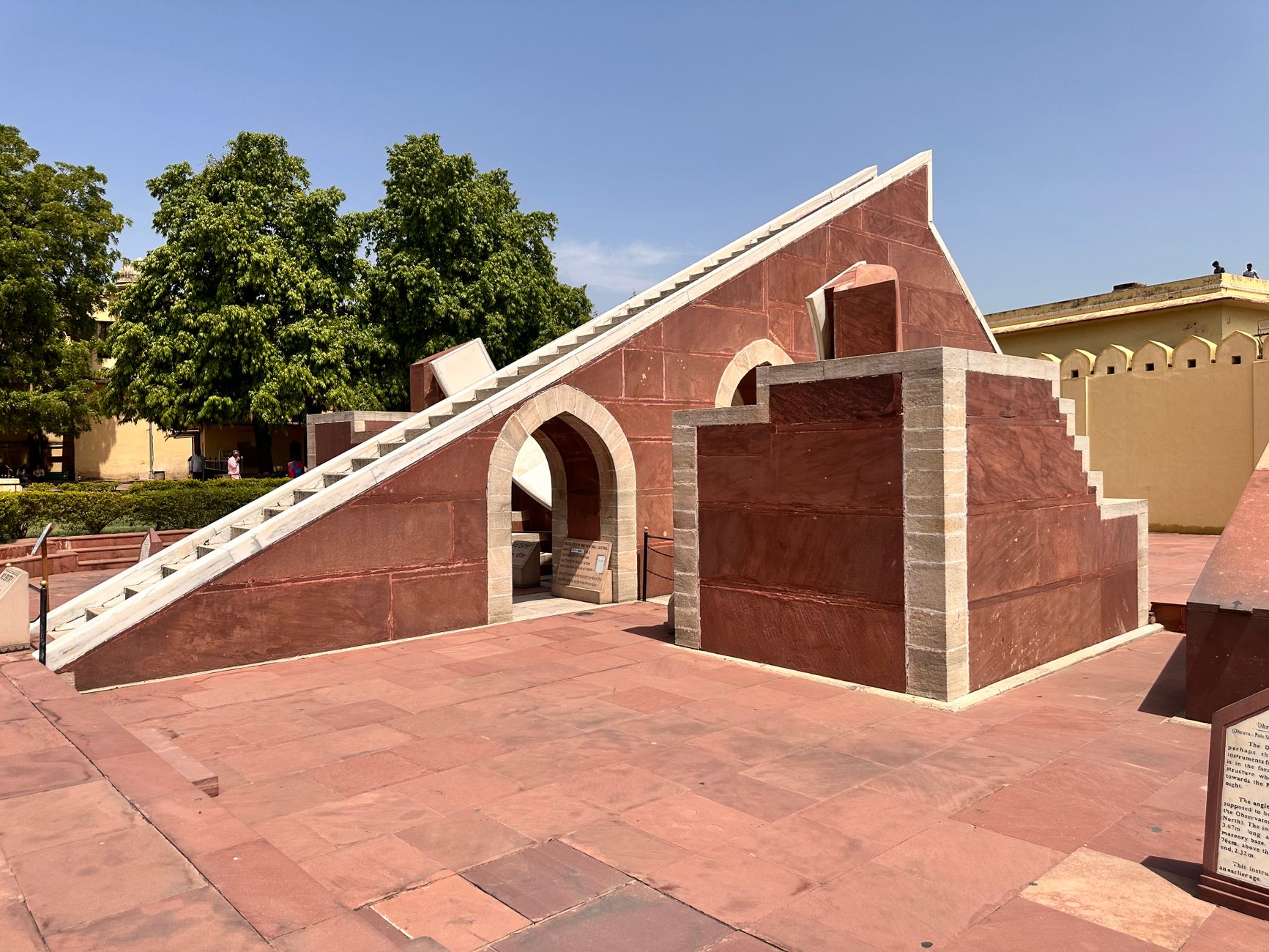
<p>The transformation of Jantar Mantar from an 18th-century astronomical marvel to a 21st-century protest venue is itself a testament to India's democratic evolution. Built by Maharaja Jai Singh II in 1735, these massive geometric structures were designed to measure time and track celestial movements. Today, they measure something far more profound – the rhythm of public dissent.</p>
Advertisement
Loading partner content...
<p>The modern chapter began in earnest during the summer of 2011, when Anna Hazare's indefinite fast against corruption drew thousands to the monument's grounds. This wasn't an isolated incident but part of a continuum that traces back to India's freedom struggle. The site's selection was deliberate – a place where science once sought to understand the cosmos now hosted humanity's quest for social justice.</p>
<ul>
<li><b>The 2011 anti-corruption movement marked a watershed moment in urban middle-class political participation</b></li>
<li>Ramlila Maidan became the epicenter, but Jantar Mantar served as the persistent pressure point</li>
<li>Grassroots organizations began using the space regularly for smaller, sustained campaigns</li>
<li>The location's accessibility and symbolic significance made it ideal for sustained activism</li>
</ul>
<p>What distinguishes the Jantar Mantar protests from other demonstration spaces is their longevity and consistency. Unlike temporary rallies that flare up and fade, these protests often become permanent fixtures. Organizations like the Citizens for Justice and Peace (CJP) have maintained regular presence, turning the area into a laboratory for democratic experimentation.</p>
<p>The parallels with earlier movements are striking. Just as the Quit India Movement saw ordinary citizens taking extraordinary risks, modern protesters at Jantar Mantar continue that tradition. However, the tools have evolved – <a href="/article/mastering-social-media-strategy-in-india-a-comprehensive-guide" title="Mastering Social Media Strategy in India: A Comprehensive Guide" class="internal-link">social media</a> amplifies voices that might otherwise be marginalized, while legal frameworks provide new avenues for sustained pressure.</p>
Advertisement
Loading partner content...
<h2>Key Figures and Their Impact: Architects of Modern Resistance</h2>
<p>While mass movements are collective endeavors, certain individuals emerge as catalysts who shape public discourse and action. Among the most prominent figures associated with recent Jantar Mantar protests is Sonam Wangchuk, the engineer-turned-climate activist whose 2023 fast-unto-death brought renewed attention to environmental concerns in Ladakh.</p>
<p>Wangchuk's 26-day fast represented more than personal sacrifice; it demonstrated the Gandhian principle of peaceful resistance adapted for contemporary challenges. His strategy combined traditional satyagraha with modern advocacy techniques, including viral social media campaigns and strategic partnerships with legal experts. The impact was immediate – within weeks, his movement had garnered support from across India's environmental community.</p>
<table>
<tr>
<th>Activist</th>
<th>Cause</th>
<th>Duration of Action</th>
<th>Outcome</th>
</tr>
<tr>
<td>Sonam Wangchuk</td>
<td>Environmental Protection/Ladakh Rights</td>
<td>26 days fasting</td>
<td>National attention, policy discussions initiated</td>
</tr>
<tr>
<td>Anna Hazare</td>
<td>Anti-Corruption/Lokpal Bill</td>
<td>Multiple fasts (longest 12 days)</td>
<td>Lokpal Act passage in 2013</td>
</tr>
<tr>
<td>Tejaswini Apte</td>
<td>Women's Safety/Farmers' Rights</td>
<td>Ongoing advocacy</td>
<td>Regional policy changes in Maharashtra</td>
</tr>
</table>
<p>The Citizens for Justice and Peace (CJP), led by activists like Tejaswini Apte, has institutionalized much of the protest culture at Jantar Mantar. Their approach differs from charismatic leadership – instead focusing on building coalitions, documenting grievances, and maintaining sustained pressure through legal channels. This methodical approach has proven particularly effective in cases involving communal violence and farmer distress.</p>
Advertisement
Loading partner content...
<p>Dipke, whose full name deserves recognition in any discussion of contemporary activism, represents the new generation of protest leaders. Unlike traditional politicians or social reformers, these individuals often emerge from civil society organizations, bringing technical expertise and fresh perspectives to age-old problems. Their impact lies not in fiery speeches but in patient coalition-<a href="/article/corporate-culture-development-strategies-building-a-thriving-organizational-ecosystem" title="Corporate Culture Development Strategies: Building a Thriving Organizational Ecosystem" class="internal-link">building a</a>nd strategic use of democratic institutions.</p>
<blockquote>"The true measure of a democracy is not how well we celebrate victory, but how respectfully we accommodate dissent." - This sentiment echoes through every protest at Jantar Mantar, reminding us that protest itself is democracy in action.</blockquote>
<p>These leaders share common characteristics: they understand that sustainable change requires both moral authority and practical strategy. Their sacrifices – whether through fasting, legal battles, or personal risk – create ripple effects that extend far beyond the protest grounds. They've mastered <a href="/article/creating-engaging-social-media-content-the-art-of-capturing-attention-in-a-digital-age" title="Creating Engaging Social Media Content: The Art of Capturing Attention in a Digital Age" class="internal-link">the art of</a> converting public sympathy into concrete political action.</p>
<h2>Societal Significance: The Pulse of Evolving Democracy</h2>
<p>The Jantar Mantar protests serve as a barometer for India's democratic health, revealing both strengths and vulnerabilities in the system. In 2026, as digital technologies reshape civic engagement, these physical gatherings remain crucial touchstones for citizen activism. They demonstrate that despite online mobilization capabilities, there's still immense power in collective physical presence.</p>
Advertisement
Loading partner content...
<p>What makes these protests particularly significant is their role in bridging urban-rural divides. While participants may be primarily urban-based, their causes often resonate deeply with rural communities. The 2020-2021 farmer protests, which maintained strong connections to Jantar Mantar activities, exemplify this dynamic. Technology facilitated coordination, but physical presence at symbolic locations provided legitimacy and visibility.</p>
<p>The tension between institutional accountability and political resistance plays out daily at these protests. Government responses vary from engagement to dismissal, reflecting broader questions about how democratic institutions should handle sustained public pressure. This dance between state and society reveals the maturation of Indian democracy – increasingly complex, nuanced, and multifaceted.</p>
<ul>
<li><b>Citizen activism has become more sophisticated, combining traditional methods with digital strategies</b></li>
<li>Cross-movement solidarity has strengthened, with different causes supporting each other</li>
<li>Youth participation has increased significantly, bringing fresh energy and perspectives</li>
<li>Legal literacy among protesters has improved, leading to more effective advocacy</li>
</ul>
<p>The protests also highlight evolving concepts of representation in Indian democracy. No longer content with periodic electoral participation, citizens demand continuous engagement with their representatives. Jantar Mantar becomes a space where this demand takes tangible form – a reminder that democracy extends beyond voting booths.</p>
Advertisement
Loading partner content...
<p>Perhaps most importantly, these gatherings demonstrate the resilience of India's democratic culture. Despite various challenges – from resource constraints to political pressure – the space remains available for dissent. This availability itself represents a victory for democratic principles, even when specific protest outcomes remain contested.</p>
<h2>Cultural Symbolism: Where History Meets Contemporary Struggle</h2>
<p>The irony is profound: instruments built to understand the cosmos now witness humanity's struggle to understand itself. Jantar Mantar's massive sundials and geometric formations provide an incongruous backdrop for 21st-century political theater. Yet this juxtaposition enhances rather than diminishes the site's symbolic power.</p>
<p>As a monument to scientific inquiry, Jantar Mantar embodies Enlightenment values that complement democratic ideals. Both seek to illuminate truth, measure reality, and guide human behavior toward better outcomes. When protesters gather here, they unconsciously align themselves with these aspirations – seeking to bring light to dark corners of governance and society.</p>
Advertisement
Loading partner content...
<p>The architectural grandeur serves multiple symbolic functions. The scale reminds participants of their place within larger historical currents, while the precision of the instruments suggests that social change, like astronomical calculation, requires careful measurement and sustained effort. Each protest becomes part of a continuum stretching back centuries.</p>
<p>Cultural significance extends beyond physical space to encompass rituals and practices that have emerged. The morning assemblies, evening vigils, and sustained presence create rhythms that mirror religious observances. This secular spirituality transforms political action into something approaching pilgrimage – a journey toward justice undertaken with devotion and sacrifice.</p>
<p>The site has also become a repository of memory, where each protest adds layers to collective understanding. Photographs, banners, and testimonies accumulate, creating an informal archive of democratic struggle. Visitors don't just see monuments; they encounter living history in the making.</p>
<h2>Future Implications: Seeds of Tomorrow's Movements</h2>
Advertisement
Loading partner content...
<p>The legacy of Jantar Mantar protests extends far beyond immediate outcomes. Each gathering plants seeds that may take years or decades to bloom. Young activists who participate carry lessons learned into future endeavors, creating networks of experience and knowledge that strengthen civil society over time.</p>
<p>Looking toward 2026 and beyond, several trends suggest continued relevance for this form of protest. Climate change activism, gender equality movements, and digital rights advocacy all find expression in sustained physical demonstrations. The space provides legitimacy that purely online movements sometimes lack, while offering organizational advantages that purely digital approaches cannot match.</p>
<p>Policy implications remain uncertain but potentially significant. While not every protest achieves immediate legislative success, the cumulative effect shapes political discourse and decision-making. Politicians ignore Jantar Mantar at their peril, knowing that sustained public presence can influence electoral outcomes and policy priorities.</p>
<ul>
<li><b>Environmental movements increasingly use sustained protest as primary strategy</b></li>
<li>Digital documentation ensures transparency and accountability of authorities</li>
<li>Intergenerational knowledge transfer strengthens movement sustainability</li>
<li>International solidarity networks provide additional leverage and support</li>
</ul>
Advertisement
Loading partner content...
<p>The inspiration factor cannot be overstated. For every participant, there are dozens more who observe and learn. Children who witness protests develop early understanding of civic responsibility. Students studying social movements find living examples of theory in practice.</p>
<p>Artists draw creative energy from the atmosphere of possibility and change.</p>
<p>Institutional responses continue evolving as well. Police protocols, municipal regulations, and political strategies adapt to accommodate regular protest activity. This evolution itself represents democratic maturation – institutions learning to work with rather than against civic engagement.</p>
<h2>Conclusion: The Eternal Dance of Democracy</h2>
<p>The Jantar Mantar protests remind us that democracy is not a destination but a continuous journey. Each generation must renew its commitment to the principles of justice, equality, and accountability. These gatherings serve as laboratories where democratic values are tested, refined, and strengthened through real-world application.</p>
Advertisement
Loading partner content...
<p>As India navigates the complexities of 21st-century governance, spaces like Jantar Mantar become increasingly precious. They represent the fundamental right to dissent, the necessity of peaceful assembly, and the power of collective action. Whether addressing corruption, environmental degradation, or social injustice, the format remains remarkably consistent – ordinary people demanding extraordinary change.</p>
<p>The legacy continues to unfold. Each protest adds chapters to an ongoing story of democratic struggle, proving that the instruments at Jantar Mantar weren't just measuring time – they were measuring the eternal human quest for justice and dignity. In this sacred space where history meets contemporary activism, India's democratic identity finds its purest expression.</p>
<figure class="my-8 overflow-hidden rounded-3xl shadow-xl">
<img src="https://ichef.bbci.co.uk/ace/branded_news/1200/cpsprodpb/09ec/live/0b1604e0-84dc-11f1-bee8-53ce494e1abc.jpg" alt="Jantar Mantar" class="w-full h-[400px] object-cover" />
</figure>
<figure class="my-8 overflow-hidden rounded-3xl shadow-xl">
<img src="https://s.yimg.com/lo/mysterio/api/146a0356f9c89203a8bc53868dfa8e294a0a73f9e485b305300e9291e8a8ae7c/lightyear_networkapi/resizefill_w866_h488;quality_80;format_webp/https:%2F%2Fmedia.zenfs.com%2Fen%2Fbbc_us_articles_995%2Fceadcd74e9f74f9062c889c8317c27e2" alt="Anna Hazare" class="w-full h-[400px] object-cover" />
</figure>
<figure class="my-8 overflow-hidden rounded-3xl shadow-xl">
<img src="https://images.pexels.com/photos/11621838/pexels-photo-11621838.jpeg?auto=compress&cs=tinysrgb&dpr=2&h=650&w=940" alt="Protest in India" class="w-full h-[400px] object-cover" />
</figure>
<figure class="my-8 overflow-hidden rounded-3xl shadow-xl">
<img src="https://images.pexels.com/photos/32335008/pexels-photo-32335008.jpeg?auto=compress&cs=tinysrgb&dpr=2&h=650&w=940" alt="Democracy and activism" class="w-full h-[400px] object-cover" />
</figure></b></i></i></i></i>


