
<h1>The Shadow War: A Deep Dive into the Century-Long Rivalry Between Iran and Israel</h1>
<p>The <b>Iran‑Israel conflict</b> is not a recent flare‑up but a <b>century‑long rivalry</b> shaped by ideology, geography, and great‑power competition. <b>Middle East geopolitics</b> has turned this bilateral tension into a multi‑layered <b>proxy warfare</b> arena that reverberates across the region. Understanding the <b>historical roots of Iran‑Israel rivalry</b> is essential for any serious assessment of <b>Middle East security</b>.</p>
<figure class="my-8 overflow-hidden rounded-3xl shadow-xl">
<img src="https://images.pexels.com/photos/6037021/pexels-photo-6037021.jpeg?auto=compress&cs=tinysrgb&dpr=2&h=650&w=940" alt="Ayatollah Khomeini" class="w-full h-[400px] object-cover" />
</figure>
<h2>1. The Historical Pivot: <a href="/article/how-the-reopening-of-the-strait-of-hormuz-could-reshape-global-oil-markets-a-complete-guide" title="How the Reopening of the Strait of Hormuz Could Reshape Global Oil Markets: A Complete Guide" class="internal-link">How the</a> 1979 Islamic Revolution Changed Everything</h2>
<p>Before 1979, Iran and Israel maintained <b>covert diplomatic ties</b> and robust intelligence cooperation under the Shah. The <b>Islamic Revolution</b> replaced a secular monarchy with a theocratic republic that declared Israel an illegitimate entity. <b>Anti‑Zionist rhetoric</b> became state policy, <a href="/article/india-italy-relations-the-cultural-diplomacy-behind-modi-s-colosseum-visit-and-the-future-of-indo-eu" title="India-Italy Relations: The Cultural Diplomacy Behind Modi's Colosseum Visit and the Future of Indo-European Ties" class="internal-link">and the</a> new leadership framed the Palestinian cause as a central pillar of revolutionary legitimacy.</p>
Advertisement
Loading partner content...
<p>Key turning points include:</p>
<ul>
<li><b>Severance of diplomatic relations</b> in 1979.</li>
<li><b>Support for Lebanese Shiite militias</b> that later evolved into Hezbollah.</li>
<li><b>Ideological export</b> of the “Resistance Axis” concept across the Levant.</li>
</ul>
<blockquote cite="https://en.wikipedia.org/wiki/Iranian_Revolution" rel="nofollow noopener noreferrer">“The revolution turned a <a href="/article/how-iran-israel-war-impacts-indian-economy-and-businesses-india-s-strategic-response" title="How Iran-Israel War Impacts Indian Economy and Businesses: India's Strategic Response" class="internal-link">strategic</a> partnership into an existential confrontation.” – Middle East analyst, 2024</blockquote>
<p>The revolution also reoriented Iran’s foreign policy toward <b>revolutionary export</b>, making the <b>Iran‑Israel conflict</b> a cornerstone of its regional doctrine.</p>
<figure class="my-8 overflow-hidden rounded-3xl shadow-xl">
<img src="https://ichef.bbci.co.uk/ace/branded_news/1200/cpsprodpb/806d/live/8cf56f00-8950-11f1-aee1-9f17574ebbb3.jpg" alt="Benjamin Netanyahu" class="w-full h-[400px] object-cover" />
</figure>
Advertisement
Loading partner content...
<h2>2. The Proxy Battlefield: An Analysis of Third‑Party Warfare</h2>
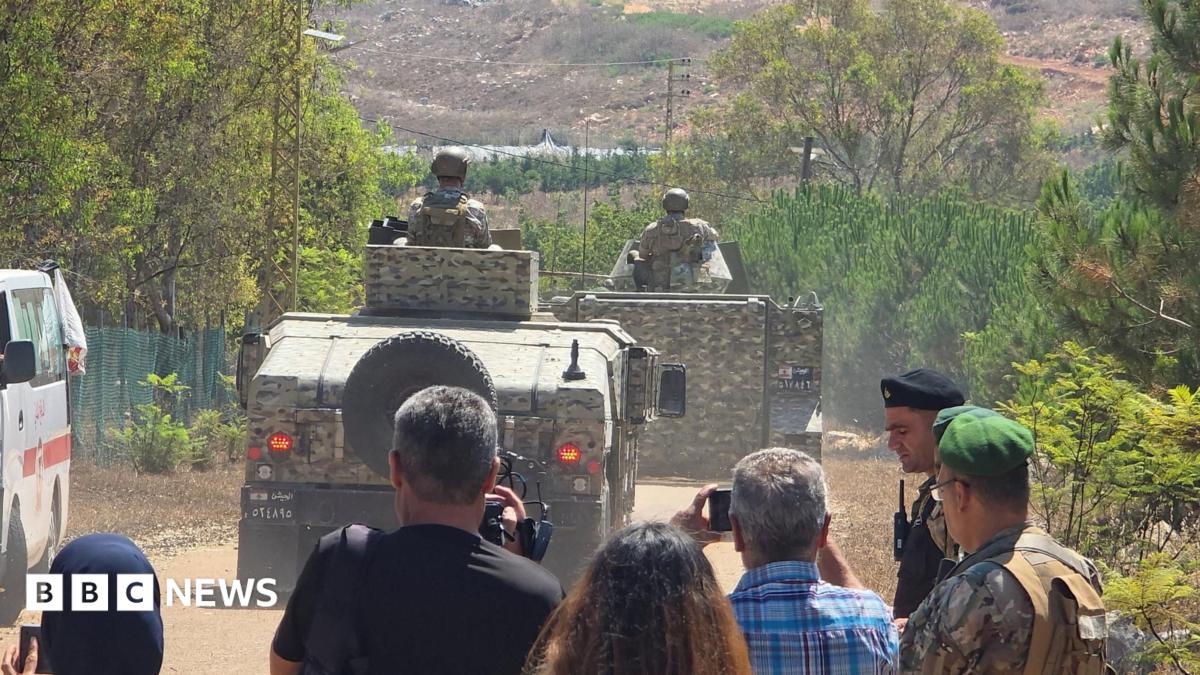
<p>Direct military engagement between Tehran and Jerusalem remains rare. Instead, both sides employ <b>proxy forces</b> to project power, deny attribution, and manage escalation risk. The most prominent proxies are Hezbollah in Lebanon, Hamas and Islamic Jihad in Gaza, and the Houthi movement in Yemen.</p>
<h3>Proxy Capabilities and Roles</h3>
<table>
<thead>
<tr>
<th>Proxy</th>
<th>Primary Sponsor</th>
<th>Operational Theater</th>
<th>Strategic Function</th>
</tr>
</thead>
<tbody>
<tr>
<td>Hezbollah</td>
<td>Iran (IRGC Quds Force)</td>
<td>Lebanon, Syria, Israel’s northern border</td>
<td>Deterrence, missile threat, political leverage in Beirut</td>
</tr>
<tr>
<td>Hamas / Islamic Jihad</td>
<td>Iran (financial, training, arms)</td>
<td>Gaza Strip, West Bank</td>
<td>Asymmetric pressure, rocket fire, tunnel warfare</td>
</tr>
<tr>
<td>Houthis (Ansar Allah)</td>
<td>Iran (advisory, missiles, drones)</td>
<td>Yemen, Red Sea shipping lanes</td>
<td>Maritime disruption, strategic depth for Iran</td>
</tr>
</tbody>
</table>
<p>These groups provide <b>plausible deniability</b> for Tehran while extending its <b>strategic depth</b> far beyond its borders. Israel counters with targeted assassinations, airstrikes on supply lines, and cyber operations aimed at disrupting command‑and‑control networks.</p>
Advertisement
Loading partner content...
<blockquote cite="https://www.iaea.org" rel="nofollow noopener noreferrer">“Proxy warfare allows state actors to fight without crossing the threshold of conventional war.” – International security scholar, 2025</blockquote>
<figure class="my-8 overflow-hidden rounded-3xl shadow-xl">
<img src="https://images.pexels.com/photos/1214270/pexels-photo-1214270.jpeg?auto=compress&cs=tinysrgb&dpr=2&h=650&w=940" alt="proxy warfare" class="w-full h-[400px] object-cover" />
</figure>
<h2>3. <a href="/article/australia-india-uranium-deal-how-pm-modi-s-new-trade-pact-is-reshaping-global-nuclear-energy" title="Australia‑India Uranium Deal: How PM Modi’s New Trade Pact is Reshaping Global Nuclear Energy" class="internal-link">Nuclear</a> Ambitions: The Significance of Iran’s Nuclear Program to Regional Stability</h2>
<p>Iran’s nuclear trajectory is the <b>single most consequential variable</b> in the <b>Iran‑Israel conflict</b>. The 2015 Joint Comprehensive Plan of Action (JCPOA) temporarily capped enrichment, but the U.S. withdrawal in 2018 and subsequent Iranian breaches have pushed breakout time to <b>weeks rather than months</b>.</p>
Advertisement
Loading partner content...
<p>Implications for regional stability:</p>
<ol>
<li><b>Deterrence calculus</b> – A nuclear‑capable Iran would fundamentally alter Israel’s security doctrine.</li>
<li><b>Arms race risk</b> – Saudi Arabia, Turkey, and Egypt have signaled intent to pursue civilian nuclear programs with potential military dimensions.</li>
<li><b>Diplomatic leverage</b> – The nuclear file dominates great‑power engagement, often sidelining other flashpoints.</li>
</ol>
<p>Israel maintains a <b>policy of ambiguity</b> regarding its own arsenal while investing heavily in missile defense (Arrow, David’s Sling) and offensive cyber capabilities (e.g., Stuxnet). The <b>nuclear shadow</b> fuels a perpetual <b>security dilemma</b> where each side’s defensive measures are perceived as offensive by the other.</p>
<figure class="my-8 overflow-hidden rounded-3xl shadow-xl">
<img src="https://images.unsplash.com/photo-1772376920750-dac1470b1bad?crop=entropy&cs=tinysrgb&fit=max&fm=jpg&ixid=M3w4NjI1Nzh8MHwxfHNlYXJjaHwxfHxudWNsZWFyJTIwZmFjaWxpdHl8ZW58MHwwfHx8MTc4NTY1MjM4Mnww&ixlib=rb-4.1.0&q=80&w=1080" alt="nuclear facility" class="w-full h-[400px] object-cover" />
</figure>
Advertisement
Loading partner content...
<h2>4. Strategic Chessboard: How Global Powers Like the U.S. and Russia Influence This Tension</h2>
<p>The <b>Iran‑Israel conflict</b> is embedded in a broader <b>great‑power competition</b>. The United States provides Israel with <b>qualitative military edge</b> (QME) guarantees, intelligence sharing, and diplomatic cover at the UN. Russia, meanwhile, maintains working relations with both Tehran and Jerusalem, leveraging its Syria presence to mediate de‑escalation while selling advanced air‑defense systems (S‑300/400) to Iran.</p>
<h3>Key Great‑Power Levers</h3>
<ul>
<li><b>U.S. security assistance</b> – $3.8 billion annual memorandum of understanding (2026).</li>
<li><b>Russian diplomatic channels</b> – Moscow’s “Astana Process” includes Iranian and Israeli representatives.</li>
<li><b>Chinese economic stakes</b> – Belt and Road investments in Iran create a vested interest in Gulf stability.</li>
</ul>
Advertisement
Loading partner content...
<p>These external actors can <b>restrain</b> or <b>enable</b> escalation. For instance, U.S. pressure on Iran’s oil exports limits Tehran’s funding for proxies, while Russian air‑defense deliveries raise the cost of Israeli strikes in Syria.</p>
<blockquote cite="https://www.un.org" rel="nofollow noopener noreferrer">“Great‑power rivalry turns a bilateral dispute into a multipolar flashpoint.” – UN Security Council report, 2025</blockquote>
<h2>5. The Human Cost: Societal and Cultural Impact of Constant Regional Instability</h2>
<p>Beyond strategic calculations, the <b>Iran‑Israel conflict</b> exacts a heavy toll on ordinary citizens. In Lebanon, Hezbollah’s dominance distorts governance and fuels sectarian polarization. In Gaza, recurrent wars devastate infrastructure, causing <b>chronic humanitarian crises</b>. Iranian society bears the weight of sanctions, while Israeli communities near the northern border live under constant rocket threat.</p>
Advertisement
Loading partner content...
<p>Cultural repercussions include:</p>
<ul>
<li><b>Narrative entrenchment</b> – School curricula and media reinforce zero‑sum historical grievances.</li>
<li><b>Brain drain</b> – Skilled professionals emigrate from conflict‑affected zones.</li>
<li><b>Inter‑generational trauma</b> – Children grow up with air‑raid sirens as a normalized soundtrack.</li>
</ul>
<p>Civil‑society initiatives—joint Israeli‑Palestinian peace NGOs, Iranian diaspora advocacy groups—struggle against state‑driven securitization but keep a <b>track‑two dialogue</b> alive.</p>
<figure class="my-8 overflow-hidden rounded-3xl shadow-xl">
<img src="https://images.pexels.com/photos/29123664/pexels-photo-29123664.jpeg?auto=compress&cs=tinysrgb&dpr=2&h=650&w=940" alt="Middle East map" class="w-full h-[400px] object-cover" />
</figure>
<h2>6. Future Outlook: Scenarios for De‑Escalation Versus Total Regional Conflict</h2>
Advertisement
Loading partner content...
<p>Analysts outline three plausible trajectories for the next decade:</p>
<ol>
<li><b>Managed Competition</b> – Continued low‑intensity proxy clashes, periodic diplomatic back‑channels, and a revived nuclear deal that caps enrichment. This scenario preserves the status quo but leaves underlying grievances unresolved.</li>
<li><b>Breakthrough Diplomacy</b> – A grand bargain brokered by major powers, linking Iranian sanctions relief to verifiable nuclear limits, regional security guarantees, and a Palestinian political horizon. Requires unprecedented trust‑building.</li>
<li><b>Full‑Scale Conflagration</b> – Miscalculation or deliberate escalation triggers direct Israeli strikes on Iranian soil, Iranian missile barrages on Israeli cities, and activation of all proxy fronts. <a href="/article/india-s-60-b-russian-oil-pivot-how-us-tariff-threats-are-reshaping-global-energy-politics-and-what-i" title="India’s $60 B Russian Oil Pivot: How US Tariff Threats Are Reshaping Global Energy Politics and What It Means for India’s Energy Future" class="internal-link">Global energy</a> markets, shipping lanes, and great‑power forces would be drawn in.</li>
</ol>
<p>Key variables that could tip the balance:</p>
<ul>
<li>Iran’s <b>breakout timeline</b> crossing a declared red line.</li>
<li>Israeli domestic politics shifting toward pre‑emptive doctrine.</li>
<li>U.S. electoral cycles altering commitment levels.</li>
<li>Unexpected non‑state actor actions (e.g., a major cyberattack on critical infrastructure).</li>
</ul>
Advertisement
Loading partner content...
<blockquote cite="https://www.cfr.org" rel="nofollow noopener noreferrer">“The region sits on a knife‑edge; a single spark can ignite a fire that no single actor can control.” – Council on Foreign Relations, 2026</blockquote>
<p>The <b>Iran‑Israel conflict</b> remains a <b>defining fault line</b> in <b>Middle East geopolitics</b>. Its resolution—or</b></b></b></b></p></i></i></i></i></i>


