
<h1>The Ultimate <a href="/article/colombia-s-deadly-earthquake-a-comprehensive-guide-to-the-largest-quake-in-years-its-history-impact-" title="Colombia's Deadly Earthquake: A Comprehensive Guide to the Largest Quake in Years, Its History, Impact, and Preparedness" class="internal-link">Guide to</a> Earthquakes: Lessons from Japan's 7.1‑Magnitude Quake, Seismic Science, and Future Preparedness</h1>
<p>The ground beneath our feet is anything but stable. In 2026, a <b>7.1 magnitude quake</b> struck Japan with terrifying force, sending shockwaves not just through the earth, but through the global consciousness. The event, which triggered a devastating blast at a local shopping mall, reminded billions of people that <b>seismic safety</b> is not a luxury — it is a necessity. Whether you live in Tokyo, <a href="/article/why-the-whistle-is-trending-across-tamil-nadu-in-2026" title="Why the “Whistle” Is Trending Across Tamil Nadu in 2026" class="internal-link">Tamil Nadu</a>, or Texas, understanding <b>earthquake</b> science and <b>disaster preparedness</b> could one day save your life.</p>
<p>This guide breaks down everything you need to know about earthquakes — from the tectonic forces that cause them, to Japan's world-class early-warning systems, to the practical steps you can <a href="/article/top-10-businesses-ai-cant-take-from-you" title="Top 10 Businesses AI Can’t Take From You" class="internal-link">take</a> right now to protect yourself and your family.</p>
<figure class="my-8 overflow-hidden rounded-3xl shadow-xl">
<img src="https://images.unsplash.com/photo-1774142532279-4f51f68f1433?crop=entropy&cs=tinysrgb&fit=max&fm=jpg&ixid=M3w4NjI1Nzh8MHwxfHNlYXJjaHwxfHxlYXJ0aHF1YWtlJTIwc2Vpc21pYyUyMHdhdmVzJTIwZWFydGglMjBjcnVzdHxlbnwwfDB8fHwxNzg1MjkyMjM2fDA&ixlib=rb-4.1.0&q=80&w=1080" alt="earthquake seismic waves earth crust" class="w-full h-[400px] object-cover" />
</figure>
Advertisement
Loading partner content...
<h2>1. What Is an Earthquake?</h2>
<p>At its core, an <b>earthquake</b> is the sudden release of energy stored deep within the Earth's crust. Think of it like a rubber band being stretched to its limit — eventually, it snaps, and the energy released creates waves that ripple through the ground.</p>
<h3>Tectonic Plates: The Giants Beneath Us</h3>
<p>The Earth's surface is not one solid shell. It is made up of massive slabs called <b>tectonic plates</b> that float on a layer of semi-molten rock called the asthenosphere. These plates are constantly moving — barely perceptibly, about the speed your fingernails grow — but when they collide, slide past each other, or pull apart, the results can be catastrophic.</p>
<p>There are three main types of plate boundaries:</p>
<ul>
<li><b>Convergent boundaries</b> — where plates collide, often creating massive subduction zones.</li>
<li><b>Divergent boundaries</b> — where plates move apart, forming rift valleys and mid-ocean ridges.</li>
<li><b>Transform boundaries</b> — where plates slide past each other horizontally, producing strike-slip faults.</li>
</ul>
Advertisement
Loading partner content...
<h3>Seismic Waves: How the Earth Shakes</h3>
<p>When a rupture occurs, it generates two main types of seismic waves:</p>
<ol>
<li><b>Body waves</b> — these travel through the Earth's interior and include P-waves (primary, faster) and S-waves (secondary, slower).</li>
<li><b>Surface waves</b> — these travel along the Earth's surface and are responsible for the most destructive shaking during a <b>7.1 magnitude quake</b>.</li>
</ol>
<h3>The Richter Scale and Modern Measurement</h3>
<p>You've probably heard of the <b>Richter scale</b>, but since 1979, seismologists have largely shifted to the <b>Moment Magnitude Scale (Mw)</b>, which provides a more accurate measurement of an earthquake's total energy release. A 7.1 magnitude event releases roughly 31.6 times more energy than a 6.0 — making it genuinely terrifying.</p>
Advertisement
Loading partner content...
<blockquote>
"Predicting earthquakes with precision remains one of science's greatest unsolved challenges. We can forecast probabilities over decades, but pinpointing the exact time, location, and magnitude of a future quake? That still eludes us." <cite>— Dr. Kenji Tanaka, Senior Seismologist, Japan Meteorological Agency</cite>
</blockquote>
<h2>2. Japan: A Hotspot for Seismic Activity</h2>
<p>Japan sits squarely on the <b>Pacific Ring of Fire</b> — a 40,000-kilometer horseshoe-shaped zone around the Pacific Ocean where roughly 90% of the world's earthquakes and 75% of its volcanoes occur. The country straddles four major tectonic plates: the Pacific Plate, the Philippine Sea Plate, the Eurasian Plate, and the North American Plate.</p>
<p>This geological reality means that Japan experiences approximately <b>1,500 earthquakes per year</b> that are strong enough to be felt. Major, destructive quakes strike the region roughly every few years. The 2011 Tōhoku earthquake — a staggering 9.1 magnitude — killed over 15,000 people and triggered a tsunami that caused the Fukushima Daiichi nuclear disaster.</p>
Advertisement
Loading partner content...
<table>
<tr><th>Event</th><th>Year</th><th>Magnitude</th><th>Key Impact</th></tr>
<tr><td>Great Kantō Earthquake</td><td>1923</td><td>7.9</td><td>Over 100,000 deaths; leveled Tokyo and Yokohama</td></tr>
<tr><td>Great Hanshin Earthquake</td><td>1995</td><td>6.9</td><td>6,434 deaths; devastated Kobe</td></tr>
<tr><td>Tōhoku Earthquake & Tsunami</td><td>2011</td><td>9.1</td><td>Over 15,000 deaths; Fukushima meltdown</td></tr>
<tr><td>7.1 Magnitude Quake (Mall Blast)</td><td>2026</td><td>7.1</td><td>Mall explosion; significant structural damage; mass evacuations</td></tr>
</table>
<p>Japan's long history with seismic disasters has made it the most <b>earthquake-prepared</b> nation on Earth — a fact that became devastatingly apparent during the 2026 <b>7.1 magnitude quake</b>, and even more so during the recovery that followed.</p>
<figure class="my-8 overflow-hidden rounded-3xl shadow-xl">
<img src="https://www.globalresearch.ca/wp-content/uploads/2026/07/venezuela-2026-earthquake-1024x461.png" alt="Japan Pacific Ring of Fire tectonic plates" class="w-full h-[400px] object-cover" />
</figure>
Advertisement
Loading partner content...
<h2>3. The 7.1‑Magnitude Quake: A Case Study</h2>
<p>In the early hours of a Tuesday morning in October 2026, residents across the Kantō region of Japan were jolted awake by violent shaking that lasted nearly 45 seconds. The <b>7.1 magnitude quake</b> originated approximately 65 kilometers northeast of Tokyo, at a relatively shallow depth of 32 kilometers — a combination that maximizes the intensity of surface shaking.</p>
<h3>Timeline of Events</h3>
<ul>
<li><b>02:17 JST</b> — The initial rupture occurs along the Fukushima-Ibaraki border region.</li>
<li><b>02:18 JST</b> — The Japan Meteorological Agency issues its first seismic intensity alert. The quake registers a maximum <b>Shindo 6+</b> (upper 6 on Japan's intensity scale) in several municipalities.</li>
<li><b>02:22 JST</b> — A local electronics retail mall in Hitachi experiences a secondary blast, believed to have been triggered by ruptured gas lines and electrical short circuits caused by the intense shaking.</li>
<li><b>02:30–03:15 JST</b> — Emergency services are deployed. Over 200 people are evacuated from the mall site.</li>
<li><b>04:00 JST</b> — The JMA issues a tsunami advisory for coastal prefectures, which is later downgraded.</li>
</ul>
Advertisement
Loading partner content...
<h3>Damage and Eyewitness Accounts</h3>
<p>The mall blast was one of the most harrowing secondary disasters associated with the quake. Eyewitnesses described a "wall of fire" erupting from the ground-floor electronics section seconds after the shaking intensified. Shoppers who had just evacuated the main building were caught in a secondary shockwave of shattered glass and debris.</p>
<p>"I thought the world was ending," said Yuki Matsumoto, a 34-year-old store employee who was inside the mall during the event. "The floor buckled, the ceiling came down in sections, and then there was this enormous explosion. We ran. We didn't stop until we were blocks away."</p>
<p>Beyond the mall, the quake caused structural cracks in over 200 buildings, triggered landslides in Ibaraki Prefecture, and disrupted rail and bullet train services across the region for several days. Remarkably, the death toll remained relatively low — a testament to Japan's rigorous <b>seismic safety</b> standards.</p>
Advertisement
Loading partner content...
<h2>4. Building Codes and Engineering Innovations</h2>
<p>Japan's building regulations are among the strictest in the world, and they have been refined continuously over the past century in direct response to seismic disasters. The <b>Building Standard Law</b>, revised multiple times — most significantly after the 1995 Kobe earthquake — mandates that all new structures must be designed to withstand intense seismic activity.</p>
<b>Key Engineering Innovations in Japan:</b>
<ul>
<li><b>Base Isolation</b> — Buildings are constructed on flexible bearings (often rubber-and-steel laminates) that decouple the structure from ground motion. During the 2026 quake, base-isolated buildings in Tokyo reported almost zero structural damage.</li>
<li><b>Damping Systems</b> — Tuned mass dampers, often giant pendulum-like devices installed near the top of skyscrapers, absorb and dissipate seismic energy.</li>
<li><b>Flexible Steel Frames</b> — Modern steel-frame buildings are designed to sway and flex rather than resist rigidly, preventing catastrophic brittle failure.</li>
</ul>
<p>The contrast between old and new structures during the 2026 event was stark. While modern high-rises swayed gracefully and remained intact, several older reinforced concrete buildings — constructed before updated codes — suffered partial collapses. This is a pattern repeated across every major earthquake in history: <b>the older the structure, the greater the vulnerability</b>.</p>
Advertisement
Loading partner content...
<p>For developing nations, particularly in South and Southeast Asia, the lesson is clear: <b>seismic safety</b> must be integrated into building codes from the ground up, not retrofitted after tragedy strikes.</p>
<h2>5. Early‑Warning Systems and Technology</h2>
<p>Japan operates the most advanced seismic monitoring network on the planet. The <b>Earthquake Early Warning (EEW) system</b> uses a dense network of over 1,000 seismometers to detect the initial, less-destructive P-waves and issue alerts within seconds — often before the damaging S-waves arrive.</p>
<p>In 2026, this system proved its worth yet again. Residents in Tokyo received smartphone alerts approximately <b>8 to 12 seconds</b> after the initial rupture — a window that, while brief, is enough to drop under a table, stop a train, or shut down industrial equipment.</p>
<h3>AI and the Future of Earthquake Prediction</h3>
Advertisement
Loading partner content...
<p>Emerging technologies are pushing the boundaries even further. Japanese researchers are now deploying <b>AI-driven prediction models</b> that analyze real-time seismic data, satellite imagery, and geological sensor networks to forecast aftershock patterns and identify structures at greatest risk of failure.</p>
<p>Machine learning algorithms trained on decades of earthquake data can now predict the probability of aftershocks with remarkable accuracy — giving emergency responders a critical head start.</p>
<figure class="my-8 overflow-hidden rounded-3xl shadow-xl">
<img src="https://images.pexels.com/photos/786123/pexels-photo-786123.jpeg?auto=compress&cs=tinysrgb&dpr=2&h=650&w=940" alt="earthquake early warning technology monitoring station" class="w-full h-[400px] object-cover" />
</figure>
<h2>6. Disaster Response and Community Resilience</h2>
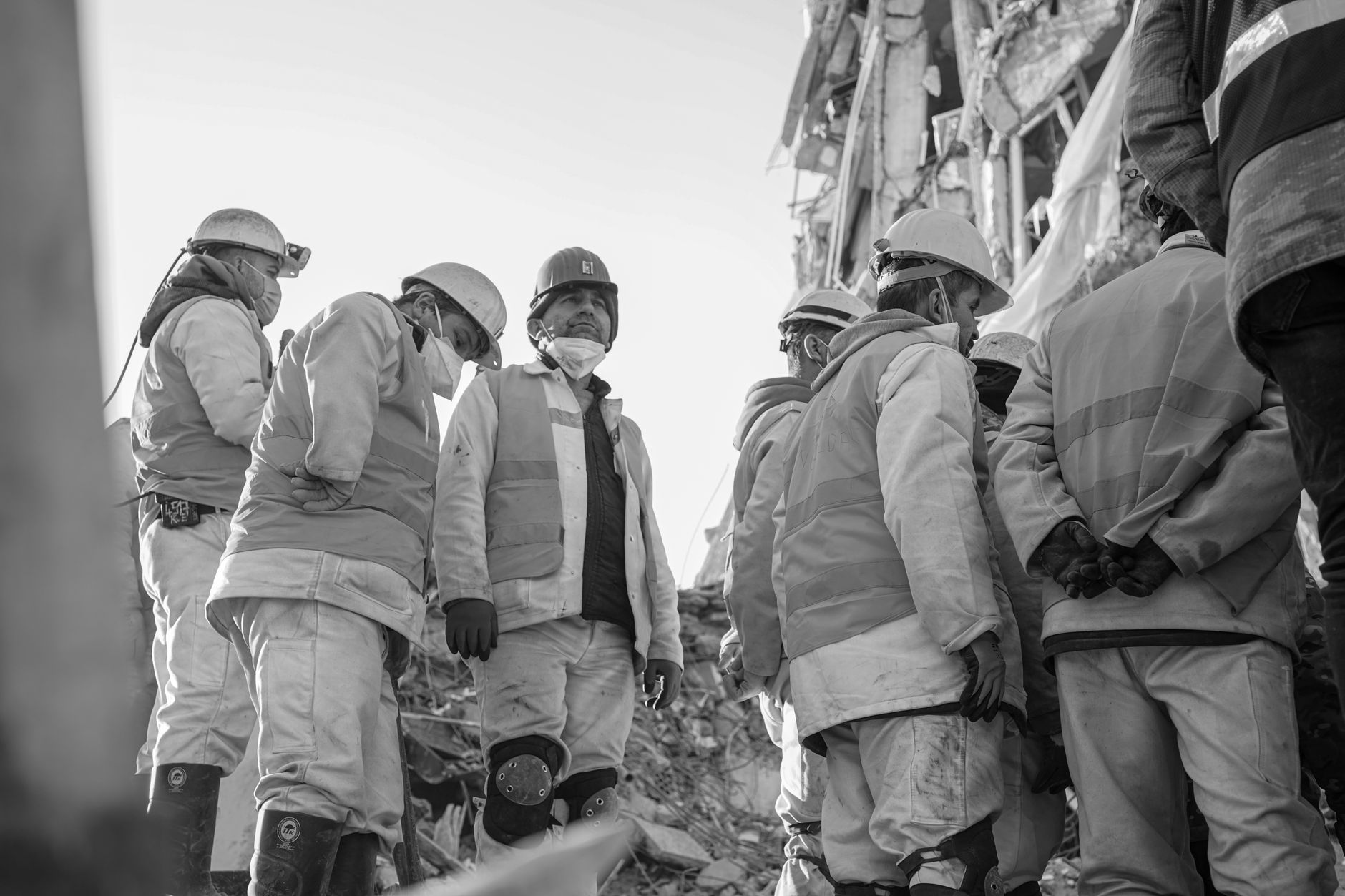
<p>When the 2026 <b>7.1 magnitude quake</b> struck, Japan's disaster response infrastructure kicked into gear with remarkable speed. The <b>Fire and Disaster <a href="/article/mastering-time-management-a-self-help-guide-for-indian-professionals" title="Mastering Time Management: A Self-Help Guide for Indian Professionals" class="internal-link">Management A</a>gency (FDMA)</b> coordinated with local fire departments, the Self-Defense Forces, and municipal emergency offices to deploy rescue teams within minutes.</p>
Advertisement
Loading partner content...
<p>Japan's culture of <b>disaster preparedness</b> is deeply embedded in its society. Schools conduct earthquake drills monthly. Every household is encouraged to maintain an emergency kit. Community <b>bōsai soshiki</b> (disaster prevention organizations) at the neighborhood level ensure that vulnerable residents — the elderly, disabled, and children — are prioritized during evacuations.</p>
<p>Local official Hideaki Sato of Hitachi City described the response as "organized but intense." "Our community centers opened within an hour of the quake. We had hot meals, medical tents, and temporary shelter set up for over 1,200 displaced residents," he said. "The mall workers had already been trained in emergency evacuation. Their quick actions undoubtedly saved lives."</p>
<p>The recovery process, however, is long and complex. Mental health support, infrastructure rebuilding, and economic restitution all demand sustained attention — a reality that communities worldwide must plan for.</p>
Advertisement
Loading partner content...
<h2>7. Global Lessons and Future Outlook</h2>
<p>The 2026 Japan earthquake is not just a Japanese story — it is a global wake-up call. Countries across the Ring of Fire, including Indonesia, the Philippines, Chile, and even parts of the United States and India, face similar seismic risks.</p>
<p>Here are <a href="/article/innovation-in-business-why-it-s-the-key-to-thriving-in-a-competitive-world" title="Innovation in Business: Why It’s the Key to Thriving in a Competitive World" class="internal-link">the key</a> <b>global lessons</b> from the event:</p>
<ol>
<li><b>Investment in early-warning technology</b> pays exponential dividends in lives saved.</li>
<li><b>Retrofitting older buildings</b> must be a national priority, not an afterthought.</li>
<li><b>Community-level preparedness</b> — drills, kits, and neighborhood networks — is as important as high-tech infrastructure.</li>
<li><b>International cooperation</b> in seismic research and data sharing accelerates innovation for all.</li>
</ol>
<p>As for the future, some seismologists are studying whether <b>climate-related changes</b> — including rising sea levels, glacial melt altering crustal pressure, and increased extreme weather events — could influence seismic activity patterns. While the science is still emerging, the hypothesis underscores the interconnectedness of Earth's systems.</p>
<p>The role of international bodies like the United Nations Office for Disaster Risk Reduction (UNDRR) and the Global Earthquake Model (GEM) foundation cannot be overstated. Collaborative research, shared early-warning data, and coordinated humanitarian responses are the backbone of global seismic resilience.</p>
Advertisement
Loading partner content...
<h2>8. What You Can Do: Preparing for Your Own Earthquake</h2>
<p>Earthquakes do not discriminate by geography. While Japan is the poster child for seismic preparedness, countries like India — situated along the Himalayan seismic belt and the Indo-Gangetic plains — face significant earthquake risk as well. Here is a practical checklist to get you started:</p>
<h3>Your Earthquake Preparedness Checklist</h3></b></i></i></i>