<h1>The Unresolved Jharkhand Student Protest: Decoding the Deadlock and Its Cultural Impact on India's Youth Movement</h1>
<p>The Jharkhand student protest has escalated into a nationwide flashpoint, drawing attention to the frustrations of India's youth <a href="/article/why-jharkhand-students-are-protesting-a-deep-dive-into-education-rights-government-response-and-the-" title="Why Jharkhand Students Are Protesting: A Deep Dive into Education Rights, Government Response, and the Role of Public Figures like Rahul Gandhi" class="internal-link">and the</a> complexities of state‑level governance. As 2026 unfolds, the deadlock between protesting scholars and the state government remains unresolved, sparking debates on education policy, social justice, and political accountability. This article decodes the stalemate, explores its cultural reverberations, and offers actionable insights for activists and policymakers alike.</p>
<figure class="my-8 overflow-hidden rounded-3xl shadow-xl">
<img src="https://images.pexels.com/photos/32347985/pexels-photo-32347985.jpeg?auto=compress&cs=tinysrgb&dpr=2&h=650&w=940" alt="student protest" class="w-full h-[400px] object-cover" />
</figure>
<h2>Background of the Jharkhand Student Protest</h2>
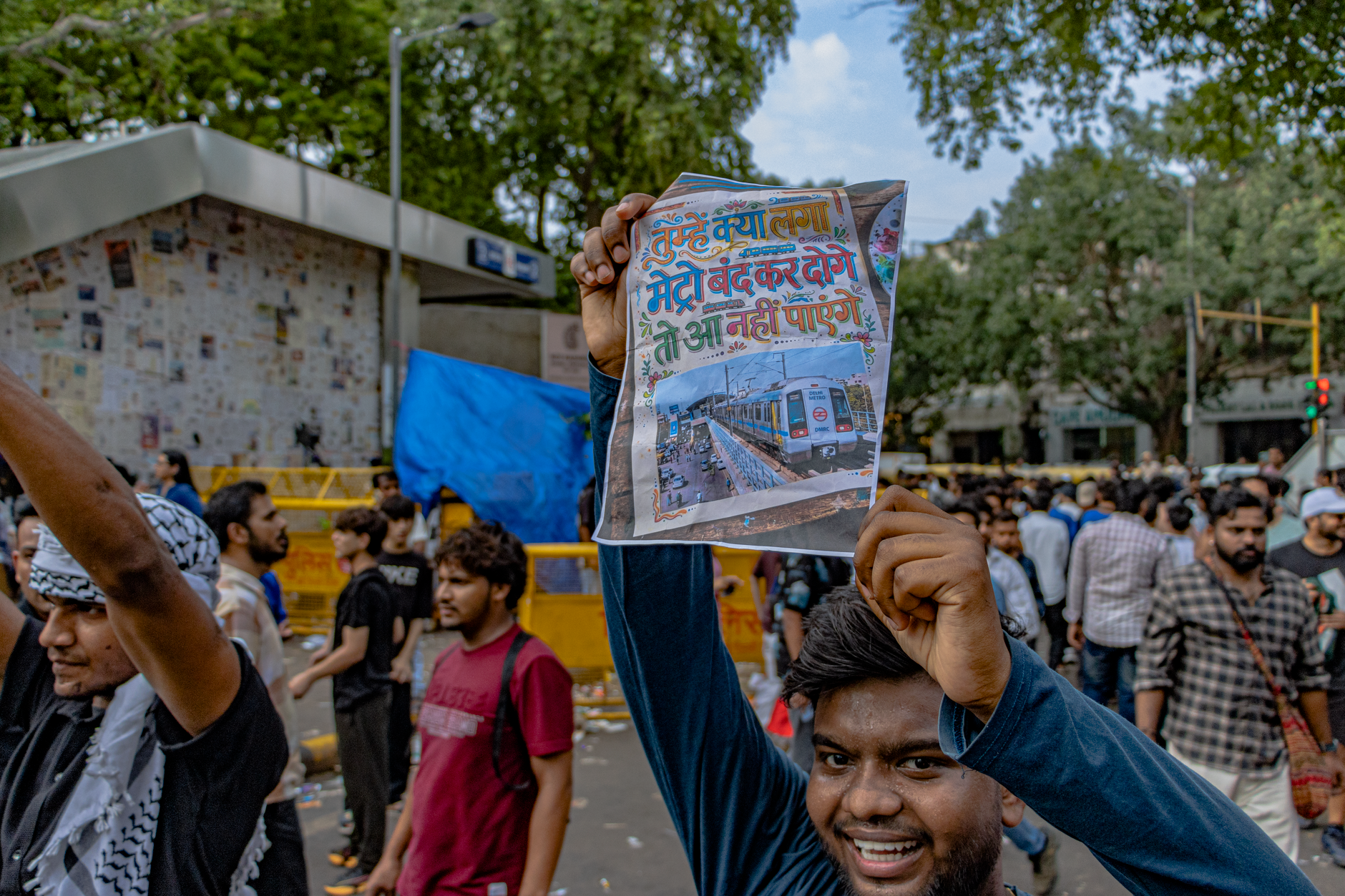
<p>Jharkhand, a state carved out in 2000, has seen a surge in educational activism over the past decade, driven by rising enrollment in state universities and a growing demand for quality infrastructure. The recent unrest stems from a combination of policy neglect, perceived unfairness in reservation quotas, and delayed compensation for college fee hikes. Students across the state have taken to the streets, demanding transparency and accountability from the Jharkhand government.</p>
Advertisement
Loading partner content...
<h3>Historical Context</h3>
<p>The roots of student dissent in Jharkhand can be traced back to the 2018 education reform that introduced a new grading system, which many institutions deemed opaque and demoralizing. Subsequent budget cuts in 2021 reduced funding for scholarships, prompting a wave of protests that were initially localized but gained momentum as social media amplified the grievances. By 2025, the state had witnessed a 35% increase in student‑led demonstrations compared to the previous year, signaling a broader generational shift.</p>
<h3>Trigger Events</h3>
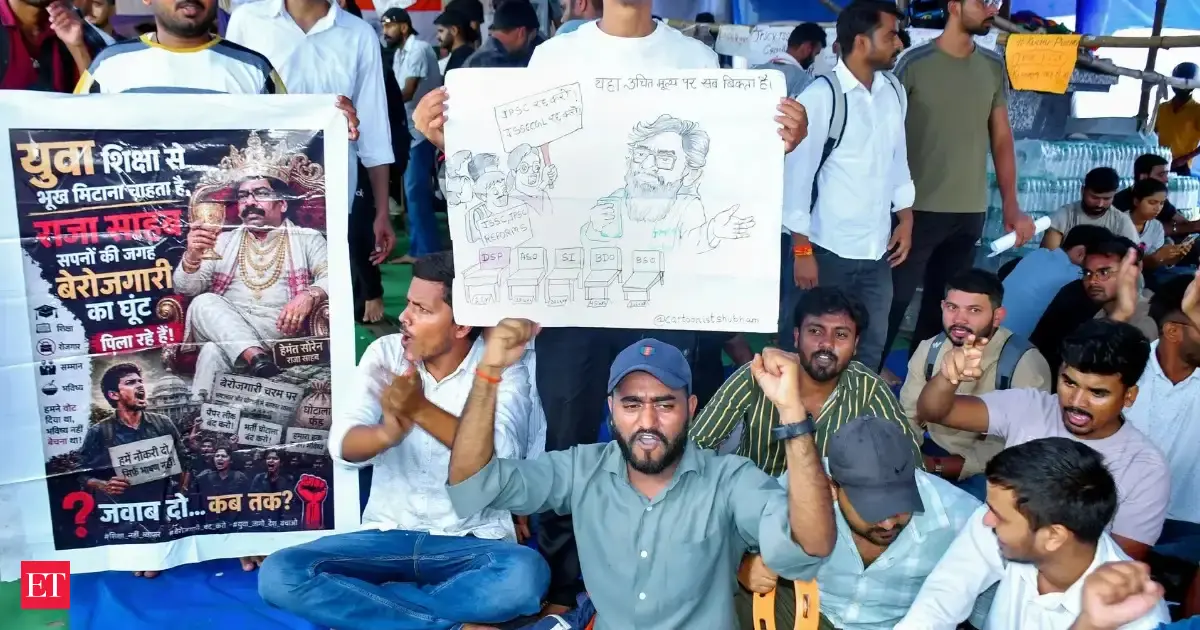
<p>The immediate catalyst for the current protest was the announcement in March 2026 of a proposed increase in tuition fees for engineering and medical colleges, which was justified as a measure to fund infrastructure upgrades. The proposal was met with immediate backlash from student unions, who argued that the hike would exacerbate financial barriers for low‑income families. Within weeks, thousands of students organized sit‑ins at major campuses, culminating in a massive rally in Ranchi that attracted national media coverage.</p>
<figure class="my-8 overflow-hidden rounded-3xl shadow-xl">
<img src="https://images.pexels.com/photos/32266781/pexels-photo-32266781.jpeg?auto=compress&cs=tinysrgb&dpr=2&h=650&w=940" alt="government meeting" class="w-full h-[400px] object-cover" />
</figure>
Advertisement
Loading partner content...
<h2>Current Status and Deadlock</h2>
<p>As of October 2026, the Jharkhand government has convened a series of talks with student representatives, but progress has been limited by mistrust and divergent priorities. The government insists on a phased implementation of fee adjustments, while students demand an immediate rollback and a guaranteed increase in scholarship funding. The stalemate has led to intermittent campus occupations, occasional violence, and a growing sense of disillusionment among youth.</p>
<h3>Jharkhand Government Talks</h3>
<p>Negotiations have taken place in a dedicated mediation cell under the aegis of the state's Education Department, with senior bureaucrats and elected officials participating alongside student leaders. Despite multiple sessions, a concrete agreement has yet to emerge, primarily because the government seeks to balance fiscal constraints with the political cost of conceding to demanding protestors. The talks have been scheduled in three‑month cycles, the latest occurring in September 2026.</p>
<h3>Student Demands</h3>
Advertisement
Loading partner content...
<p>Students have articulated a clear set of demands: an immediate rollback of the fee hike, a 20% increase in merit‑based scholarships, and the establishment of a transparent grievance redressal mechanism. Additionally, they <a href="/article/thinking-of-doing-something-different-up-medical-student-dies-of-suicide-a-call-for-mental-health-re" title="“Thinking Of Doing Something Different”: UP Medical Student Dies Of Suicide – A Call for Mental Health Reform in India" class="internal-link">call for</a> the reversal of the 2021 budget cuts that reduced educational subsidies, and for the creation of a state‑level student advisory council with legislative representation. These demands reflect a broader desire for participatory governance in the education sector.</p>
<ul>
<li><b>Immediate fee rollback</b></li>
<li><b>20% rise in merit scholarships</b></li>
<li><b>Transparent grievance redressal</b></li>
<li><b>Reversal of 2021 budget cuts</b></li>
<li><b>Student advisory council with legislative voice</b></li>
</ul>
<h3>Economic and Social Implications</h3>
<p>The ongoing protest has strained the state’s education budget, with estimated losses of ₹250 crore in tuition revenue and additional costs associated with security operations. Moreover, the unrest has heightened social tensions, especially in rural districts where access to <a href="/article/first-ai-enabled-university-in-india-a-game-changer-for-higher-education" title="First AI-Enabled University in India — A Game Changer for Higher Education?" class="internal-link">higher education</a> is already limited. Stakeholders across the political spectrum have warned that prolonged disruption could deter prospective students and affect the state’s human‑capital development.</p>
<blockquote>“Our voices will not be silenced,” said Akanksha Singh, a third‑year engineering student and spokesperson for the protest coalition, emphasizing the resolve of the movement.</blockquote>
Advertisement
Loading partner content...
<h2>Cultural Impact on India's Youth Movement</h2>
<p>The Jharkhand student protest has become a symbolic rallying point for a generation that feels increasingly disconnected from traditional political channels. Its longevity and visibility have inspired similar movements in other states, reinforcing a narrative of collective agency among young Indians. This cultural shift is evident in the rise of student‑led NGOs, increased civic participation, and a redefinition of what it means to be an engaged citizen.</p>
<h3>Rise of Student Activism</h3>
<p>In the wake of the protest, there has been a measurable uptick in the formation of student unions that adopt digital organizing tools and intersectional frameworks, addressing caste, gender, and environmental concerns simultaneously. A recent survey by the Indian Youth Survey 2026 indicated that 62% of college students now consider themselves activists, up from 48% in 2022, highlighting a growing consciousness and willingness to mobilize.</p>
<h3>Influence on National Discourse</h3>
Advertisement
Loading partner content...
<p>The protest has forced national policymakers to revisit the 2019 National Education Policy, prompting calls for more inclusive funding formulas and greater autonomy for state universities. Debates in the Rajya Sabha have referenced the Jharkhand crisis as a cautionary tale, underscoring the need for responsive governance that aligns with the aspirations of India's youth. As a result, the issue has entered the mainstream media agenda, with op‑eds and talk shows dedicating prime time to analysis.</p>
<h3>Social Media and Mobilization</h3>
<p>Platforms such as Twitter, Instagram, and TikTok have played a decisive role in coordinating protests, disseminating information, and shaping narratives. Hashtags like #JharkhandStudents and #EducationJustice have trended nationally, reaching millions of users and amplifying the movement's voice. A recent study showed that posts containing personal stories of financial hardship garnered 3.5 times more engagement than generic calls to action, illustrating <a href="/article/unlocking-the-power-of-social-media-marketing-tactics" title="Unlocking the Power of Social Media Marketing Tactics" class="internal-link">the power of</a> emotive storytelling in digital activism.</p>
<figure class="my-8 overflow-hidden rounded-3xl shadow-xl">
<img src="https://images.unsplash.com/photo-1589995779584-b67121dfa9fc?crop=entropy&cs=tinysrgb&fit=max&fm=jpg&ixid=M3w4NjI1Nzh8MHwxfHNlYXJjaHwxfHx5b3V0aCUyMGFjdGl2aXNtfGVufDB8MHx8fDE3ODYyNDY5MDF8MA&ixlib=rb-4.1.0&q=80&w=1080" alt="youth activism" class="w-full h-[400px] object-cover" />
</figure>
Advertisement
Loading partner content...
<h2>Comparative Analysis with Other 2026 Student Protests</h2>
<p>While the Jharkhand protest shares common themes with student movements across India, distinct regional dynamics shape its trajectory. A comparative overview highlights both convergences and divergences, offering insights into the broader landscape of educational dissent in 2026.</p>
<table border="1" cellpadding="5" cellspacing="0">
<tr><th>Aspect</th><th>Jharkhand</th><th>Delhi University</th><th>Maharashtra Colleges</th></tr>
<tr><td>Primary grievance</td><td>Fee hike and scholarship cuts</td><td>Reservation policy in admissions</td><td>Inadequate infrastructure funding</td></tr>
<tr><td>Leadership structure</td><td>Decentralized student councils</td><td>Centralized university council</td><td>Student federations</td></tr>
<tr><td>Outcome so far</td><td>Deadlock, ongoing negotiations</td><td>Policy revision, fee freeze</td><td>Partial funding allocation</td></tr>
<tr><td>Public sentiment (survey)</td><td>68% support</td><td>75% support</td><td>60% support</td></tr>
</table>
<h2>Future Prospects and Possible Resolutions</h2>
<p>While the deadlock persists, several pathways exist that could transform the situation from stalemate to resolution, each requiring political will and sustained dialogue. Anticipating these scenarios helps stakeholders prepare for constructive outcomes.</p>
Advertisement
Loading partner content...
<h3>Potential Resolutions</h3>
<p>One viable resolution is a negotiated fee freeze accompanied by a commitment to increase scholarship allocations by 25% over the next fiscal year, thereby addressing immediate financial concerns while signaling long‑term investment in education. Another option involves the establishment of an independent oversight committee, comprising academics, government officials, and student representatives, to monitor policy implementation and ensure transparency.</p>
<h3>Role of Policy Reforms</h3>
<p>Comprehensive policy reforms that decouple tuition fees from state budgetary constraints could prevent future protests. Proposals include a fixed education budget guaranteed at 5% of the state's GDP, automatic indexation of scholarships to inflation, and the creation of a student representation quota in university governing bodies. Implementing such measures would align educational financing with the aspirations of a youthful population that demands both affordability and quality.</p>
<blockquote>“The future of our nation depends on an education system that is both equitable and financially sustainable,” remarked Minister of Education Anil Kumar during a televised address on October 10, 2026.</blockquote>
Advertisement
Loading partner content...
<h2>Conclusion</h2>
<p>In summary, the unresolved Jharkhand student protest encapsulates a critical juncture where educational equity, governmental accountability, and youth empowerment intersect. The deadlock, while frustrating, has galvanized a generation to demand systemic change, influencing national discourse and inspiring parallel movements across the country. As dialogue continues, the eventual convergence of student demands with pragmatic policy solutions will determine not only the future of Jharkhand's education system but also the broader trajectory of India's youth activism.</p>
<figure class="my-8 overflow-hidden rounded-3xl shadow-xl">
<img src="https://images.pexels.com/photos/12935123/pexels-photo-12935123.jpeg?auto=compress&cs=tinysrgb&dpr=2&h=650&w=940" alt="school protest" class="w-full h-[400px] object-cover" />
</figure>
<SPHERE>
{
"@context": "https://schema.org",
"@type": "BlogPosting",
"headline": "The Unresolved Jharkhand Student Protest: Decoding the Deadlock and Its Cultural Impact on India's Youth Movement",
"image": "https://example.com/featured-image.jpg",
"author": {
"@type": "Person",
"name": "Rohan Sharma",
"url": "https://thereadist.in/authors/rohan-sharma"
},
"publisher": {
"@type": "Organization",
"name": "The Readist",
"url": "https://thereadist.in"
},
"url": "https://thereadist.in/articles/jharkhand-student-protest",
"datePublished": "2026-10-15",
"description": "An in-depth analysis of the Jharkhand student protest, its deadlock with the government, and its cultural impact on India's youth movement in 2026."
}
</SPHERE></b></b></i></i></i></i>