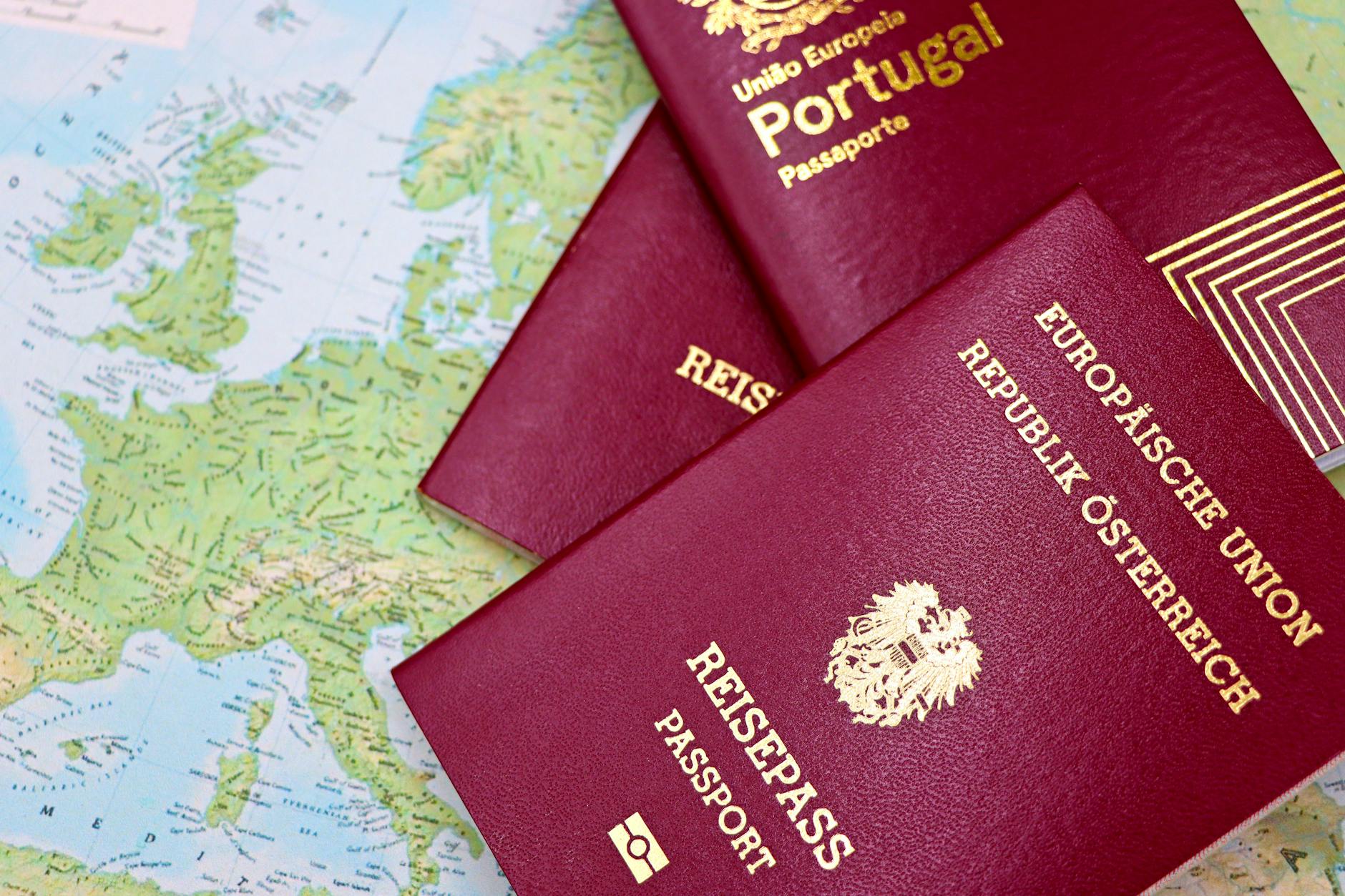

<h1>Understanding <a href="/article/mastering-time-management-a-self-help-guide-for-indian-professionals" title="Mastering Time Management: A Self-Help Guide for Indian Professionals" class="internal-link">Indian</a> Citizenship Documentation: Passports, Legal Proof & Beyond</h1>
<p>In the vast, pulsating tapestry of the Indian subcontinent, <b>identity is more than just a name on a card.</b> It is a complex intersection of heritage, legal standing, and administrative validation. For millions, the quest for <b>properly documented legal identity</b> is a lifelong journey that dictates access to education, healthcare, and the right to vote.</p>
<p>Whether you are a first-generation citizen, a student planning to study abroad, or a professional navigating the nuances of <b>identity governance</b>, understanding the paperwork is crucial. This guide dives deep into the labyrinth of <b>Indian Citizenship Laws</b> and the documents that prove your place in this nation.</p>
<figure class="my-8 overflow-hidden rounded-3xl shadow-xl">
<img src="https://images.unsplash.com/photo-1760872646618-13594fc00567?crop=entropy&cs=tinysrgb&fit=max&fm=jpg&ixid=M3w4NjI1Nzh8MHwxfHNlYXJjaHwxfHxJbmRpYW4lMjBHb3Zlcm5tZW50JTIwQnVpbGRpbmd8ZW58MHwwfHx8MTc4MjM4NDE3NXww&ixlib=rb-4.1.0&q=80&w=1080" alt="Indian Government Building" class="w-full h-[400px] object-cover" />
</figure>
Advertisement
Loading partner content...
<h2>The Fundamental Distinction: Passport vs Citizenship</h2>
<p>One of the most frequent points of confusion among the Indian populace is the conceptual gap between <b>passport vs citizenship.</b> While they are intrinsically linked, they serve entirely different purposes in the eyes of the law.</p>
<p><b>Citizenship is your legal status as a member of the nation.</b> It is a permanent bond between an individual and the Republic of India, granting you fundamental rights like voting and holding public office. It is governed primarily by the <b>Citizenship Act of 1955.</b></p>
<p><b>A passport, on the other hand, is a travel document.</b> It is a tool issued by the government to facilitate international movement. Think of citizenship as your "membership card" to the country, while the passport is your "boarding pass" to the rest of the world.</p>
<h3>Key Differences at a Glance</h3>
Advertisement
Loading partner content...
<table>
<tr>
<th>Feature</th>
<th>Citizenship</th>
<th>Passport</th>
</tr>
<tr>
<td><b>Primary Purpose</b></td>
<td>Defines legal status and rights with<a href="/article/first-ai-enabled-university-in-india-a-game-changer-for-higher-education" title="First AI-Enabled University in India — A Game Changer for Higher Education?" class="internal-link">in India</a>.</td>
<td>Facilitates international travel and identity verification abroad.</td>
</tr>
<tr>
<td><b>Acquisition</b></td>
<td>By birth, descent, registration, or naturalization.</td>
<td>By application to the Ministry of External Affairs.</td>
</tr>
<tr>
<td><b>Loss of Status</b></td>
<td>Can be lost through renunciation or termination.</td>
<td>Can expire or be revoked for misuse.</td>
</tr>
<tr>
<b>Legal Framework</b></b></td>
<td>Citizenship Act, 1955.</td>
<td>Passports Act, 1967.</td>
</tr>
</table>
<p><b>Crucially, you cannot have an Indian passport without being an Indian citizen.</b> However, you can be an Indian citizen without currently holding a valid passport. <b>Document verification</b> processes for domestic services often rely on other proofs of identity rather than the passport itself.</p>
<h2>The Evolution of Indian Identity: A Historical Context</h2>
Advertisement
Loading partner content...
<p>To understand current <b>legal frameworks</b>, one must look at how India's concept of identity has shifted. Post-independence, the nation faced the monumental task of defining who belonged to the new Republic. <b>The Constitution of India provided the bedrock</b> for this definition, emphasizing jus soli (right of soil) and jus sanguinis (right of blood).</p>
<p>Over the decades, the <b>Indian Citizenship Laws</b> have undergone significant amendments. These changes have often been driven by geopolitical shifts, migration patterns, and the need to secure national borders. <b>Identity has become a central pillar of political discourse in India,</b> often influencing policy and social dynamics.</p>
<blockquote>
"Identity is not a static concept; it is a living, breathing legal reality that evolves alongside the state."
</blockquote>
<p>Historically, <b>cultural documentation</b> was often oral or community-based. Today, it is strictly digitized and centralized. This shift from the personal to the bureaucratic has changed how Indians interact with their own history and their sense of belonging.</p>
Advertisement
Loading partner content...
<figure class="my-8 overflow-hidden rounded-3xl shadow-xl">
<img src="https://images.pexels.com/photos/8850737/pexels-photo-8850737.jpeg?auto=compress&cs=tinysrgb&dpr=2&h=650&w=940" alt="Indian Constitution of India" class="w-full h-[400px] object-cover" />
</figure>
<h2>Navigating Document Verification: The Essential Toolkit</h2>
<p>When applying for government services, opening a bank account, or verifying your <b>legal identity</b>, you will encounter various tiers of documentation. <b>Effective document verification</b> requires knowing which document carries the most weight in specific scenarios.</p>
<p>In India, the ecosystem of identity is multi-layered. <b>The Aadhaar card is the most ubiquitous,</b> yet it is technically a proof of residency and identity, not a proof of citizenship. This is a distinction that many people often overlook during <b>identity governance</b> procedures.</p>
Advertisement
Loading partner content...
<h3>Primary Documents for Identity and Citizenship Proof</h3>
<ul>
<li><b>Birth Certificate:</b> The foundational document for establishing <b>legal identity</b> from inception.</li>
<li><b>Aadhaar Card:</b> Essential for biometric-based <b>document verification</b> and welfare schemes.</li>
<li><b>Voter ID (EPIC):</b> A critical proof of citizenship used primarily for exercising democratic rights.</li>
<li><b>PAN Card:</b> Primarily for financial transactions, but serves as a secondary identity validator.</li>
<li><b>Indian Passport:</b> The strongest document for proving both citizenship and identity on a global scale.</li>
</ul>
<p><b>It is vital to maintain updated versions of these documents.</b> Discrepancies in names, dates of birth, or parentage across different documents can lead to massive hurdles in <b>legal frameworks</b> and administrative processing.</p>
<h2>The Technological Revolution: Digital Identity & Aadhaar</h2>
<p>India has undergone a digital transformation unlike any other nation. The move toward <b>digital identity governance</b> has been spearheaded by the Aadhaar project. This has revolutionized how the state interacts with its citizens, making <b>document verification</b> near-instantaneous in many sectors.</p>
Advertisement
Loading partner content...
<p><b>The integration of biometrics has significantly reduced fraud.</b> By linking fingerprints and iris scans to a unique ID, the government can ensure that benefits reach the intended recipients. This has been a game-changer for direct benefit transfers (DBT) in rural India.</p>
<p>However, this technological leap is not without its critics. <b>Concerns regarding data privacy and surveillance are at the forefront of the debate.</b> As we move toward a more digitized society, the balance between <b>security and individual privacy</b> becomes increasingly delicate.</p>
<figure class="my-8 overflow-hidden rounded-3xl shadow-xl">
<img src="https://images.pexels.com/photos/17155842/pexels-photo-17155842.jpeg?auto=compress&cs=tinysrgb&dpr=2&h=650&w=940" alt="Digital Fingerprint Scan" class="w-full h-[400px] object-cover" />
</figure>
Advertisement
Loading partner content...
<h3>The Impact of Digitalization on Identity</h3>
<ol>
<li><b>Efficiency:</b> Reduced waiting times for verification in banks and government offices.</li>
<li><b>Transparency:</b> Minimizing the role of middlemen in the distribution of social welfare.</li>
<li><b>Inclusion:</b> Providing a digital footprint to those who previously lacked formal paperwork.</li>
<li><b>Risk:</b> Creating centralized targets for cyber-attacks and data breaches.</li>
</ol>
<h2>Identity Politics and the Social Fabric</h2>
<p>We cannot discuss <b>Indian Citizenship Laws</b> without touching upon the socio-political implications. In recent years, the discourse around <b>legal identity</b> has become deeply intertwined with identity politics. Discussions regarding the Citizenship Amendment Act (CAA) and the National Register of Citizens (NRC) have highlighted the sensitivity of these topics.</p>
<p><b>For many, these legislative discussions are not just about paperwork; they are about belonging.</b> The fear of being "undocumented" can impact community cohesion and social stability. This makes <b>identity governance</b> one of the most sensitive areas of modern Indian administration.</p>
Advertisement
Loading partner content...
<p><b>The intersection of religion, ethnicity, and citizenship</b> continues to be a defining feature of the Indian political landscape. Understanding these nuances is essential for anyone trying to grasp the complexities of the Indian social fabric.</p>
<h2>Future Trends: What Lies Ahead for Identity in India?</h2>
<p>As we look toward the future, the landscape of <b>legal identity</b> in India is set to change again. We are moving toward an era of "Seamless Identity," where different government databases will likely communicate more fluidly.</p>
<p><b>Blockchain technology is being explored</b> as a potential tool for secure, decentralized identity management. This could potentially solve many of the current issues surrounding <b>document verification</b> and the risk of centralized data theft.</p>
<h3>Anticipated Regulatory Shifts</h3>
Advertisement
Loading partner content...
<ul>
<li><b>Unified Identity Ecosystems:</b> Moving beyond Aadhaar to a more holistic, multi-purpose digital ID.</li>
<li><b>Enhanced Data Protection Laws:</b> Stricter regulations to protect the <b>legal identity</b> of citizens in a digital world.</li>
<li><b>AI-Driven Verification:</b> Using artificial intelligence to detect fraudulent documents in real-time.</li>
<li><b>Cross-Border Digital Identity:</b> Potential frameworks for easier identity verification for the Indian diaspora.</li>
</ul>
<p><b><a href="/article/how-to-stay-motivated-during-tough-times-a-practical-guide-for-indians" title="How to Stay Motivated During Tough Times: A Practical Guide for Indians" class="internal-link">Stay</a>ing informed is your best defense.</b> As laws evolve and new technologies emerge, the requirements for maintaining your <b>cultural documentation</b> and legal proof will continue to shift.</p>
<figure class="my-8 overflow-hidden rounded-3xl shadow-xl">
<img src="https://media3.giphy.com/media/v1.Y2lkPTlkZTM3ZjIweXkxem54aHhqa3M2ZDBhbnM3ZXJ3N3l3Z2g1NDk5bDd4NDEybnJ2cCZlcD12MV9naWZzX3NlYXJjaCZjdD1n/gz945ghj1zMyI/giphy.gif" alt="Technology Connectivity" class="w-full h-[400px] object-cover" />
</figure>
Advertisement
Loading partner content...
<h2>Frequently Asked Questions (FAQs)</h2>
<h3>1. Can I use my Aadhaar card as proof of citizenship?</h3>
<p><b>No, Aadhaar is a proof of residence and identity, not citizenship.</b> While it is an essential document for many services, for formal citizenship verification, you will need documents like a Voter ID, Passport, or Birth Certificate.</p>
<h3>2. How long is an Indian passport valid?</h3>
<p><b>Standard Indian passports are usually issued for 10 years for adults.</b> For minors, the validity is typically shorter. You should always monitor your expiry date to ensure uninterrupted travel and identity validity.</p>
Advertisement
Loading partner content...
<h3>3. What should I do if there is a mistake in my name on my legal documents?</h3>
<p><b>You must initiate a formal correction process immediately.</b> Discrepancies can cause significant issues during <b>document verification</b> for visas or bank loans. This usually involves an affidavit and an application to the issuing authority.</p>
<h3>4. Does renouncing Indian citizenship affect my ability to visit India?</h3>
<p><b>Yes, if you renounce citizenship, you are no longer an Indian citizen.</b> To visit India, you would need to apply for an OCI (Overseas Citizen of India) card or a standard visa, depending on your new nationality.</p>
<h3>5. Is digital documentation as secure as physical documentation?</h3>
<p><b>Digital documentation offers higher efficiency and easier access, but it carries different risks.</b> While physical documents can be lost or forged, digital identities are susceptible to hacking. A hybrid approach of robust <b>identity governance</b> is currently the standard.</p>
Advertisement
Loading partner content...
<h2>Conclusion: The Importance of Proactive Identity Management</h2>
<p>Navigating the world of <b>Indian Citizenship Laws</b> and <b>document verification</b> can feel overwhelming. However, understanding the distinction between <b>passport vs citizenship</b> <a href="/article/why-jharkhand-students-are-protesting-a-deep-dive-into-education-rights-government-response-and-the-" title="Why Jharkhand Students Are Protesting: A Deep Dive into Education Rights, Government Response, and the Role of Public Figures like Rahul Gandhi" class="internal-link">and the role of</a> various <b>legal frameworks</b> is empowering.</p>
<p><b>Your identity is your most valuable asset in a modern state.</b> By ensuring your <b>legal identity</b> is accurate, updated, and securely stored, you protect your ability to participate fully in the life of the nation and the world.</p>
<p><b>Stay vigilant, keep your records organized, and always seek official sources</b> when navigating the complex waters of identity governance. <a href="/article/holistic-approaches-to-mental-wellness-in-the-digital-age" title="Holistic approaches to mental wellness in the digital age" class="internal-link">In the digital age</a>, being "documented" is not just a requirement—it is a gateway to opportunity.</p></i></i></i></i>