
<h1>Understanding the NEET Protest Movement: <a href="/article/unraveling-the-legal-shift-how-bci-handles-high-profile-cases-in-dowry-death-investigations" title="Unraveling the Legal Shift: How BCI Handles High-Profile Cases in Dowry Death Investigations" class="internal-link">Legal</a> Rights, Social Impact, and What’s Next</h1>
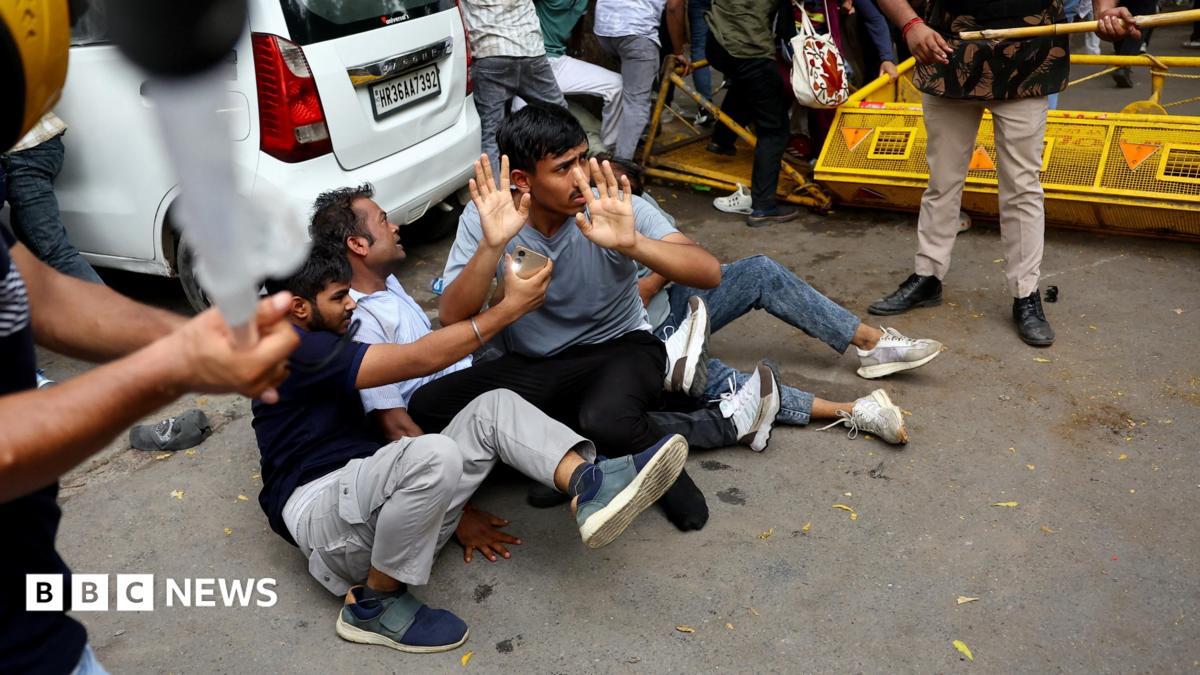
<p>The streets of Delhi witnessed a rare convergence <a href="/article/the-pulse-of-youth-how-the-jantar-mantar-protests-are-redefining-environmental-activism-in-india" title="The Pulse of Youth: How the Jantar Mantar Protests Are Redefining Environmental Activism in India" class="internal-link">of youth</a>ful anxiety and democratic assertion in late 2024 and early 2025. <b>Thousands of medical aspirants camped near Jantar Mantar demanding accountability for alleged irregularities in the National Eligibility cum Entrance Test (NEET-UG).</b> The movement reached a critical inflection point when the Delhi government announced it would not pursue legal action against the protesters. This decision reframed the narrative from law-and-order management to a validation of constitutional dissent. <b>It signaled that the state recognizes the legitimacy of student grievances in a high-stakes examination ecosystem.</b> Understanding this movement requires looking beyond the headlines into the structural fault lines of India’s medical education gateway.</p>
<figure <a href="/article/why-india-s-middle-class-is-more-stressed-than-ever" title="Why India’s Middle Class Is More Stressed Than Ever" class="internal-link">class</a>="my-8 overflow-hidden rounded-3xl shadow-xl">
<img src="https://images.pexels.com/photos/6257964/pexels-photo-6257964.jpeg?auto=compress&cs=tinysrgb&dpr=2&h=650&w=940" alt="students protesting peacefully holding placards" class="w-full h-[400px] object-cover" />
</figure>
Advertisement
Loading partner content...
<h2>Origins of the NEET Protests</h2>
<p>The National Eligibility cum Entrance Test was introduced to standardize medical admissions across India. <b>It replaced a fragmented landscape of state-level exams and private college entrance tests with a single, centralized mechanism.</b> While the intent was meritocracy and transparency, the execution has repeatedly faced scrutiny. The 2024 examination cycle became a flashpoint due to allegations of paper leaks, grace mark controversies, and statistical anomalies in result declarations.</p>
<h3>Key Grievances Fueling the Unrest</h3>
<ul>
<li><b>Paper Leak Allegations:</b> Reports from Bihar and Gujarat suggested the question paper was compromised days before the exam.</li>
<li><b>Grace Mark Arbitrariness:</b> The National Testing Agency (NTA) awarded compensatory marks for a Physics question with ambiguous options, benefiting a specific subset of students disproportionately.</li>
<li><b>Result Anomalies:</b> An unprecedented 67 candidates scored a perfect 720/720, raising statistical red flags about normalization processes.</li>
<li><b>Coaching Industry Dominance:</b> Aspirants argue the exam now tests "coaching endurance" rather than conceptual aptitude, disadvantaging rural and economically weaker students.</li>
</ul>
Advertisement
Loading partner content...
<p>These issues did not emerge in a vacuum. <b>Previous years saw similar controversies regarding NEET-PG counseling delays and NEET-UG question paper errors.</b> The accumulation of distrust transformed isolated complaints into a sustained <b>social movement</b> demanding a Supreme Court-monitored re-test and structural reform of the NTA.</p>
<h2>Who Are the NEET Protesters?</h2>
<p>The demographic profile of the agitation defies the stereotypical "student politician" label. <b>The core constituency comprises 17-to-20-year-olds from middle-class and aspirational lower-middle-class families.</b> Many are first-generation learners carrying the weight of familial debt and expectation. Their parents, often seen sitting beside them on protest sites, represent a silent but powerful stakeholder group.</p>
<h3>Stakeholder Ecosystem</h3>
<table>
<thead>
<tr>
<th>Stakeholder Group</th>
<th>Primary Motivation</th>
<th>Mode of Engagement</th>
</tr>
</thead>
<tbody>
<tr>
<td>Medical Aspirants</td>
<td>Fair evaluation, career security</td>
<td>Sit-ins, hunger strikes, social media campaigns</td>
</tr>
<tr>
<td>Parents/Guardians</td>
<td>Return on educational investment, justice</td>
<td>Logistical support, media interaction, legal petitions</td>
</tr>
<tr>
<td>Coaching Institutes</td>
<td>Business continuity, brand reputation</td>
<td>Funding legal aid, organizing transport, press conferences</td>
</tr>
<tr>
<td>Civil Society/NGOs</td>
<td>Student rights, institutional accountability</td>
<td>Legal representation, documentation, policy advocacy</td>
</tr>
<tr>
<td>Opposition Political Parties</td>
<td>Electoral capital, youth outreach</td>
<td>Parliamentary questions, protest visits, manifesto promises</td>
</tr>
</tbody>
</table>
Advertisement
Loading partner content...
<p>Notably, the movement has largely remained leaderless in the traditional sense. <b>Decentralized coordination via Telegram channels and Twitter Spaces allowed for rapid mobilization without a single point of failure.</b> This structure frustrated authorities attempting to negotiate or issue prohibitory orders against specific individuals.</p>
<figure class="my-8 overflow-hidden rounded-3xl shadow-xl">
<img src="https://images.unsplash.com/photo-1571260899304-425eee4c7efc?crop=entropy&cs=tinysrgb&fit=max&fm=jpg&ixid=M3w4NjI1Nzh8MHwxfHNlYXJjaHwxfHxkaXZlcnNlJTIwZ3JvdXAlMjBvZiUyMGluZGlhbiUyMHN0dWRlbnRzJTIwc3R1ZHlpbmclMjB0b2dldGhlcnxlbnwwfDB8fHwxNzg1NDI2OTA3fDA&ixlib=rb-4.1.0&q=80&w=1080" alt="diverse group of indian students studying together" class="w-full h-[400px] object-cover" />
</figure>
<h2>Legal Framework & Government Response</h2>
<p>India’s Constitution guarantees the right to peaceful assembly under Article 19(1)(b), subject to reasonable restrictions under Article 19(3). <b>The Delhi Police, reporting to the Union Home Ministry, initially invoked Section 144 CrPC (now Section 163 BNSS) to prohibit assemblies of five or more persons.</b> Detentions were made under preventive sections of the Bharatiya Nagarik Suraksha Sanhita (BNSS).</p>
Advertisement
Loading partner content...
<h3>The "No Legal Action" Decision</h3>
<p>The pivot came when the Delhi government, led by the Chief Minister, directed the Directorate of Prosecution to withdraw cases registered against students for "unlawful assembly" and "obstruction of public way." <b>This executive decision is distinct from a judicial acquittal; it prevents the state from pursuing the prosecution, effectively granting immunity from the specific FIRs.</b></p>
<blockquote>
"Criminalizing dissent by students asking for a fair exam sets a dangerous precedent. Our children are not criminals; they are stakeholders in the education system." — Statement attributed to the Delhi Education Minister, January 2025.
</blockquote>
<h3>Legal Precedents and Implications</h3>
<ol>
<li><b><i>Ramlila Maidan Incident (2012):</i></b> Supreme Court held that peaceful protest is a fundamental right; police action must be proportionate.</li>
<li><b><i>Shaheen Bagh Judgment (2020):</i></b> Upheld right to protest but emphasized designated spaces and time limits to balance public order.</li>
<li><b>Current Context:</b> The withdrawal of cases creates a <b>de facto</b> precedent where the political executive shields protesters from police action initiated by the same executive's law-enforcement arm.</li>
</ol>
Advertisement
Loading partner content...
<p>Legal experts argue this strengthens <b>student rights</b> but warn of a "chilling effect" on police morale. The decision effectively decouples the <b>Delhi government</b> from the Union-controlled police apparatus on this specific issue, highlighting federal tensions in the capital's governance.</p>
<h2>Civil Liberties and Public Opinion</h2>
<p>The decision to drop charges sparked a polarized but nuanced public discourse. <b>A CVoter survey conducted in February 2025 indicated 62% of urban respondents supported the protesters' demand for a re-test, while 48% supported the government's decision to withdraw cases.</b> The gap suggests the public distinguishes between the *cause* (exam fairness) and the *method* (blocking roads).</p>
<h3>Freedom of Expression vs. Public Order</h3>
<p>Critics argued that the protests paralyzed central Delhi, affecting emergency services and daily wage earners. Proponents countered that the "inconvenience" argument is routinely used to suppress legitimate dissent. <b>The Delhi High Court, hearing a PIL on traffic disruption, notably refused to order forcible eviction, directing authorities to "engage in dialogue."</b> This judicial restraint reinforced the protesters' moral high ground.</p>
Advertisement
Loading partner content...
<ul>
<li><b>Media Narrative:</b> Mainstream TV channels initially framed it as "NEET Chaos," shifting to "Students' Fight for Justice" after the paper leak FIRs in Bihar.</li>
<li><b>Social Media:</b> Hashtags like #NEETReExam and #JusticeForNEETAspirants trended for weeks, bypassing traditional gatekeepers.</li>
<li><b>Academic Commentary:</b> Vice-Chancellors of central universities issued open letters supporting academic integrity over administrative convenience.</li>
</ul>
<p>This episode serves as a case study in <b>civil disobedience</b> within a digital democracy. The protesters leveraged the Right to Information (RTI) Act to extract NTA meeting minutes, turning bureaucratic opacity into public evidence.</p>
<figure class="my-8 overflow-hidden rounded-3xl shadow-xl">
<img src="https://images.pexels.com/photos/33678872/pexels-photo-33678872.jpeg?auto=compress&cs=tinysrgb&dpr=2&h=650&w=940" alt="gavel and law books representing legal framework" class="w-full h-[400px] object-cover" />
</figure>
<h2>Impact on Education Policy</h2>
Advertisement
Loading partner content...
<p>The agitation has forced a paradigm shift in <a href="/article/how-the-blanket-telegram-ban-is-reshaping-social-media-legal-battles-user-impact-and-the-future-of-m" title="How the Blanket Telegram Ban is Reshaping Social Media: Legal Battles, User Impact, and the Future of Messaging Apps" class="internal-link">how the</a> <b>Indian education system</b> approaches high-stakes testing. The NTA, previously an opaque body, faced unprecedented scrutiny. The Ministry of Education constituted a high-powered committee under former ISRO Chairman Dr. K.</p>
<p>Radhakrishnan to recommend reforms.</p>
<h3>Concrete Policy Shifts (2025-2026)</h3>
<table>
<thead>
<tr>
<th>Area</th>
<th>Pre-Protest Status</th>
<th>Post-Protest Reform (Implemented/Proposed)</th>
</tr>
</thead>
<tbody>
<tr>
<td>Exam Mode</td>
<td>Pen-and-paper (OMR) only</td>
<td>Hybrid model: Computer-Based Test (CBT) with paper backup; multi-session window</td>
</tr>
<tr>
<td>Question Paper Security</td>
<td>Printed at select presses, transported by road</td>
<td>Digital encryption, on-demand printing at centers, GPS-tracked transport</td>
</tr>
<tr>
<td>Grievance Redressal</td>
<td>Email-based challenge window (paid)</td>
<td>Free, real-time objection portal; independent Ombudsman for exams</td>
</tr>
<tr>
<td>Normalization/Scoring</td>
<td>Proprietary algorithm, not public</td>
<td>Mandatory public disclosure of psychometric methodology; Equipercentile method standardized</td>
</tr>
<tr>
<td>Coaching Regulation</td>
<td>Unregulated</td>
<td>Draft "Coaching Centers Regulatory Bill" mandating fee caps, mental health counselors, minimum infrastructure</td>
</tr>
</tbody>
</table>
<p><b>The most significant outcome is the legislative push for a "National Examination Standards Act."</b> This proposed law aims to bring all national testing agencies (NTA, UPSC, SSC, IBPS) under a unified statutory framework with parliamentary oversight. It addresses the core demand: accountability.</p>
Advertisement
Loading partner content...
<h2>Future Outlook</h2>
<p>As of mid-2026, the movement has evolved from reactive protest to proactive policy engagement. <b>Three distinct scenarios define the trajectory ahead.</b></p>
<h3>Scenario A: Institutionalization of Dialogue (Most Likely)</h3>
<p>The National Testing Agency establishes a permanent "Student Advisory Council" with rotating representation from aspirant unions. <b>Quarterly town halls <a href="/article/debt-management-techniques-to-become-debt-free" title="Debt Management Techniques to Become Debt-Free" class="internal-link">become</a> mandatory before major exam cycles.</b> Reforms are implemented iteratively. Trust rebuilds slowly but the "emergency" phase ends.</p>
<h3>Scenario B: Continued Activism & Judicialization</h3>
<p>If the 2025 NEET-UG cycle (conducted under new norms) throws up fresh anomalies, the movement reverts to streets. <b>Public Interest Litigations (PILs) become the primary weapon, clogging High Courts and the Supreme Court.</b> The "No Legal Action" precedent emboldens future agitations across sectors (SSC, Railway, UPSC).</p>
Advertisement
Loading partner content...
<h3>Scenario C: Structural Overhaul</h3>
<p>A political consensus emerges to dismantle the NTA entirely. <b>Medical admissions revert to a decentralized model or a new autonomous body with constitutional status (like UPSC).</b> This is the "nuclear option" demanded by hardline protesters but resisted by the Centre due to administrative inertia.</p>
<h3>Recommendations for Stakeholders</h3>
<ul>
<li><b>For Students:</b> Formalize collectives into registered associations to gain legal standing for policy negotiations. Invest in data literacy to audit exam statistics independently.</li>
<li><b>For Government:</b> Operationalize the Radhakrishnan Committee recommendations *before* the 2026 notification. Transparency is cheaper than crisis management.</li>
<li><b>For Coaching Institutes:</b> Pivot from "syllabus completion" to "conceptual mastery" models. Adopt the upcoming regulatory framework voluntarily to gain legitimacy.</li>
<li><b>For Civil Society:</b> Build a "Student Rights Watch" archive documenting every exam irregularity, police action, and judicial order to create institutional memory.</li>
</ul>
Advertisement
Loading partner content...
<figure class="my-8 overflow-hidden rounded-3xl shadow-xl">
<img src="https://images.unsplash.com/photo-1659353887977-c310d90c751a?crop=entropy&cs=tinysrgb&fit=max&fm=jpg&ixid=M3w4NjI1Nzh8MHwxfHNlYXJjaHwxfHx5b3VuZyUyMGluZGlhbiUyMGRvY3RvciUyMHdlYXJpbmclMjBzdGV0aG9zY29wZSUyMGxvb2tpbmclMjBjb25maWRlbnR8ZW58MHwwfHx8MTc4NTQyNjkwN3ww&ixlib=rb-4.1.0&q=80&w=1080" alt="young indian doctor wearing stethoscope looking confident" class="w-full h-[400px] object-cover" />
</figure>
<h2>Conclusion</h2>
<p>The NEET protest movement of 2024-2025 was not merely about a leaked paper or a flawed answer key. <b>It was a referendum on the social contract between the Indian state and its meritocratic youth.</b> The Delhi government’s decision to withdraw legal cases marked a rare moment where political wisdom aligned with constitutional morality. It acknowledged that when the gateway to a profession becomes a lottery, the social fabric frays.</p>
Advertisement
Loading partner content...
<p>The reforms triggered—hybrid testing, transparent normalization, coaching regulation—are necessary but insufficient without cultural change. <b>Accountability must become a habit, not a headline.</b> For the millions watching from coaching hubs in Kota, villages in Bihar, and apartments in Delhi, the lesson is clear: organized, peaceful, evidence-based dissent works. The stethoscope is a symbol of service, but the clipboard of the examiner must first be a symbol of trust.</p>
<p>For readers seeking deeper engagement, the following resources offer primary data and ongoing analysis:</p>
<ul>
<li><b>Ministry of Education:</b> Reports of the High-Level Committee on Examination Reforms (Radhakrishnan Committee).</li>
<li><b>Supreme Court of India:</b> Judgments in <i>NEET-UG 2024 Batch vs. Union of India</i> (Writ Petitions 2024).</li>
<li><b>PRS Legislative Research:</b> Track the "National Examination Standards Bill" and "Coaching Centers Regulatory Bill."</li>
<li><b>Student Collectives:</b> Follow verified handles of "NEET Aspirants United" and "All India Medical Students Association" for ground updates.</li>
</ul></b></i></i></i></i>


