<h1>Voices of the Republic: A Definitive History of Protest Spaces, Rights, and Resistance in Modern <a href="/article/effective-leadership-strategies-for-modern-workplaces-in-india" title="Effective Leadership Strategies for Modern Workplaces in India" class="internal-link">India</a></h1>
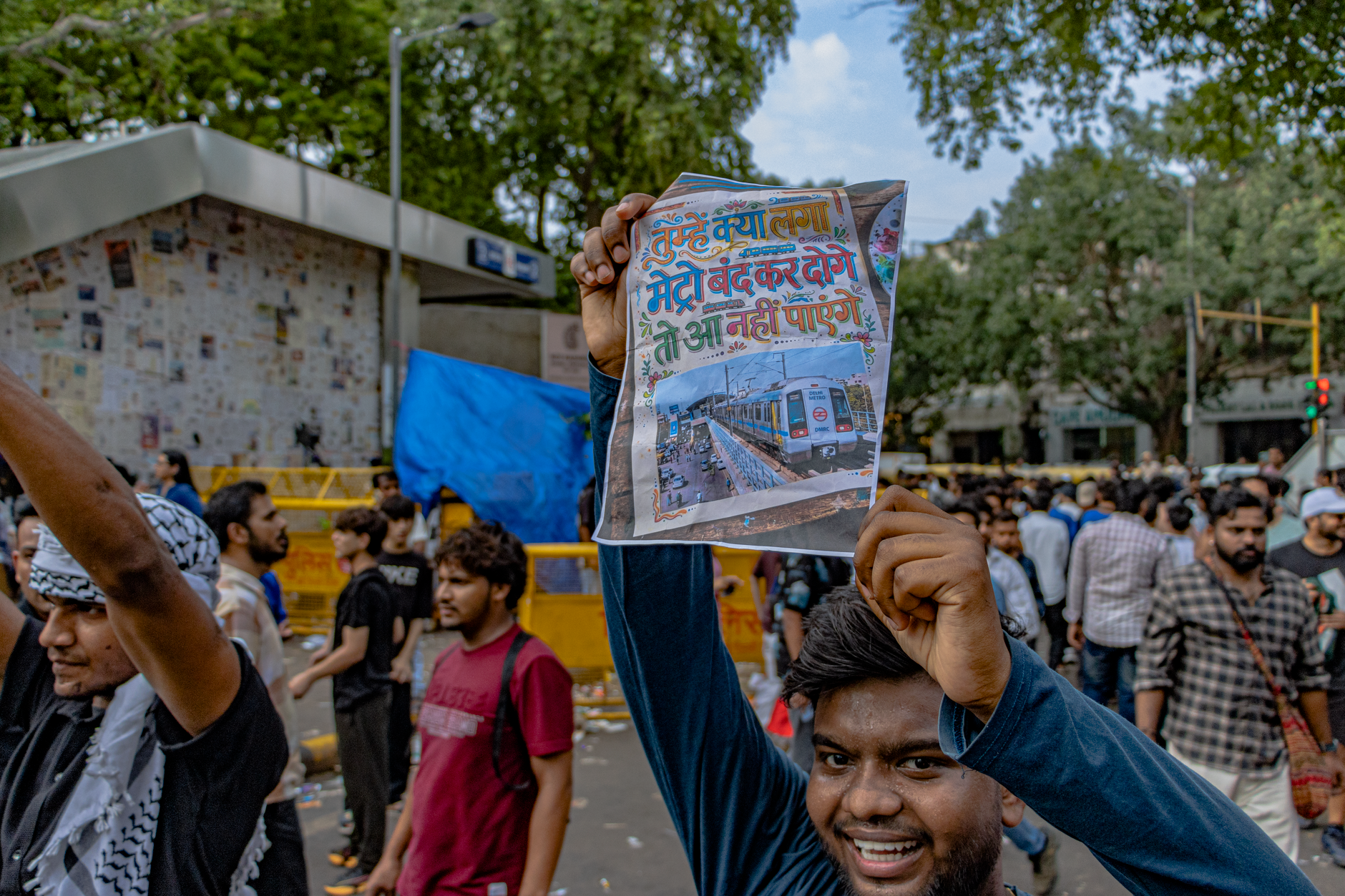
<p><b>The streets surrounding Parliament, the lawns of <a href="/article/the-pulse-of-youth-how-the-jantar-mantar-protests-are-redefining-environmental-activism-in-india" title="The Pulse of Youth: How the Jantar Mantar Protests Are Redefining Environmental Activism in India" class="internal-link">Jantar Mantar</a>, <a href="/article/why-jharkhand-students-are-protesting-a-deep-dive-into-education-rights-government-response-and-the-" title="Why Jharkhand Students Are Protesting: A Deep Dive into Education Rights, Government Response, and the Role of Public Figures like Rahul Gandhi" class="internal-link">and the</a> by‑lanes of Shaheen Bagh are not merely thoroughfares; they are the physical syntax of Article 19.</b> Every chant, sit‑in, and banner unfurled in these spaces writes a living amendment to the Constitution’s promise of free speech, assembly, and association. Yet the same streets are also policed by Section 144, barricades, and preventive detention orders that seek to translate “public order” into a vocabulary of containment. This tension — between the citizen’s right to occupy public space and the state’s mandate to secure it — forms the architecture of dissent in the world’s largest democracy.</p>
<h2>The Geography of Resistance: Iconic Protest Sites</h2>
<h3>Jantar Mantar: From Observatory to Protest Capital</h3>
<p>Built in 1724 as an astronomical instrument, Jantar Mantar became the <b>default stage for national mobilisation</b> after the 1993 Supreme Court ban on demonstrations at Boat Club. Anna Hazare’s 2011 anti‑corruption fast, the 2012 Nirbhaya candle‑light vigils, the year‑long farmers’ encampment of 2020‑21, and the 2023 wrestlers’ sit‑in all chose this 18‑acre plot. Its proximity to the Ministry of Home Affairs and the Prime Minister’s residence makes every decibel a direct address to power.</p>
<h3>Boat Club and India Gate: The Pre‑1993 Epicentre</h3>
<p>Before the 1993 order, the Boat Club lawns hosted the 1974 Jayaprakash Narayan rally, the 1984 anti‑Sikh violence protests, and countless student marches. The Supreme Court’s <i>Mazdoor Kisan Shakti Sangathan vs Union of India</i> ruling shifted the “designated protest zone” to Jantar Mantar, arguing that the Boat Club’s heritage status and traffic flow outweighed unrestricted assembly. The decision entrenched a <b>geography of permission</b> that still shapes protest logistics today.</p>
Advertisement
Loading partner content...
<h3>Shaheen Bagh: Organic Occupation, Women‑Led Redefinition</h3>
<p>In December 2019, a cluster of Muslim women blocked a arterial road in South Delhi, turning a neighbourhood into a 101‑day sit‑in against the Citizenship Amendment Act. <b>Shaheen Bagh demonstrated that protest need not seek state‑sanctioned venues; it can create its own public square.</b> The Supreme Court’s 2020 <i>Amit Sahni vs Commissioner of Police</i> judgment later held that indefinite occupation of a public road infringes on the rights of commuters, yet the movement’s visual vocabulary — blankets, poetry, community kitchens — remains a template for decentralized resistance.</p>
<h3>Regional Hubs: Azad Maidan, Park Circus, Freedom Park</h3>
<ul>
<li><b>Azad Maidan (Mumbai):</b> Host to the 1946 Royal Indian Navy mutiny commemorations, 1980s textile workers’ strikes, and the 2019 Maratha quota agitations.</li>
<li><b>Park Circus Maidan (Kolkata):</b> Historic ground for Naxalite-era rallies, 1970s refugee rights marches, and recent anti‑CAA gatherings.</li>
<li><b>Freedom Park (Bengaluru):</b> Converted from a colonial jail in 2008, it now anchors tech‑worker protests, climate strikes, and Kannada language movements.</li>
</ul>
<figure class="my-8 overflow-hidden rounded-3xl shadow-xl">
<img src="https://s.yimg.com/lo/mysterio/api/3d320113fb74a937dd97f126e71db93cd622cde5b93d9cc8c58569e35ee9df1c/lightyear_networkapi/resizefill_w1200;quality_80;format_webp/https:%2F%2Fmedia.zenfs.com%2Fen%2Fap.org%2Ff561f4074620debb1c430a974b96f6ec" alt="Jantar Mantar Delhi" class="w-full h-[400px] object-cover" />
</figure>
Advertisement
Loading partner content...
<h2>The Legal Framework: Rights vs. Restrictions</h2>
<h3>Constitutional Backbone</h3>
<p>Article 19(1)(a) guarantees freedom of speech and expression; (b) the right to assemble peaceably without arms; (c) the right to form associations. Articles 19(2)–(4) permit “reasonable restrictions” on grounds of sovereignty, security, public order, decency, morality, contempt of court, defamation, and incitement to offence. The phrase <b>“reasonable restriction”</b> is the hinge on which every protest‑related litigation turns.</p>
<h3>Landmark Supreme Court Judgments</h3>
<table>
<thead>
<tr><th>Case</th><th>Year</th><th>Core Holding</th></tr>
</thead>
<tbody>
<tr><td><i>Himat Lal K. Shah vs Commissioner of Police</i></td><td>1973</td><td>Citizens may hold meetings in public parks; prior police permission cannot be arbitrary.</td></tr>
<tr><td><i>Mazdoor Kisan Shakti Sangathan vs Union of India</i></td><td>2018</td><td>Balanced right to protest with residents’ right to quiet; designated zones must be “reasonable”.</td></tr>
<tr><td><i>Amit Sahni vs Commissioner of Police</i></td><td>2020</td><td>Indefinite occupation of public roads illegal; protests must be time‑bound and space‑specific.</td></tr>
<tr><td><i>Ramleela Maidan Incident vs Home Secretary, Union of India</i></td><td>2012</td><td>Police action against sleeping protesters at night violated Article 21.</td></tr>
</tbody>
</table>
<h3>Preventive Tools: Section 144 CrPC / BNSS and Detention Laws</h3>
<p>Section 144 of the Criminal Procedure Code (now Section 163 of the Bharatiya Nagarik Suraksha Sanhita, 2023) empowers magistrates to issue orders prohibiting assembly of four or more persons. <b>Its frequent, blanket use — often without specific threat assessment — has turned it into a “protest‑off” switch.</b> Complementary statutes — the Unlawful Activities (Prevention) Act (UAPA), the National Security Act (NSA), and the now‑repealed sedition provision (Section 124A IPC, replaced by Section 152 BNS) — allow prolonged detention without trial, raising concerns about the criminalisation of dissent.</p>
Advertisement
Loading partner content...
<figure class="my-8 overflow-hidden rounded-3xl shadow-xl">
<img src="https://gizmodo.com/app/uploads/2020/12/k8djqgl9h7pydcahgcpk.jpg" alt="Supreme Court of India" class="w-full h-[400px] object-cover" />
</figure>
<h2>Chronicles of Resistance: Defining Movements Post‑Independence</h2>
<h3>Rights & Justice</h3>
<ul>
<li><b>JP Movement (1974‑75):</b> Student‑led “Total Revolution” against corruption; precipitated the Emergency.</li>
<li><b>Narmada Bachao Andolan (1985‑present):</b> Tribal and environmental resistance to large dams; pioneered the “right to rehabilitation” jurisprudence.</li>
<li><b>RTI Movement (MKSS, 1990s):</b> Grassroots demand for transparency culminated in the Right to Information Act, 2005.</li>
<li><b>Anti‑CAA/NRC Protests (2019‑20):</b> Nationwide, Muslim‑women‑led sit‑ins; tested the limits of Article 19 in a digital surveillance era.</li>
</ul>
<h3>Identity & Representation</h3>
<ul>
<li><b>Mandal Commission Protests (1990):</b> Student self‑immolations and counter‑mobilisations reshaped OBC <a href="/article/india-s-60-b-russian-oil-pivot-how-us-tariff-threats-are-reshaping-global-energy-politics-and-what-i" title="India’s $60 B Russian Oil Pivot: How US Tariff Threats Are Reshaping Global Energy Politics and What It Means for India’s Energy Future" class="internal-link">politics</a>.</li>
<li><b>Dalit Panther Movement (1970s):</b> Radical literary‑political fusion; asserted caste‑based dignity in public space.</li>
<li><b>Farmers’ Protests (2020‑21 & 2024):</b> Year‑long encampment at Delhi’s borders forced repeal of three farm laws; 2024 revival centred on MSP legal guarantee.</li>
<li><b>Maratha/OBC Reservation Agitations (2018, 2023):</b> Massive rallies in Maharashtra; highlighted quota‑politics as a protest catalyst.</li>
</ul>
Advertisement
Loading partner content...
<h3>Labour & Economy</h3>
<ul>
<li><b>Great Railway Strike (1974):</b> 1.7 million workers struck; state responded with mass arrests and the Essential Services Maintenance Act.</li>
<li><b>New Pension Scheme (NPS) Protests (2018‑present):</b> Government employees demand restoration of Old Pension Scheme; ongoing in multiple states.</li>
</ul>
<h2>The Changing Face of Protest: Technology, Surveillance & The State</h2>
<h3>Digital Mobilisation vs. Internet Shutdowns</h3>
<p>WhatsApp groups, Twitter/X hashtags, and Instagram reels now replace pamphlets. <b>India leads the world in internet shutdowns</b> — 84 in 2023 alone — often imposed pre‑emptively around protest dates. The 2020 farmers’ protests saw a 55‑day shutdown in Haryana and Punjab, illustrating the state’s capacity to sever the digital nervous system of mobilisation.</p>
<h3>Surveillance Infrastructure</h3>
<ul>
<li>Facial Recognition Technology (FRT) deployed at Delhi’s Singhu and Tikri borders.</li>
<li>Drone mapping of crowd density at Jantar Mantar and Shaheen Bagh.</li>
<li>Allegations of Pegasus‑grade spyware targeting protest organisers (2021‑22).</li>
</ul>
Advertisement
Loading partner content...
<h3>Criminalisation Labels</h3>
<p>Terms such as <b>“Tukde Tukde Gang”, “Andolanjeevi”, and “Urban Naxal”</b> have migrated from political rhetoric into police FIRs and media narratives. These labels function as pre‑emptive delegitimisation, framing dissent as anti‑national rather than democratic.</p>
<blockquote>
<p><b>“The right to protest is not a gift of the state; it is a constitutional guarantee that the state must facilitate, not frustrate.”</b> — Justice D.Y. Chandrachud, <i>Mazdoor Kisan Shakti Sangathan vs Union of India</i> (2018)</p>
</blockquote>
<figure class="my-8 overflow-hidden rounded-3xl shadow-xl">
<img src="https://images.pexels.com/photos/11572425/pexels-photo-11572425.jpeg?auto=compress&cs=tinysrgb&dpr=2&h=650&w=940" alt="women protest India" class="w-full h-[400px] object-cover" />
</figure>
<h2>The Opposition’s Dilemma: Street Politics vs. Parliamentary Strategy</h2>
Advertisement
Loading partner content...
<h3>Historical Precedents</h3>
<ul>
<li><b>Indira Gandhi (1977):</b> Courted arrest during the Emergency; the “jail bharo” campaign became a symbol of democratic restoration.</li>
<li><b>Vajpayee & Advani (1974‑75):</b> Participated in JP Movement; imprisonment bolstered their anti‑authoritarian credentials.</li>
</ul>
<h3>Contemporary Dynamics</h3>
<p>Leaders across the spectrum — Rahul Gandhi, Akhilesh Yadav, Arvind Kejriwal, Sitaram Yechury — routinely join sit‑ins or court arrest. <b>The optics of “court arrest” (Satyagraha) serve dual purposes:</b> they signal solidarity with the street and generate media cycles that parliamentary debates rarely achieve. Critics argue this blurs the line between representation and performance; supporters contend it keeps the executive accountable between elections.</p>
<h3>Electoral Capital</h3>
<p>Data from the 2019 and 2024 general elections suggest that parties which visibly backed major protests (farmers, anti‑CAA) gained vote share in affected regions, though the correlation is mediated by caste, religion, and local leadership. The <b>“protest dividend”</b> is real but volatile.</p>
<h2>Global Context & Comparative Lens</h2>
<table>
<thead>
<tr><th>Country</th><th>Legal Basis</th><th>Key Restriction Mechanism</th><th>Recent Flashpoint</th></tr>
</thead>
<tbody>
<tr><td>India</td><td>Article 19(1)(a)(b)(c) + 19(2‑4)</td><td>Section 144 CrPC/BNSS, UAPA, NSA</td><td>Farmers’ Protest 2020‑21</td></tr>
<tr><td>United Kingdom</td><td>Human Rights Act 1998 (ECHR Art. 10,11)</td><td>Public Order Act 1986, Police, Crime, Sentencing and Courts Act 2022</td><td>Just Stop Oil road blockades (2022‑24)</td></tr>
<tr><td>United States</td><td>First Amendment</td><td>Time‑Place‑Manner permits, anti‑riot statutes</td><td>George Floyd protests (2020)</td></tr>
<tr><td>France</td><td>Declaration of 1789, Constitution</td><td>State of Emergency laws, “loi anti‑casseurs”</td><td>Yellow Vests (2018‑19)</td></tr>
<tr><td>Hong Kong</td><td>Basic Law Art. 27</td><td>Public Order Ordinance, National Security Law 2020</td><td>Anti‑Extradition protests (2019)</td></tr>
</tbody>
</table>
Advertisement
Loading partner content...
<p>India’s framework resembles the UK’s “public order” model more than the US’s near‑absolute speech protection. However, the <b>scale of preventive detention</b> (UAPA, NSA) and the frequency of internet shutdowns place India in a distinct category among major democracies.</p>
<h2><a href="/article/web3-and-decentralized-applications-the-future-of-the-internet" title="Web3 and Decentralized Applications: The Future of the Internet" class="internal-link">The Future of</a> Public Space: Reclaiming the ‘Right to the City’</h2>
<h3>Urban Planning and the Shrinking Maidan</h3>
<p>Master plans for Delhi, Mumbai, and Bengaluru allocate less than 2 % of land to “public assembly” zones. Smart‑city designs prioritize vehicular flow, gated communities, and commercial plazas over open maidans. <b>Privatisation of parks — leasing to event managers, cafés, or fitness chains —</b></b></p></i></i></i>