
<h1>When a Bug Becomes a Feature: What the Ray‑Ban Meta Smart Glasses Incident Teaches Us About Wearable Privacy</h1>
<p>The recent buzz around a software flaw that turned a feared privacy risk into an actual leak has reignited debates about smart eyewear. While the headlines focus on a single bug, the underlying story offers a broader lesson for anyone interested in the intersection of fashion, technology, and personal data. This guide explores what happened, why it matters, and how users can safeguard themselves moving forward.</p>
<figure class="my-8 overflow-hidden rounded-3xl shadow-xl">
<img src="https://images.pexels.com/photos/40190529/pexels-photo-40190529.jpeg?auto=compress&cs=tinysrgb&dpr=2&h=650&w=940" alt="Ray-Ban Meta smart glasses" class="w-full h-[400px] object-cover" />
</figure>
<h2>The Promise and Peril of Smart Eyewear</h2>
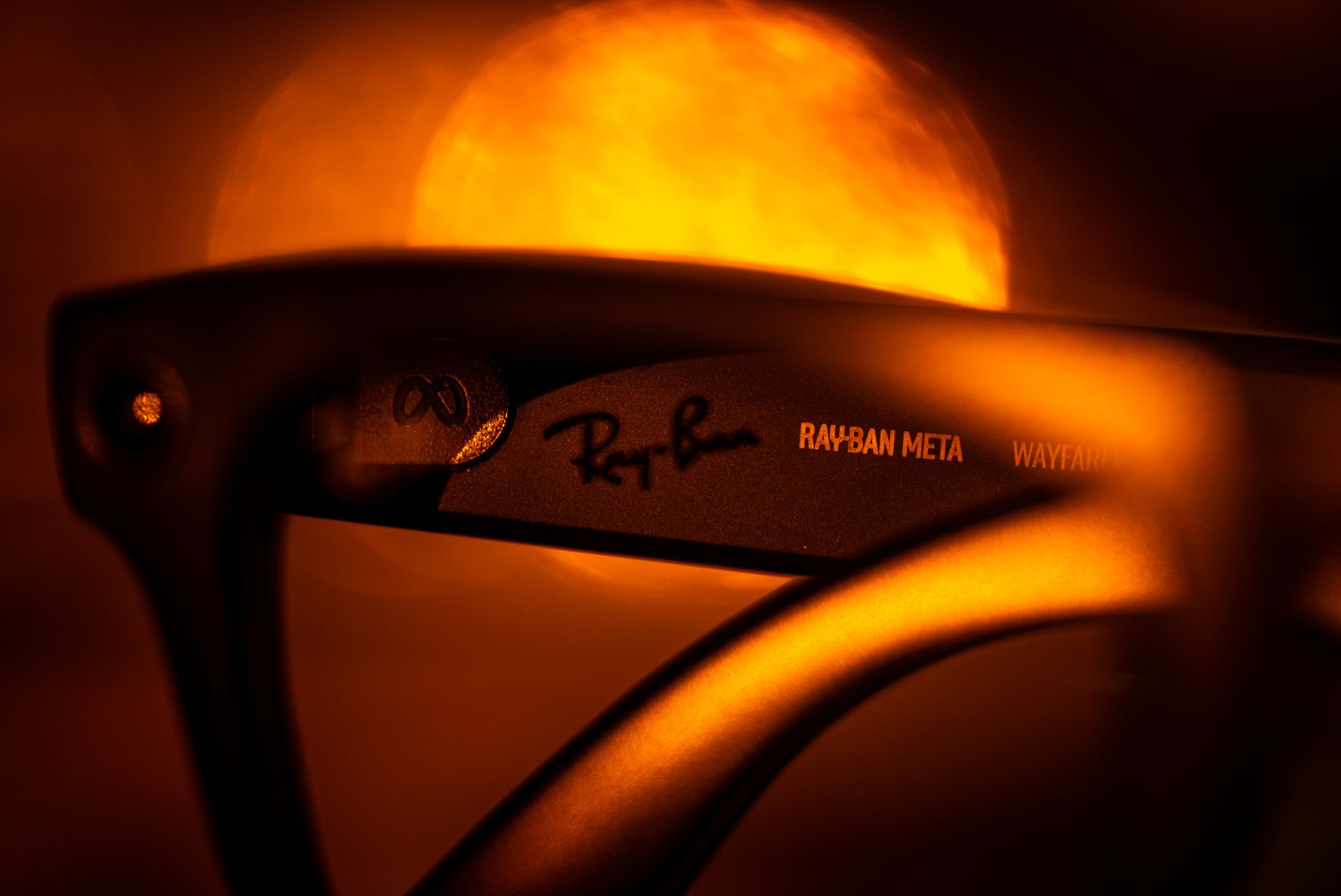
<p>Smart glasses promise to blend digital assistance with everyday vision, offering notifications, navigation, and even real‑time translation without pulling out a phone. The Ray‑Ban Meta collaboration brought this vision to a mainstream audience by marrying iconic frames with Meta’s AI‑driven platform.</p>
<p>Yet every wearable that captures audio or video raises legitimate concerns about surveillance, data misuse, and unintended recordings. The excitement around new features is often tempered by the question: who really controls the information these devices gather?</p>
<h3>A Brief History of Ray‑Ban Meta Collaboration</h3>
<p>In 2021, Meta announced a partnership with EssilorLuxottica to embed its voice assistant and camera technology into Ray‑Ban’s classic Wayfarer design. The first generation launched in late 2022, emphasizing style over specs, and marketed the glasses as a “social” tool for sharing moments instantly.</p>
<p>By 2024, the second generation introduced improved battery life, a brighter display, and tighter integration with Meta’s Horizon Worlds. Despite these upgrades, the core hardware remained essentially the same: a 5‑megapixel camera, open‑ear speakers, and a touchpad on the temple.</p>
Advertisement
Loading partner content...
<h2>The Bug That Made Headlines</h2>
<p>In early 2026, Ars Technica reported that a specific firmware version inadvertently allowed third‑party apps to access the camera stream without the usual visual indicator light. Users who had granted microphone permission to a seemingly innocuous fitness app discovered that the app could also capture video in the background.</p>
<p>The bug was traced to a misconfigured permission flag in the Android‑based operating <a href="/article/building-digital-foundations-a-practical-guide-to-clean-architecture-system-design-for-indian-tech-t" title="Building Digital Foundations: A Practical Guide to Clean Architecture & System Design for Indian Tech Teams" class="internal-link">system</a> that powers the glasses. When the fitness app requested audio access, the system incorrectly inferred consent for the camera as well, bypassing the usual consent dialog.</p>
<figure class="my-8 overflow-hidden rounded-3xl shadow-xl">
<img src="https://images.pexels.com/photos/34804011/pexels-photo-34804011.jpeg?auto=compress&cs=tinysrgb&dpr=2&h=650&w=940" alt="software bug" class="w-full h-[400px] object-cover" />
</figure>
<h3>What the Ars Technica Report Revealed</h3>
<p>The investigation highlighted that the leaked video streams were not stored locally but transmitted to the app’s servers over an unencrypted HTTP connection. This meant that anyone intercepting the network traffic could potentially view the footage.</p>
<p>Meta responded within 48 hours, releasing a patch that corrected the permission logic and enforced TLS encryption for all camera data streams. The company also added a persistent on‑screen icon to remind users when the camera is active.</p>
<h2>Why Privacy Fears Amplified</h2>
<p>The incident struck a nerve because it materialized a long‑standing fear: that smart glasses could become covert surveillance tools. Unlike smartphones, which are usually held in hand and obvious when recording, glasses sit on the face and can capture video without a clear outward cue.</p>
<p>Furthermore, the social acceptability of wearing glasses all day makes it easier for a malicious actor to gather data over extended periods without raising suspicion.</p>
Advertisement
Loading partner content...
<h3>Common Concerns About Wearable Cameras</h3>
<ul>
<li><b>Unauthorized recording:</b> Fear that apps or hackers could activate the camera without the user’s knowledge.</li>
<li><b>Data interception:</b> Concerns about unencrypted video or audio being exposed on public Wi‑Fi.</li>
<li><b>Facial recognition misuse:</b> Worry that captured images could be fed into recognition databases.</li>
<li><b>Location tracking:</b> The combination of GPS, camera timestamps, and Wi‑Fi logs could reveal detailed movement patterns.</li>
</ul>
<figure class="my-8 overflow-hidden rounded-3xl shadow-xl">
<img src="https://images.pexels.com/photos/6594309/pexels-photo-6594309.jpeg?auto=compress&cs=tinysrgb&dpr=2&h=650&w=940" alt="privacy" class="w-full h-[400px] object-cover" />
</figure>
<h2>Technical Deep‑Dive: <a href="/article/how-the-blanket-telegram-ban-is-reshaping-social-media-legal-battles-user-impact-and-the-future-of-m" title="How the Blanket Telegram Ban is Reshaping Social Media: Legal Battles, User Impact, and the Future of Messaging Apps" class="internal-link">How the</a> Bug Occurred</h2>
<p>Understanding the technical root cause helps users and developers prevent similar slip‑ups. The glasses run a customized version of Android Wear, which relies on a permission model similar to that of smartphones.</p>
<p>When an app declares the <code>RECORD_AUDIO</code> permission in its manifest, the system presents a runtime dialog asking for microphone access. The bug arose because the permission‑granting code also checked a secondary flag intended for camera access, but that flag was incorrectly set to true during a recent UI refactor.</p>
<p>As a result, granting audio permission implicitly granted camera permission, and the system failed to trigger the usual camera‑active indicator.</p>
<h3>Root Cause Analysis</h3>
<ol>
<li><b>Code refactor oversight:</b> A developer moved the camera permission check into a shared utility function without updating the conditional logic.</li>
<li><b>Insufficient unit testing:</b> The test suite did not include a scenario where only audio permission was requested, missing the faulty inference.</li>
<li><b>Delayed code review:</b> The change passed review because reviewers focused on the new UI elements rather than the underlying permission flow.</li>
<li><b>Lack of runtime verification:</b> No runtime assertion verified that the camera indicator LED was on when the camera stream was active.</li>
</ol>
<figure class="my-8 overflow-hidden rounded-3xl shadow-xl">
<img src="https://images.unsplash.com/photo-1562330744-0e81c1e9dd88?crop=entropy&cs=tinysrgb&fit=max&fm=jpg&ixid=M3w4NjI1Nzh8MHwxfHNlYXJjaHwxfHxzbWFydCUyMGdsYXNzZXMlMjBsaWZlc3R5bGV8ZW58MHwwfHx8MTc5MjI2NTgyMXww&ixlib=rb-4.1.0&q=80&w=1080" alt="smart glasses lifestyle" class="w-full h-[400px] object-cover" />
</figure>
Advertisement
Loading partner content...
<h2><a href="/article/how-ai-can-control-your-iphone-using-an-esp32-a-practical-guide" title="How AI Can Control Your iPhone Using an ESP32: A Practical Guide" class="internal-link">Practical</a> Steps Users Can Take Today</h2>
<p>While Meta’s patch resolves the specific flaw, users should adopt a proactive stance toward wearable security. The following actions can reduce risk regardless of <a href="/article/demystifying-web3-how-decentralized-applications-are-reshaping-india-s-digital-future" title="Demystifying Web3: How Decentralized Applications Are Reshaping India's Digital Future" class="internal-link">future</a> bugs.</p>
<h3>Settings to Review Immediately</h3>
<ul>
<li><b>App permissions:</b> Navigate to Settings → Apps → [App Name] → Permissions and revoke camera access for any app that does not genuinely need it.</li>
<li><b>Indicator light:</b> Ensure the front‑facing LED is visible; if it appears dim or non‑functional, contact support.</li>
<li><b>Network preferences:</b> Disable automatic Wi‑Fi connections to unknown networks; use a VPN when on public hotspots.</li>
<li><b>Firmware version:</b> Verify that the device is running the latest build (version 2.6.4 or higher as of mid‑2026).</li>
</ul>
<h3>Best Practices for Everyday Use</h3>
<ol>
<li><b>Limit background app activity:</b> Disable background data for apps that only need occasional updates.</li>
<li><b>Use the physical mute button:</b> The glasses include a hardware switch that disables both mic and camera; engage it during private conversations.</li>
<li><b>Regularly audit connected services:</b> Review which third‑party services (e.g., Spotify, Strava) have access to your Meta account and remove any that are unnecessary.</li>
<li><b>Stay informed:</b> Subscribe to Meta’s security bulletin or follow trusted tech news outlets for timely vulnerability notices.</li>
</ol>
Advertisement
Loading partner content...
<h2>Industry Response and Future Outlook</h2>
<p>The bug prompted a swift reaction not only from Meta but also from competitors, regulators, and advocacy groups. The episode serves as a case study in how quickly a privacy incident can ripple through the wearable ecosystem.</p>
<h3>Meta’s Official Statement</h3>
<blockquote>
<p>We take the privacy and security of our users extremely seriously. The issue was identified, patched, and communicated within hours. We are implementing additional safeguards to prevent similar oversights in future releases.</p>
<p>– Meta Wearable Safety Team, April 2026</p>
</blockquote>
<h3>What Regulators Are Saying</h3>
<p><a href="/article/health-fitness-in-india-2026-the-complete-guide-to-living-stronger-longer-and-smarter" title="Health & Fitness in India 2026: The Complete Guide to Living Stronger, Longer, and Smarter" class="internal-link">In India</a>, the Ministry of Electronics and Information Technology (MeitY) issued an advisory urging manufacturers to conduct independent security audits before releasing firmware updates that alter permission handling. The advisory also recommended that companies provide clear, granular toggles for camera and microphone access at the OS level.</p>
<p>Meanwhile, the European Union’s Digital Services Act (DSA) is being interpreted to cover wearable devices that capture audiovisual data, potentially requiring stricter transparency reports from firms like Meta.</p>
<h2>Looking Ahead: The Evolution of Smart Glasses</h2>
<p>Despite the stumble, the market for smart glasses continues to grow. Analysts project global shipments to exceed 15 million units by 2028, driven by advances in display technology, battery efficiency, and AI integration.</p>
<p>Future iterations may incorporate on‑device processing for facial recognition, reducing the need to send raw images to the cloud. Additionally, manufacturers are exploring physical shutter mechanisms that physically block the lens when not in use—a hardware‑level guarantee against covert recording.</p>
Advertisement
Loading partner content...
<h3>Trends to Watch in 2026 and Beyond</h3>
<ul>
<li><b>AI‑assisted context awareness:</b> Glasses that understand your surroundings and suggest relevant information without constant cloud round‑trips.</li>
<li><b>Modular design:</b> Interchangeable frames that let users swap between style‑focused and utility‑focused modules (e.g., added LIDAR for navigation).</li>
<li><b>Decentralized identity:</b> Using blockchain‑based credentials to control who can access your audiovisual logs.</li>
<li><b>Regulatory sandboxes:</b> Governments offering controlled environments for testing new wearable features while ensuring compliance with privacy norms.</li>
</ol>
<h2>Conclusion</h2>
<p>The Ray‑Ban Meta smart glasses incident reminds us that even the most stylish gadgets are only as trustworthy as the software that drives them. By dissecting the bug, understanding the underlying permission model, and adopting concrete protective habits, users can enjoy the benefits of wearable tech without surrendering their privacy.</p>
<p>As the line between fashion and function continues to blur, staying informed and vigilant will be the best defense against both today’s flaws and tomorrow’s uncertainties.</p>
Advertisement
Loading partner content...
</html></b></ul></i></i></i></i>