<!DOCTYPE html>
<html lang="en">
<head>
<meta charset="UTF-8">
<meta name="viewport" content="width=device-width, initial-scale=1.0">
<title>E20 Fuel Explained: How Ethanol Blending <a href="/article/india-s-private-space-race-how-the-first-private-orbital-rocket-is-transforming-the-nation-s-aerospa" title="India's Private Space Race: How the First Private Orbital Rocket Is Transforming the Nation's Aerospace Industry" class="internal-link">Is Transforming</a> India's Automotive Landscape <a href="/article/india-s-60-b-russian-oil-pivot-how-us-tariff-threats-are-reshaping-global-energy-politics-and-what-i" title="India’s $60 B Russian Oil Pivot: How US Tariff Threats Are Reshaping Global Energy Politics and What It Means for India’s Energy Future" class="internal-link">and What</a> Every Driver Should Know</title>
</head>
<body>
<h1>E20 Fuel Explained: How Ethanol Blending Is Transforming India's Automotive Landscape and What Every Driver Should Know</h1>
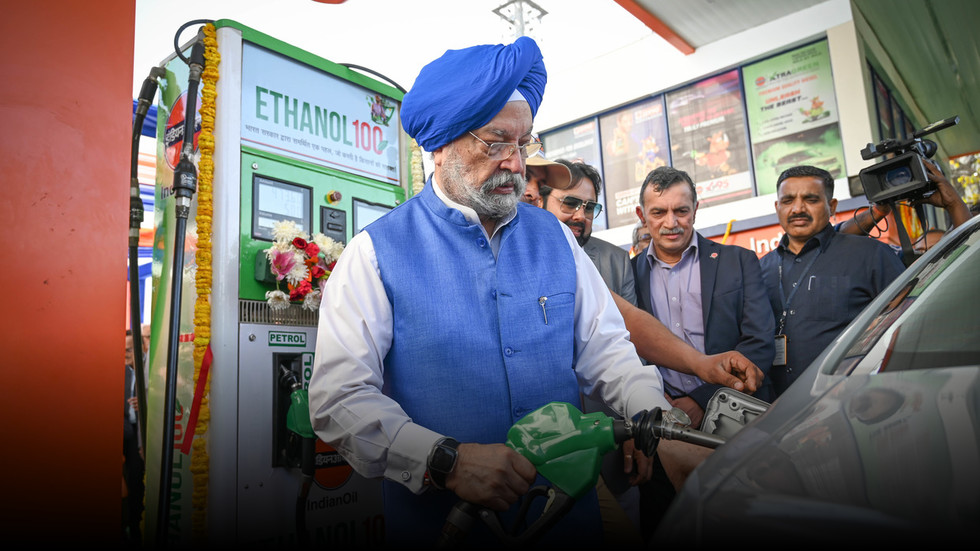
<p>Have you noticed your car’s mileage dipping slightly since the switch to E20 fuel? You’re not alone. With India’s aggressive push toward ethanol blending, drivers across the country are experiencing a subtle yet significant shift in their daily commutes. The government’s decision to increase ethanol content in fuel is a bold move aimed at energy security, reducing oil imports, and cutting emissions.</p>
<p>But what exactly is E20 fuel, and how does it impact your vehicle’s performance? This <a href="/article/colombia-s-deadly-earthquake-a-comprehensive-guide-to-the-largest-quake-in-years-its-history-impact-" title="Colombia's Deadly Earthquake: A Comprehensive Guide to the Largest Quake in Years, Its History, Impact, and Preparedness" class="internal-link">comprehensive guide</a> will demystify the science, policy, and <a href="/article/how-to-develop-self-awareness-a-practical-guide-for-indians" title="How to Develop Self-Awareness: A Practical Guide for Indians" class="internal-link">practical</a> implications of E20 for every Indian driver.</p>
<p><figure class="my-8 overflow-hidden rounded-3xl shadow-xl">
<img src="https://images.unsplash.com/photo-1644246905181-c3753e9a82bd?crop=entropy&cs=tinysrgb&fit=max&fm=jpg&ixid=M3w4NjI1Nzh8MHwxfHNlYXJjaHwxfHxldGhhbm9sJTIwZnVlbCUyMGJsZW5kaW5nfGVufDB8MHx8fDE3ODM3MjQzNTV8MA&ixlib=rb-4.1.0&q=80&w=1080" alt="ethanol fuel blending" class="w-full h-[400px] object-cover" />
</figure></p>
<h2>What Is E20 Fuel?</h2>
<p>E20 fuel is a blended gasoline containing 20% ethanol by volume, mixed with 80% conventional petroleum-based gasoline. Ethanol, a renewable oxygenate derived primarily from sugarcane molasses and agricultural waste, enhances combustion efficiency while reducing carbon emissions. Unlike traditional fossil fuels, ethanol burns cleaner, producing fewer pollutants and contributing to India’s renewable energy goals. Its oxygen-rich molecular structure helps stabilize combustion, minimizing engine knocking and improving emission profiles.</p>
<p>However, ethanol’s lower energy density compared to gasoline means it delivers slightly less thermal energy per unit volume. This trade-off is critical for drivers to understand, especially when evaluating mileage impacts. The blend’s octane rating also increases with ethanol content, allowing for more efficient engine performance in modern vehicles designed to handle higher octane fuels.</p>
<h3>History & Policy Timeline</h3>
<p>India’s journey toward ethanol blending began in the early 2000s with the National Biofuels Policy, which initially targeted a 5% ethanol blend by 2010. Over the years, incremental targets pushed the nation toward E10 (10% ethanol) by 2015. A pivotal moment came in 2018 when the government announced an ambitious plan to achieve a 20% ethanol blend by 2025, aligning with the National Biofuels Policy Amendment. This decision was driven by concerns over soaring crude oil prices and the need to promote renewable energy.</p>
<p><table>
<tr>
<th>Year</th>
<th>Blend Standard</th>
<th>Key Announcement</th>
</tr>
<tr>
<td>2003</td>
<td>E5</td>
<td>Launch of National Biofuels Policy</td>
</tr>
<tr>
<td>2015</td>
<td>E10</td>
<td>Full implementation across major cities</td>
</tr>
<tr>
<td>2018</td>
<td>E15</td>
<td>Targeted blend for select states</td>
</tr>
<tr>
<td>2023</td>
<td>E20</td>
<td>National rollout and regulatory framework finalized</td>
</tr>
</table></p>
<p>In 2023, the Ministry of Petroleum and Natural Gas mandated E20 blending nationwide, marking a historic shift. States like Gujarat and <a href="/article/why-the-whistle-is-trending-across-tamil-nadu-in-2026" title="Why the “Whistle” Is Trending Across Tamil Nadu in 2026" class="internal-link">Tamil Nadu</a> were early adopters, leveraging their sugarcane surpluses to meet blending targets. The current regulatory framework ensures ethanol content is strictly monitored at fuel dispensing stations, with penalties for non-compliance.</p>
<h2>Technical Deep-Dive: Engine Compatibility and Combustion Science</h2>
<p>The introduction of E20 has significant technical implications for engines. Ethanol’s higher octane rating (95–100 RON) compared to gasoline (87–93 RON) allows for more efficient combustion in high-compression engines, potentially boosting performance in optimized vehicles. However, ethanol’s corrosive nature poses challenges. Older vehicles with rubber seals or carburetors may experience fuel system degradation, necessitating upgrades to ethanol-resistant materials.</p>
<p>Modern vehicles equipped with electronic fuel injection systems and Engine Control Units (ECUs) adapt seamlessly to E20. The ECU adjusts fuel injection timing and air-fuel ratios to compensate for ethanol’s lower energy density. Flex-fuel vehicles (FFVs), designed to run on multiple fuel blends, are ideal for E20 but remain rare in India’s automotive market. For non-FFVs, engine tuning or aftermarket modifications may be required to prevent long-term damage.</p>
<blockquote>"E20’s higher octane is a boon for performance engines, but the key lies in proper engine calibration," says Dr. Ramesh Chandra, an automotive engineer at IIT Delhi. "India’s shift to E20 is a test case for embracing renewable fuels at scale."</blockquote>
<p><figure class="my-8 overflow-hidden rounded-3xl shadow-xl">
<img src="https://journals.plos.org/plosone/article/figure/image?id=10.1371/journal.pone.0351949.g013&size=inline" alt="ethanol fuel engine diagram" class="w-full h-[400px] object-cover" />
</figure></p>
Advertisement
Loading partner content...
<h2>Mileage Impact Reality Check: Data and Real-World Examples</h2>
<p>One of the most pressing concerns for drivers is the reported 3–5% reduction in mileage with E20. This drop stems from ethanol’s lower energy content—approximately 33% less energy per liter than gasoline. However, the impact varies significantly based on vehicle age, engine type, and driving conditions.</p>
<p>For instance, a 2018 Honda City diesel owner in Mumbai reported a 4% decrease in mileage after switching to E20, while a 2022 Maruti Suzuki Baleno with a modern engine saw only a 2% decline. Older cars with carburetors or worn-out fuel systems may experience greater losses due to inefficient fuel-air mixing. In contrast, vehicles with adaptive ECUs adjust fuel delivery to mitigate the disparity.</p>
<p>Quantitative analysis from the Society of Indian Automobile Manufacturers (SIAM) in 2024 found that E20 caused an average mileage reduction of 3.5% across passenger vehicles. Diesel engines, which are less ethanol-compatible, showed slightly higher losses compared to gasoline-powered counterparts.</p>
<h2>Benefits Beyond Fuel Economy: Emissions, Sustainability, and Cost Savings</h2>
<p>While mileage concerns dominate headlines, E20’s environmental and economic benefits are equally compelling. Ethanol’s oxygen-rich composition reduces particulate matter (PM2.5) and carbon monoxide (CO) emissions by up to 15% compared to gasoline. A 2023 study by the Central Pollution Control Board (CPCB) found that cities using E20 observed a 10% drop in winter pollution levels, particularly in nitrogen oxides (NOx).</p>
<p>From an economic perspective, ethanol is produced domestically from agricultural byproducts, reducing India’s reliance on imported crude oil. The government estimates that every 1% increase in ethanol blending saves ₹1.5 lakh crore annually in foreign exchange. Additionally, sugarcane farmers benefit from a steady market for their molasses, boosting rural incomes.</p>
<p>Case studies from pilot programs in Karnataka and Andhra Pradesh reveal that E20 adoption in public transport fleets reduced operational costs by 6% over three years. These savings stem from lower fuel taxes on ethanol blends and improved engine longevity due to cleaner combustion.</p>
<h2>Challenges & Limitations: Infrastructure and Awareness Gaps</h2>
<p>Despite its promise, E20 faces significant hurdles. India’s ethanol production capacity, while expanding, still lags behind blending targets. As of 2026, only 60% of the required 16 billion liters of ethanol annually is produced domestically, with the remainder imported or sourced from non-traditional feedstocks like plastic waste. This dependency raises concerns about cost and sustainability.</p>
<p>Seasonal availability of sugarcane, the primary ethanol feedstock, complicates year-round supply. States with limited agricultural output struggle to meet regional blending quotas, leading to uneven distribution. Moreover, many drivers remain unaware of E20’s compatibility requirements, risking engine damage in older vehicles.</p>
<p>Infrastructure gaps persist in rural areas, where fuel stations often lack ethanol blending facilities. A 2024 survey by the Automotive Research Association of India (ARAI) found that 40% of small-town fuel stations still offer only E10, leaving rural drivers underserved.</p>
Advertisement
Loading partner content...
<h2>Future Outlook: E25, E30, and the Flex-Fuel Revolution</h2>
<p>The Indian government’s vision extends beyond E20, with plans to explore E25 and E30 blends by 2030. These higher ethanol percentages could further reduce emissions and enhance energy security. Research institutions like the Indian Institute of Petroleum (IIP) are developing advanced catalysts to improve ethanol’s combustion efficiency in engines.</p>
<p>A critical enabler for higher blends is the adoption of flex-fuel vehicles (FFVs). The Automotive Industry Action Group (AIAG) recommends phasing in FFVs by 2025 to ensure nationwide compatibility. Companies like Tata Motors and Mahindra & Mahindra are already piloting E30-ready engines, signaling a shift toward future-ready infrastructure.</p>
<p>Additionally, India’s push for electric mobility may see hybridization with ethanol, creating a dual-fuel ecosystem. This approach could bridge the gap between traditional vehicles and full electrification, ensuring a smoother transition to sustainable transport.</p>
<h2>Practical Tips for Drivers: Navigating the E20 Transition</h2>
<p>Ensuring your vehicle runs efficiently on E20 requires proactive measures:</p>
<ul>
<li><b>Check Compatibility:</b> Look for the "Flex-Fuel" badge or consult your owner’s manual. Older vehicles (pre-2010) may need fuel system upgrades.</li>
<li><b>Maintain Fuel System Cleanliness:</b> Use fuel additives to prevent ethanol-induced corrosion, especially in carbureted engines.</li>
<li><b>Monitor Mileage:</b> Track fuel efficiency to identify early signs of compatibility issues. A sudden drop in mileage may indicate engine problems.</li>
<li><b>Choose Premium Stations:</b> Opt for fuel stations with certified ethanol blending facilities to ensure consistent quality.</li>
</ul>
<p>Regular maintenance, such as replacing rubber seals with ethanol-resistant materials, can extend engine life and optimize performance with E20.</p>
<p><figure class="my-8 overflow-hidden rounded-3xl shadow-xl">
<img src="https://images.pexels.com/photos/29370541/pexels-photo-29370541.jpeg?auto=compress&cs=tinysrgb&dpr=2&h=650&w=940" alt="car fuel tank maintenance" class="w-full h-[400px] object-cover" />
</figure></p>
<h2>Frequently Asked Questions</h2>
<h3>Does E20 Affect Vehicle Warranty?</h3>
<p>Most manufacturers now include E20 compatibility in their warranties, but older vehicles may void coverage if ethanol-related damage occurs. Always verify terms with your dealer.</p>
<h3>Is Insurance Impacted by E20 Use?</h3>
<p>Insurance policies typically do not differentiate based on fuel type. However, claims related to ethanol-induced engine damage may face scrutiny if modifications were not properly documented.</p>
<h3>Will Resale Value Decline with E20?</h3>
<p>Resale value depends on the vehicle’s age and market perception. Modern cars are seen as eco-friendly, while older models may face buyer skepticism if their history involves E20 use without proper maintenance.</p>
Advertisement
Loading partner content...
<h2>Conclusion: The Road Ahead for E20 in India</h2>
<p>E20 fuel represents a transformative step in India’s journey toward energy independence and environmental sustainability. While challenges like infrastructure gaps and mileage impacts persist, the long-term benefits—reduced emissions, economic savings, and renewable energy growth—are undeniable. As the nation advances toward higher ethanol blends and flex-fuel adoption, drivers must stay informed and proactive. By understanding E20’s technical nuances and aligning with government policies, every Indian driver can contribute to a cleaner, more resilient automotive future.</p>
<p><figure class="my-8 overflow-hidden rounded-3xl shadow-xl">
<img src="https://images.indianexpress.com/2026/06/UPSC-Weekly-Concepts-Snapshot-Why-are-E85-fuel-G-Secs-and-earthquakes-in-the-news-this-week.jpg" alt="Indian fuel ethanol policy" class="w-full h-[400px] object-cover" />
</figure></p>
</body>
</html>
<META>
<SCHEMA>
{
"@context": "https://schema.org",
"@type": "BlogPosting",
"headline": "E20 Fuel Explained: How Ethanol Blending Is Transforming India's Automotive Landscape and What Every Driver Should Know",
"image": "{{IMAGE_URL}}",
"author": {
"@type": "Person",
"name": "The Readist Team",
"url": "https://thereadist.in"
},
"publisher": {
"@type": "Organization",
"name": "The Readist",
"url": "https://thereadist.in"
},
"url": "https://thereadist.in/e20-fuel-guide",
"datePublished": "2026-01-15",</b></b></i></i></i></i>