
<h1>Rise & Legacy of <a href="/article/social-norms-and-behavioral-change-how-culture-shapes-our-daily-choices-in-india" title="Social Norms and Behavioral Change: How Culture Shapes Our Daily Choices in India" class="internal-link">India</a>’s Election Chief Gyanesh Kumar: 10 Fascinating Facts Behind the Political Storm</h1>
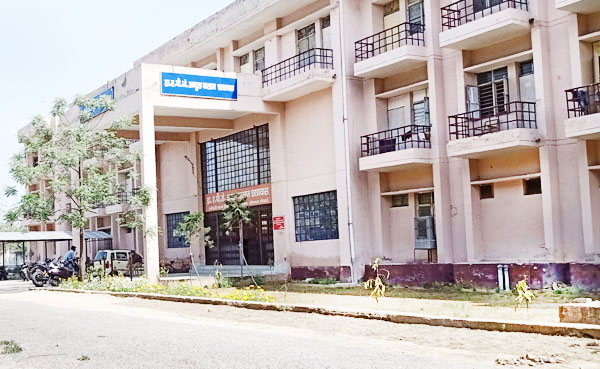
<p>In the heart of New Delhi, inside the imposing walls of <b>Nirvachan Sadan</b>, a quiet storm has been brewing. It is not the clamor of a rally or the heat of a debate, but the steady, relentless pressure of <b>institutional scrutiny</b>. At the center stands <b>Gyanesh Kumar</b>, the 26th <b>Chief Election Commissioner of India</b>, a man whose signature now authenticates the democratic mandate of nearly a billion voters. As 2026 unfolds, his tenure is defined not just by the logistics of the world’s largest electoral exercise, but by a <b>political storm</b> questioning the very architecture of his appointment and the autonomy of the <b>Election Commission of India</b>.</p>
<p>Understanding this moment requires looking <a href="/article/beyond-the-candidate-swap-what-the-bjp-s-datia-defeat-reveals-about-indian-political-strategy" title="Beyond the Candidate Swap: What the BJP's Datia Defeat Reveals About Indian Political Strategy" class="internal-link">beyond the</a> headlines. It demands a look at the bureaucrat, the administrator, and the human being tasked with guarding the <b>ballot box</b>.</p>
<figure class="my-8 overflow-hidden rounded-3xl shadow-xl">
<img src="https://www.aljazeera.com/wp-content/uploads/2026/09/image-1790360073.jpg?resize=1603%2C1080&quality=80" alt="Gyanesh Kumar" class="w-full h-[400px] object-cover" />
</figure>
Advertisement
Loading partner content...
<h2>Early Life & Education – From Small Town to Civil Services</h2>
<p>Long before the security detail and the protocol vehicles, Gyanesh Kumar navigated the bylanes of <b>Haryana</b>. Born in 1964, his upbringing was rooted in the values of a <a href="/article/why-india-s-middle-class-is-more-stressed-than-ever" title="Why India’s Middle Class Is More Stressed Than Ever" class="internal-link">middle</a>-class household where education was the primary currency for social mobility. His early schooling in local government institutions instilled a grounded perspective on <b>public service</b> that elite academies often struggle to teach. He pursued his Bachelor’s degree in <b>Civil Engineering</b> from the prestigious <b>IIT Kanpur</b>, a foundation that gifted him an analytical rigour distinct from the humanities background common in the <b>Indian Administrative Service</b>.</p>
<p>This technical training proved pivotal. Engineering teaches you to build systems that withstand stress; administration requires building institutions that withstand political pressure. He later augmented this with a Master’s in <b>Business Administration</b> from the <b>Faculty of Management Studies (FMS), Delhi University</b>. This blend of hard engineering logic and soft management skills created a unique administrative toolkit.</p>
<p>Colleagues from his university days recall a student who preferred the library’s reference section over the campus canteen, a trait that foreshadowed his reputation for <b>meticulous preparation</b>.</p>
Advertisement
Loading partner content...
<h2>Entry into the Civil Services – A Journey Through Bureaucracy</h2>
<p>The year 1988 marked his entry into the <b>Indian Administrative Service (IAS)</b>, allocated to the <b>Kerala cadre</b>. Choosing Kerala — a state known for high literacy, complex coalition politics, and vibrant civil society — was a baptism by fire. His early postings as Sub-Collector and District Magistrate in districts like <b>Wayanad</b> and <b>Kozhikode</b> exposed him to the raw nerves of governance: land disputes, tribal rights, and disaster management.</p>
<p>He didn't just administer; he innovated. In Wayanad, he spearheaded a <b>digitization of land records</b> project long before "Digital India" became a national slogan. This reduced litigation and empowered marginalized farmers. His tenure in the <b>Ministry of Defence</b> as Director and Joint Secretary saw him handling sensitive procurement files, earning a reputation for <b>incorruptibility</b> in a ministry often shadowed by controversy.</p>
<p>By the time he moved to the <b>Ministry of Home Affairs</b> as Additional Secretary, he was managing the internal security matrix of the nation, including the complex dynamics of <b>Jammu & Kashmir</b> and the Northeast. These roles were not mere stepping stones; they were masterclasses in crisis management.</p>
Advertisement
Loading partner content...
<h2>Key Milestones in Election Administration – The Making of a Chief Election Commissioner</h2>
<p>Gyanesh Kumar’s tryst with the <b>Election Commission of India (ECI)</b> began in March 2024 when he was appointed as an <b>Election Commissioner</b> alongside Sukhbir Singh Sandhu. The timing was critical — mere weeks before the <b>2024 Lok Sabha elections</b>, the largest democratic exercise in human history. He was thrown into the deep end, overseeing the <b>Model Code of Conduct (MCC)</b> enforcement and the deployment of <b>Central Armed Police Forces (CAPF)</b> across sensitive constituencies.</p>
<p>His elevation to <b>Chief Election Commissioner</b> in February 2025, following the retirement of Rajiv Kumar, placed him at the helm during a transformative period. Under his watch, the ECI piloted the <b>"Vote from Home"</b> initiative for senior citizens and Persons with Disabilities (PwD) on a national scale for the first time in general elections. He also championed the <b>integration of ERONET (Electoral Roll Management System)</b> with Aadhaar on a voluntary basis, aiming <a href="/article/building-digital-foundations-a-practical-guide-to-clean-architecture-system-design-for-indian-tech-t" title="Building Digital Foundations: A Practical Guide to Clean Architecture & System Design for Indian Tech Teams" class="internal-link">to clean</a> the electoral rolls of duplicate entries — a move that sparked both praise for efficiency and debate over privacy.</p>
<blockquote>
"The credibility of an election lies not in the perfection of the process, but in the transparency of its imperfections. We must show the voter the machinery, not just the result." — <b>Gyanesh Kumar</b>, Address to the Association of World Election Bodies, 2025.
</blockquote>
Advertisement
Loading partner content...
<h2>Top 10 Lesser‑Known Facts About Gyanesh Kumar</h2>
<ol>
<li><b>The "Midnight Inspector" Habit:</b> During his tenure as DM in Kozhikode, he famously conducted surprise inspections of ration shops and hospitals at 2 AM. He believed governance doesn't keep office hours.</li>
<li><b>A Polyglot Administrator:</b> Fluent in Hindi, English, and Malayalam, he learned conversational Malayalam within six months of joining the Kerala cadre to communicate directly with tribal communities in Wayanad without interpreters.</li>
<li><b>The "File Whisperer":</b> In the Ministry of Defence, he earned a nickname for clearing a decades-old backlog of procurement files by introducing a "Red Flag/Green Flag" coding system, reducing processing time by 40%.</li>
<li><b>Disaster Management Pioneer:</b> He drafted the <b>Kerala State Disaster Management Plan</b> in 2010, which became the template for the National Disaster Management Authority (NDMA) guidelines later adopted nationally.</li>
<li><b>Avid Marathon Runner:</b> Even in his late 50s, he completes a half-marathon annually. He credits long-distance running for the mental stamina required to read 500-page briefing documents in one sitting.</li>
<li><b>Refused the "Blue Beacon" Culture:</b> Long before the central government banned red beacons, he voluntarily removed the beacon from his official vehicle in 2014, stating it created a psychological barrier between the officer and the citizen.</li>
<li><b>Architect of the "Cooperative Movement" Reforms:</b> As the first Secretary of the newly formed <b>Ministry of Cooperation (2021-2024)</b>, he digitized over 63,000 Primary Agricultural Credit Societies (PACS), bringing them onto a unified software platform.</li>
<li><b>The "No-Gift" Policy:</b> He maintains a strict personal registry. Every ceremonial gift received (shaws, mementos, books) is deposited in the <b>Toshakhana</b> (state treasury) immediately, a practice he institutionalized in his office for all staff.</li>
<li><b>Mentor to Women Officers:</b> He actively mentored a cohort of women IAS officers in Kerala, advocating for their posting in "hard" districts like Idukki and Kasaragod, challenging the unofficial tradition of keeping them in "soft" urban postings.</li>
<li><b>Anonymous Poetry Enthusiast:</b> Few know he writes Hindi couplets (dohas) on governance ethics. A collection circulates privately among his batchmates, often satirizing bureaucratic red tape.</li>
</ol>
<h2>The Current Political Storm – Context and Implications</h2>
Advertisement
Loading partner content...
<p>The <b>political storm</b> surrounding Gyanesh Kumar in 2026 stems from the <b>Chief Election Commissioner and other Election Commissioners (Appointment, Conditions of Service and Term of Office) Act, 2023</b>. This legislation replaced the Chief Justice of India (CJI) in the selection committee with a Union Cabinet Minister, effectively giving the executive a 2:1 majority over the Leader of Opposition. The Opposition parties argue this compromises the <b>independence of the ECI</b>, turning the referee into a player appointed by one team.</p>
<p>The controversy intensified following the <b>2024 General Elections</b> where the Opposition alleged selective enforcement of the <b>Model Code of Conduct</b> — specifically regarding speeches by top leaders of the ruling party. As an Election Commissioner then, and CEC now, Gyanesh Kumar has faced the brunt of these allegations. The Supreme Court is currently hearing a batch of petitions challenging the constitutional validity of the 2023 Act. The verdict, expected late 2026, will define his legacy as much as his administrative reforms.</p>
<table>
<thead>
<tr>
<th>Aspect</th>
<th>Government Stance</th>
<th>Opposition/Civil Society Stance</th>
</tr>
</thead>
<tbody>
<tr>
<td><b>Selection Panel Composition</b></td>
<td>Executive dominance ensures accountability and speed.</td>
<td>Violates basic structure doctrine; destroys neutrality.</td>
</tr>
<tr>
<td><b>MCC Enforcement (2024)</b></td>
<td>Strict, impartial application of rules.</td>
<td>Selective targeting; "soft" on ruling party leaders.</td>
</tr>
<tr>
<td><b>EVM-VVPAT Verification</b></td>
<td>Current 5% mandatory verification is statistically robust.</td>
<td>Demand 100% counting or return to ballot paper.</td>
</tr>
<tr>
<td><b>Remote Voting (RVM)</b></td>
<td><a href="/article/first-ai-enabled-university-in-india-a-game-changer-for-higher-education" title="First AI-Enabled University in India — A Game Changer for Higher Education?" class="internal-link">Game changer for</a> migrant workers; pilot ready.</td>
<td>Security risks unaddressed; trust deficit remains.</td>
</tr>
</tbody>
</table>
Advertisement
Loading partner content...
<p>Despite the noise, Kumar has maintained a <b>studied silence</b> in public, letting institutional responses and court affidavits speak. In a rare internal town hall leaked to the press in early 2026, he reportedly told junior officers: <b>"Our armor is our procedure. If the procedure is sacred, the noise is irrelevant."</b> This stoicism frustrates critics who demand vocal defense, but reassures the bureaucracy that the institution holds.</p>
<h2>Legacy & Future Outlook – What His Tenure Means for Indian Democracy</h2>
<p>Looking ahead, Gyanesh Kumar’s legacy will likely be a tale of two tracks: <b>technological modernization</b> versus <b>institutional fortification</b>. On the tech front, he is pushing the <b>Remote Electronic Voting Machine (RVM)</b> prototype to enable migrant workers to vote from their destination cities. If successful by the 2029 cycle, it could enfranchise 300 million internal migrants — a demographic shift larger than the population of the USA.</p>
<p>Simultaneously, he is advocating for <b>state funding of elections</b> and a <b>National Electoral Fund</b> to curb the influence of black money. His 2025 report to the Law Ministry recommended capping party expenditure (not just candidate expenditure), a radical proposal gathering dust in legislative corridors. He has also strengthened the <b>ECI’s in-house legal cell</b>, reducing reliance on the Law Ministry for legal opinions — a subtle but powerful assertion of autonomy.</p>
Advertisement
Loading partner content...
<p>However, the shadow of the appointment act looms large. History will judge whether he used the "executive-friendly" appointment mechanism to entrench executive control, or whether he leveraged the mandate to build an <b>ECI so robust</b> that future appointments become irrelevant to its functioning. The <b>"Kumar Doctrine"</b> — if one may coin it — appears to be: <b>Operational Excellence as Institutional Insurance.</b> By making the election machinery flawless, transparent, and tech-enabled, he aims to make controversy factually unsustainable.</p>
<h2>Conclusion – The Man Who Shapes India’s Ballot Box</h2>
<p>Gyanesh Kumar is not a politician. He does not seek votes, he counts them. He does not make promises, he enforces rules. In an era where <b>democratic institutions</b> globally face erosion from polarization and populism, his career offers a case study in <b>bureaucratic resilience</b>.</p>
<p>From the flood-plains of Kerala to the high-security control room of Nirvachan Sadan, his journey reflects the evolution of the <b>Indian State</b> itself — from a license-permit raj administrator to a digital-age democracy architect.</p>
Advertisement
Loading partner content...
<p>The <b>political storm</b> will pass. Laws will be struck down or upheld. Governments will change. But the <b>electoral roll</b> he leaves behind — cleaner, more inclusive, technologically integrated — will remain the bedrock of the next mandate.</p>
<p>As citizens, our vigilance must match his meticulousness. The integrity of the <b>ballot box</b> is not the CEC’s burden alone; it is the citizen’s birthright.</p>
<p><b>What do you think defines an impartial Election Commission?</b> Is it the law that appoints the commissioner, or the character of the person holding the office? Share your thoughts in the comments below and follow our coverage on</b></p></i>