<h1><a href="/article/the-pulse-of-youth-how-the-jantar-mantar-protests-are-redefining-environmental-activism-in-india" title="The Pulse of Youth: How the Jantar Mantar Protests Are Redefining Environmental Activism in India" class="internal-link">The Pulse of</a> Protest: Decoding the 2024 <a href="/article/the-complete-guide-to-jharkhand-student-protests-origins-demands-government-response-and-future-outl" title="The Complete Guide to Jharkhand Student Protests: Origins, Demands, Government Response, and Future Outlook" class="internal-link">Jharkhand Student</a> Uprising and Its Political Ripple Effects</h1>
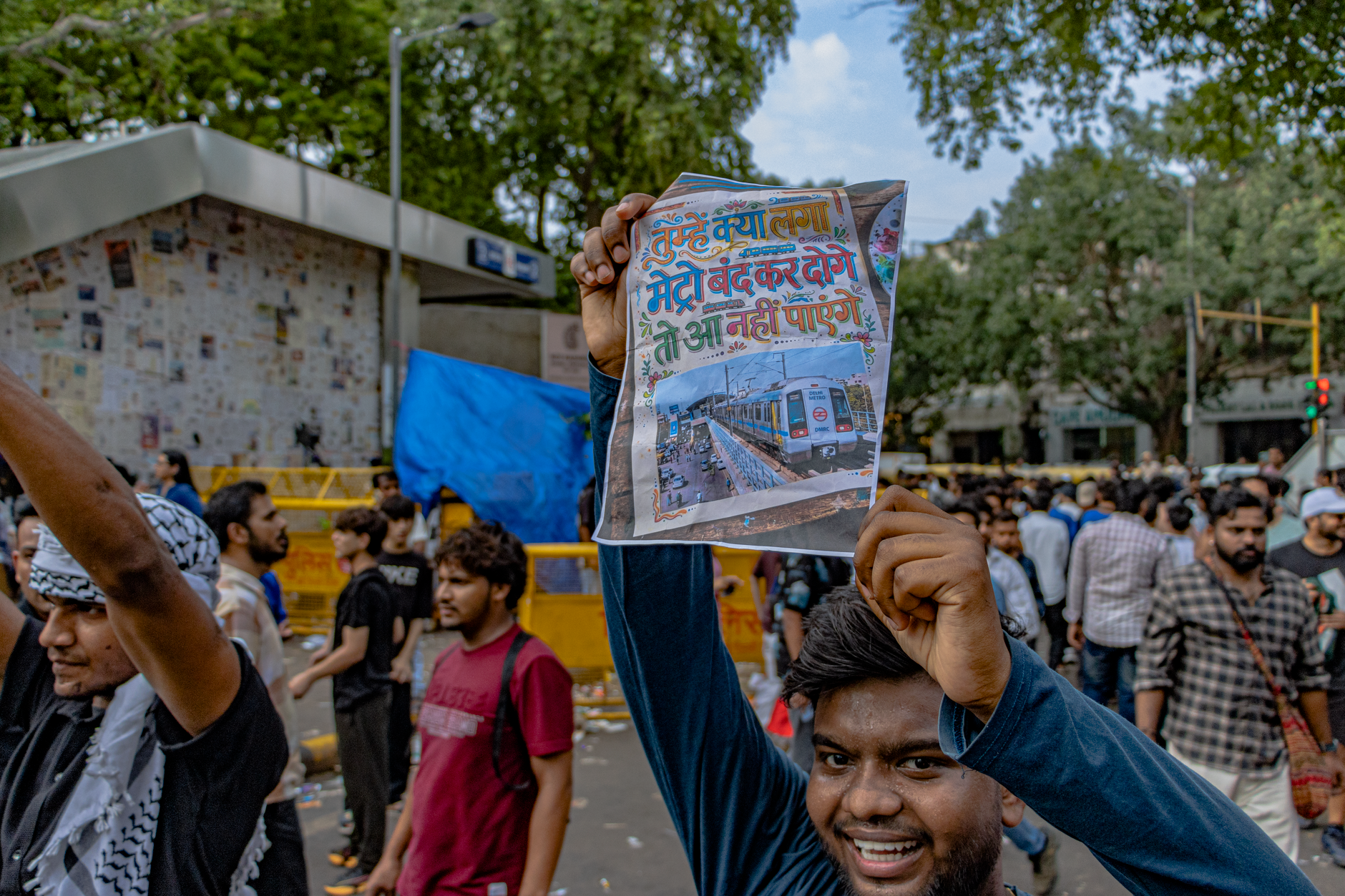
<p>In early 2024, Jharkhand’s college campuses erupted in a wave of demonstrations that captured national attention. Students took to the streets, burned effigies of prominent leaders, and voiced demands that went beyond immediate grievances. This article examines the uprising in depth, tracing its roots, analyzing its symbolism, and exploring what it means for the future of student politics in India.</p>
<figure class="my-8 overflow-hidden rounded-3xl shadow-xl">
<img src="https://images.pexels.com/photos/32347985/pexels-photo-32347985.jpeg?auto=compress&cs=tinysrgb&dpr=2&h=650&w=940" alt="student protest" class="w-full h-[400px] object-cover" />
</figure>
<h2>1. Background and Origins of Student Activism in Jharkhand</h2>
<p>Jharkhand has a long tradition of student-led movements, dating back to the state’s formation in 2000. Early agitations focused on land rights, tribal welfare, and employment opportunities for youth. Over the decades, campuses in Ranchi, Jamshedpur, and Dhanbad became incubators for political awareness, with groups such as the All Jharkhand Students’ Union (AJSU) and various left‑leaning collectives organizing rallies, sit‑ins, and cultural protests.</p>
Advertisement
Loading partner content...
<p>The state’s socio‑economic landscape—marked by mining wealth, stark inequality, and limited industrial diversification—has often left graduates facing underemployment. This persistent mismatch between education and job availability fuels frustration, making student bodies receptive to calls for systemic change.</p>
<h3>Early Roots</h3>
<p>Historical triggers include the 2006 anti‑displacement protests against coal mining projects and the 2014 demonstrations demanding better reservation policies in professional colleges. Each episode added layers of organizational experience and a shared repertoire of slogans, symbols, and tactics that later activists could draw upon.</p>
<h2>2. Specific Triggers Behind the 2024 Protest</h2>
<p>The immediate catalyst emerged in January 2024 when allegations surfaced regarding misallocation of scholarship funds and irregularities in the state’s newly launched “Skill‑India Jharkhand” initiative. Investigative reports by local news outlets claimed that a significant portion of the budget was diverted through shell companies linked to political intermediaries.</p>
Advertisement
Loading partner content...
<p>Simultaneously, the state government announced a revision to the reservation quota for Other Backward Classes (OBC) in government jobs, reducing the share from 27% to 20%. Student unions perceived this as a direct threat to their future employability, especially for those from marginalized communities.</p>
<p>These twin issues—financial malfeasance and perceived dilution of affirmative action—ignited a rapid mobilization across engineering, medical, and arts colleges.</p>
<h3>Key Triggers (List)</h3>
<ul>
<li>Alleged corruption in scholarship disbursement (≈₹120 crore misappropriated)</li>
<li>Reduction of OBC reservation quota in state jobs</li>
<li>Delayed stipend payments for internship programs</li>
<li>Lack of transparency in the “Skill‑India Jharkhand” vendor selection process</li>
</ul>
<figure class="my-8 overflow-hidden rounded-3xl shadow-xl">
<img src="https://static.toiimg.com/thumb/msid-133258262,width-1280,height-720,resizemode-6,overlay-toi_sw,pt-32,y_pad-600/photo.jpg" alt="Hemant Soren" class="w-full h-[400px] object-cover" />
</figure>
<h2>3. Symbolism of Burning Effigies of Hemant Soren and Rahul Gandhi</h2>
Advertisement
Loading partner content...
<p>One of the most striking visual elements of the protest was the public burning of effigies representing Jharkhand Chief Minister Hemant Soren and Congress leader Rahul Gandhi. This act was not merely an expression of anger; it carried layered political meaning.</p>
<p>For many demonstrators, Soren embodied the state government accused of maladministration. Burning his effigy signaled a demand for accountability at the highest level of state authority. Rahul Gandhi, as the face of the national opposition, was targeted to highlight perceived hypocrisy: protesters argued that while the Congress party championed social justice rhetoric nationally, its state allies were complicit in the very policies under scrutiny.</p>
<p>The effigy ritual also tapped into a long‑standing Indian protest tradition where symbolic destruction serves to “purify” the public sphere and reclaim moral authority.</p>
<blockquote>“We burn their images not to hate individuals, but to reject the system that lets them betray our hopes,” said a student spokesperson from Ranchi University during a live stream on 12 February 2024.</blockquote>
<h2>4. Demands and Slogans of the Protestors</h2>
Advertisement
Loading partner content...
<p>The movement coalesced around a clear charter of demands, which were repeatedly chanted in marches and displayed on placards.</p>
<h3>Core Demands</h3>
<ol>
<li>Transparent audit of all scholarship and skill‑development funds, with restitution for misappropriated amounts.</li>
<li>Restoration of the 27% OBC reservation quota in state government jobs.</li>
<li>Timely disbursement of internship stipends and a grievance redressal mechanism for delayed payments.</li>
<li>Formation of an independent student‑oversight committee to monitor implementation of education‑related schemes.</li>
<li>Guarantee of peaceful protest rights and withdrawal of any punitive measures against participating students.</li>
</ol>
<p>Slogans such as “<b>Shiksha Ka Haq, Humka Hai</b>” (Education is Our Right) and “<b>Bhrashtachar Bandh, Desh Badhe</b>” (Stop Corruption, Let the Nation Progress) reverberated through campus courtyards and <a href="/article/unlocking-the-power-of-social-media-marketing-tactics" title="Unlocking the Power of Social Media Marketing Tactics" class="internal-link">social media</a> feeds alike.</p>
<figure class="my-8 overflow-hidden rounded-3xl shadow-xl">
<img src="https://images.pexels.com/photos/7790208/pexels-photo-7790208.jpeg?auto=compress&cs=tinysrgb&dpr=2&h=650&w=940" alt="protest slogans" class="w-full h-[400px] object-cover" />
</figure>
Advertisement
Loading partner content...
<h2>5. Political Context: State Government and National Opposition</h2>
<p>The protest unfolded against a tense political backdrop. Hemant Soren’s Jharkhand Mukti Morcha (JMM)-led coalition relied heavily on tribal and rural vote banks, while the Congress party, though a junior partner, sought to expand its urban youth base.</p>
<p>When the allegations broke, the state administration initially dismissed them as “politically motivated rumors.” However, as student unions threatened to escalate to an indefinite hunger strike, the government convened an emergency cabinet meeting on 8 February 2024, announcing a judicial inquiry into the scholarship fund allegations.</p>
<p>Nationally, Rahul Gandhi’s Congress issued a statement condemning “any form of corruption” but stopped short of directly criticizing the state government, a nuance that protesters interpreted as opportunistic.</p>
<p>The Bharatiya Janata Party (BJP), seeking to capitalize on the unrest, framed the protests as evidence of “misgovernance under secular coalitions” and promised a “transparent, merit‑based” alternative if voted to power in the upcoming 2025 state elections.</p>
Advertisement
Loading partner content...
<h2>6. Reactions from Media, Administration, and Civil Society</h2>
<p>Mainstream English‑language outlets provided extensive coverage, often highlighting the protest’s scale and the visual impact of effigy burning. Regional Hindi and tribal language channels focused more on the underlying socio‑economic grievances, interviewing parents and local leaders.</p>
<p>The Jharkhand Police initially detained a handful of organizers under preventive detention laws, citing concerns over public order. Civil liberties groups, including the People’s Union for Civil Liberties (PUCL), condemned these actions as disproportionate and urged the administration to engage in dialogue.</p>
<p>Several NGOs and student‑rights organizations offered mediation services, proposing a joint monitoring committee that included university vice‑chancellors, student representatives, and independent auditors.</p>
<table>
<caption>Stakeholder Reactions Summary</caption>
<thead>
<tr>
<th>Stakeholder</th>
<th>Initial Reaction</th>
<th>Subsequent Action</th>
</tr>
</thead>
<tbody>
<tr>
<td>State Government</td>
<td>Dismissed allegations as rumors</td>
<td>Ordered judicial inquiry; promised stipend clearance</td>
</tr>
<tr>
<td>Congress (National)</td>
<td>Condemned corruption generically</td>
<td>Called for unity; avoided direct criticism of Soren</td>
</tr>
<tr>
<td>BJP</td>
<td>Labeled protests as “anti‑national”</td>
<td>Used issue in election rallies; promised reforms</td>
</tr>
<tr>
<td>Media (National)</td>
<td>Focused on visuals of effigy burning</td>
<td>Published investigative pieces on fund misallocation</td>
</tr>
<tr>
<td>Civil Society</td>
<td>Urged dialogue and restraint</td>
<td>Facilitated back‑channel talks; released fact‑finding reports</td>
</tr>
</tbody>
</table>
Advertisement
Loading partner content...
<figure class="my-8 overflow-hidden rounded-3xl shadow-xl">
<img src="https://images.unsplash.com/photo-1738374773780-d5408a97cc40?crop=entropy&cs=tinysrgb&fit=max&fm=jpg&ixid=M3w4NjI1Nzh8MHwxfHNlYXJjaHwxfHxjaXZpbCUyMHNvY2lldHklMjBkaWFsb2d1ZXxlbnwwfDB8fHwxNzg2ODkwMTEwfDA&ixlib=rb-4.1.0&q=80&w=1080" alt="civil society dialogue" class="w-full h-[400px] object-cover" />
</figure>
<h2>7. Historical Precedents of Similar Protests in India</h2>
<p>Jharkhand’s 2024 episode echoes earlier student movements across the country. The 1974 Nav Nirman agitation in Gujarat, sparked by rising prices and corruption, also featured effigy burning and mass marches. More recently, the 2016 Jawaharlal Nehru University (JNU) protests over nationalism and fee hikes demonstrated how student dissent can quickly intersect with national political narratives.</p>
<p>What distinguishes the Jharkhand case is its strong regional identity component: tribal symbols, local language chants, and references to state‑specific resource politics gave the movement a distinct flavor that resonated beyond the campus.</p>
Advertisement
Loading partner content...
<h2>8. Implications for Student Politics and Democratic Participation</h2>
<p>The protest has re‑energized debates about <a href="/article/why-jharkhand-students-are-protesting-a-deep-dive-into-education-rights-government-response-and-the-" title="Why Jharkhand Students Are Protesting: A Deep Dive into Education Rights, Government Response, and the Role of Public Figures like Rahul Gandhi" class="internal-link">the role of</a> student unions in a functioning democracy. Observers note three key implications:</p>
<ul>
<li>Renewed legitimacy for student bodies as watchdogs over public expenditure, especially in states where tribal welfare schemes dominate budgets.</li>
<li>Potential for increased politicization of campuses, raising concerns about academic freedom versus civic engagement.</li>
<li>Opportunity for political parties to recalibrate outreach strategies, recognizing that student grievances can translate into electoral volatility.</li>
</ul>
<p>Scholars suggest that institutionalizing mechanisms—such as mandatory student representation on state education‑fund oversight boards—could transform protest energy into sustained policy influence.</p>
<h2>9. Future Outlook and Potential Reforms</h2>
Advertisement
Loading partner content...
<p>Looking ahead, several pathways could shape the aftermath of the 2024 uprising.</p>
<ol>
<li><b>Policy Reform:</b> The state government may adopt a transparent, blockchain‑based fund tracking system for scholarships, reducing scope for leakage.</li>
<li><b>Institutional Reform:</b> Universities could create permanent student‑faculty committees to review and advise on state‑funded schemes.</li>
<li><b>Political Reform:</b> National parties might develop clearer youth manifestos that address regional disparities in education and employment.</li>
<li><b>Social Reform:</b> Sustained dialogue between tribal civil society groups and student unions could foster broader coalitions advocating for inclusive development.</li>
</ol>
<p>If these steps are taken, the protest could be remembered not merely as a flashpoint of anger but as a catalyst for enduring democratic deepening in Jharkhand and beyond.</p>
<figure class="my-8 overflow-hidden rounded-3xl shadow-xl">
<img src="https://images.pexels.com/photos/2027062/pexels-photo-2027062.jpeg?auto=compress&cs=tinysrgb&dpr=2&h=650&w=940" alt="future reform" class="w-full h-[400px] object-cover" />
</figure>
Advertisement
Loading partner content...
<h2>Conclusion</h2>
<p>The 2024 Jharkhand student uprising offers a vivid case study of how localized grievances, when amplified by organized youth activism, can reverberate through state and national politics. By examining its origins, symbolism, demands, and reactions, we gain insight into the evolving dynamics of student participation in India’s democratic process. The episode reminds us that protest, when channeled constructively, can serve as a powerful engine for <a href="/article/the-supreme-court-s-investigation-into-bci-chairmanship-s-impact-on-nalsar-students-a-deep-dive-into" title="The Supreme Court's Investigation into BCI Chairmanship's Impact on NALSAR Students: A Deep Dive into Institutional Authority, Legal Accountability, and Academic Freedom" class="internal-link">accountability and</a> reform.</p>
<!-- Metadata --></b></i></i></i></i></i>