<h1>Understanding the INDIA Bloc’s Anti‑CEC Rally: Origins, Impact, and What It Means for Indian Democracy</h1>
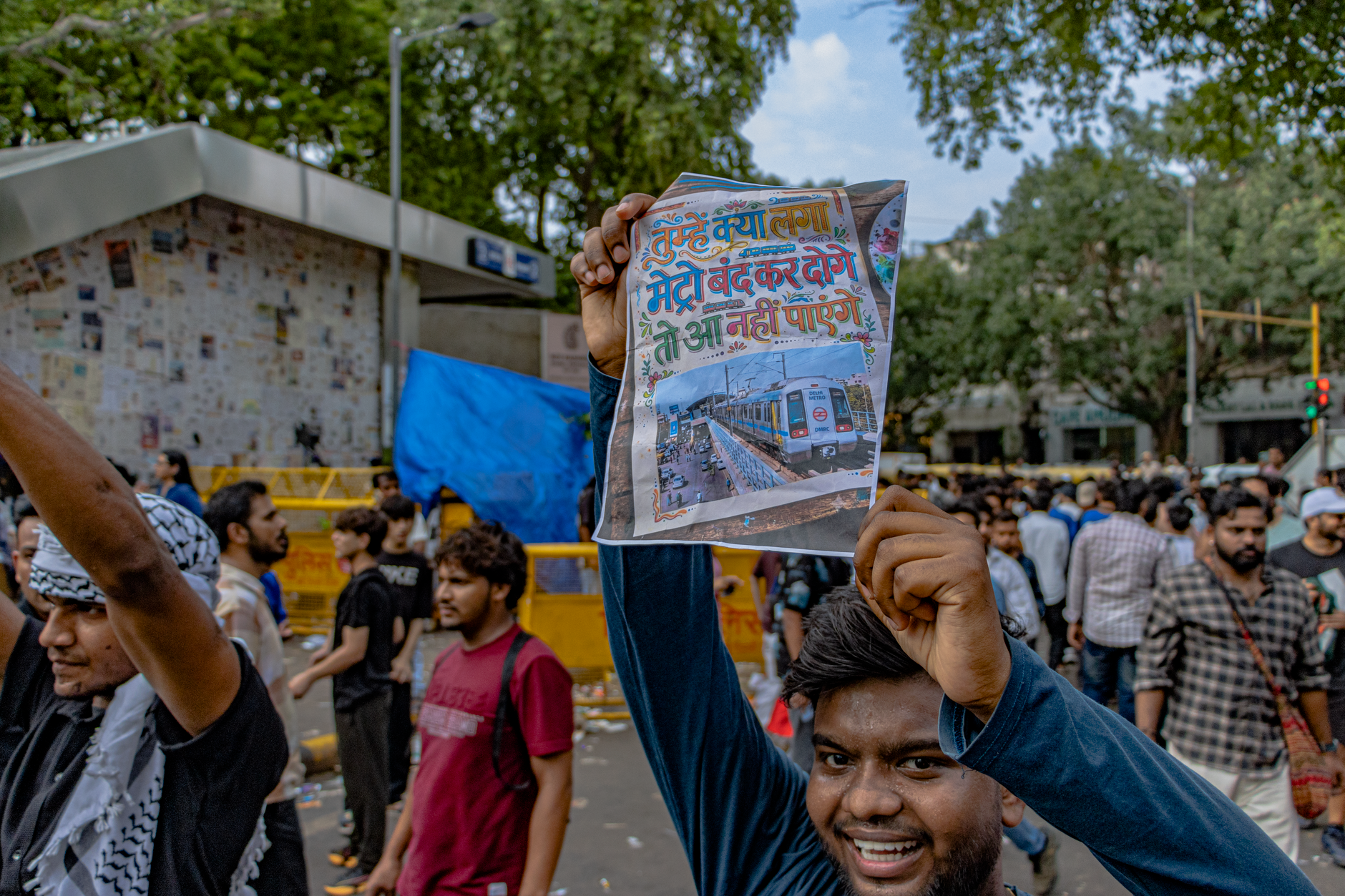
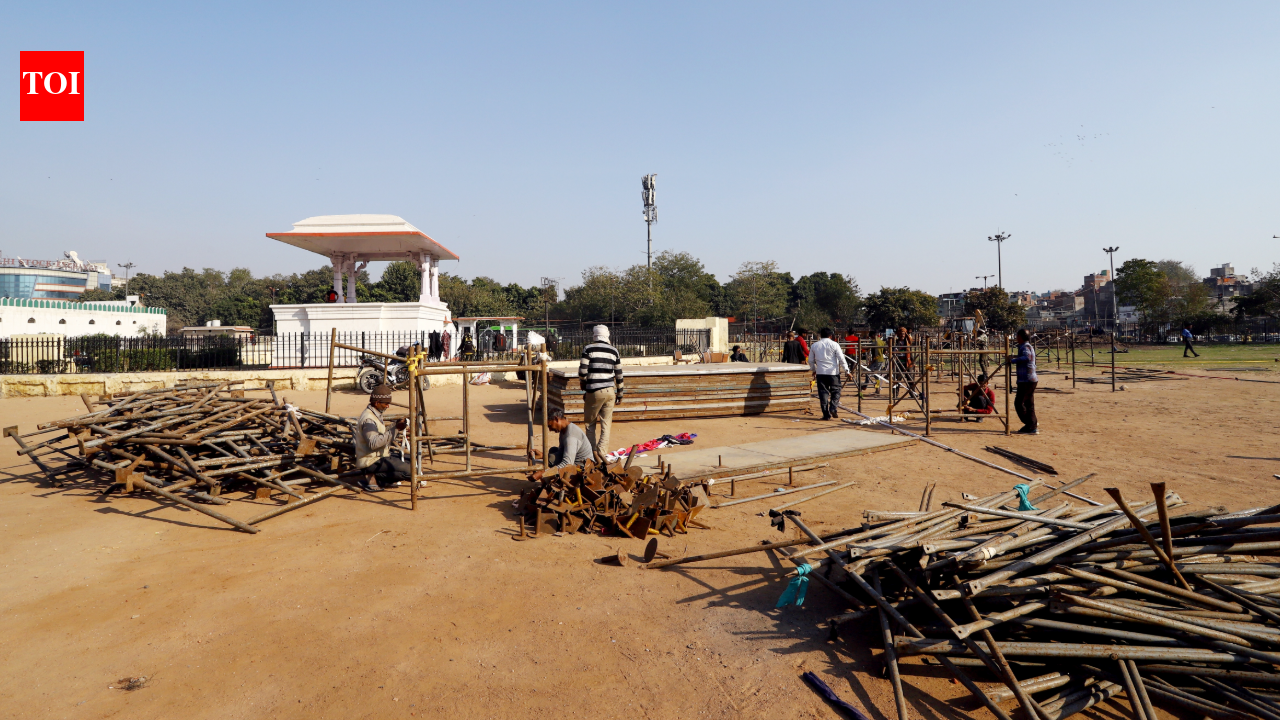
<p>The INDIA bloc’s massive anti‑<a href="/article/when-democracy-turns-against-its-own-the-unprecedented-protests-against-india-s-chief-election-commi" title="When Democracy Turns Against Its Own: The Unprecedented Protests Against India's Chief Election Commissioner and the Crisis of Electoral Integrity" class="internal-link">Chief Election Commissioner</a> (CEC) rally at Delhi’s Ramlila Maidan on 12 March 2026 sent shockwaves through the capital. According to The Times of India, the gathering attracted <b>approximately 10 lakh participants</b>, prompting the deployment of <b>4,000 police personnel</b> and <b>200 CCTV cameras</b> to maintain order. The protest was billed as a decisive moment for opposition unity, but it also raised urgent questions about the independence of India’s electoral institutions <a href="/article/why-jharkhand-students-are-protesting-a-deep-dive-into-education-rights-government-response-and-the-" title="Why Jharkhand Students Are Protesting: A Deep Dive into Education Rights, Government Response, and the Role of Public Figures like Rahul Gandhi" class="internal-link">and the</a> limits of democratic dissent in a bustling urban landscape.</p>
<h2>Event Overview</h2>
<p>The rally was organized under the banner of the INDIA bloc, a coalition of regional parties that have increasingly coordinated their strategies since 2023. The event’s scale was unprecedented <a href="/article/safe-sustainable-weight-loss-strategies-for-a-healthier-india" title="Safe & Sustainable Weight Loss Strategies for a Healthier India" class="internal-link">for a</a> single opposition demonstration in recent memory, turning Ramlila Maidan into a focal point of national attention. The security apparatus was designed to handle not only the crowd size but also the potential for disruptive tactics often seen in high‑profile protests.</p>
<table>
<tr>
<th>Metric</th>
<th>Figure</th>
</tr>
<tr>
<td>Participants</td>
<td>10 lakh</td>
</tr>
<tr>
<td>Police personnel</td>
<td>4,000</td>
</tr>
<tr>
<td>CCTV cameras</td>
<td>200</td>
</tr>
</table>
Advertisement
Loading partner content...
<p>The logistical challenges of managing such a dense gathering in a confined urban space were immense. Streets leading to the maidan were closed for hours, causing significant traffic disruptions across central Delhi. <b>Local authorities cited crowd control, bomb detection, and communication security as primary concerns.</b> The deployment of over 200 CCTV cameras allowed real‑time monitoring, but it also sparked debates about surveillance overreach and the right to peaceful assembly.</p>
<h2>Historical Background of the INDIA Bloc</h2>
<h3>Formation and Early Alliances</h3>
<p>The INDIA bloc emerged in late 2022 after months of back‑channel talks between the Indian National Congress, Aam Aadmi Party (AAP), Dravida Munnetra Kazhagam (DMK), and several regional parties. The coalition’s primary objective was to present a united front against the ruling Bharatiya Janata Party (BJP) in the 2024 general elections. <b>Its formation marked the first time several opposition parties signed a formal charter committing to shared policy platforms and coordinated election strategies.</b></p>
<h3>Previous Electoral Disputes</h3>
Advertisement
Loading partner content...
<p>Since its inception, the bloc has repeatedly challenged the Election Commission’s handling of various electoral irregularities. Notable incidents include the 2023 Tamil Nadu by‑elections, where the bloc alleged misuse of central agencies, and the 2024 Lok Sabha campaign, which saw accusations of biased media coverage. These grievances laid the groundwork for the anti‑CEC rally, positioning the Commission as a recurring point of contention rather than a neutral arbiter.</p>
<p><figure class="my-8 overflow-hidden rounded-3xl shadow-xl">
<img src="https://npr.brightspotcdn.com/dims3/default/strip/false/crop/8640x4860+0+450/resize/1400/quality/85/format/jpeg/?url=http%3A%2F%2Fnpr-brightspot.s3.amazonaws.com%2Fef%2F62%2F26a97c77444bb7c992b54826ba2d%2Fap26285319408274.jpg" alt="Rahul Gandhi" class="w-full h-[400px] object-cover" />
</figure></p>
<h2>The CEC Controversy</h2>
Advertisement
Loading partner content...
<h3>Who is the Chief Election Commissioner?</h3>
<p>As of 2026, the Chief Election Commissioner is <b>Rajiv Kumar</b>, a civil servant who assumed the role in 2023 after a distinguished career in the IAS. The CEC is the head of the Election Commission of India, an autonomous constitutional body responsible for administering all federal and state elections. The office holds significant power, from overseeing voter rolls to certifying election results, making its perceived impartiality crucial for democratic legitimacy.</p>
<h3>Key Allegations by the INDIA Bloc</h3>
<p>The INDIA bloc’s protest centered on three core concerns: impartiality, institutional independence, and procedural transparency. Spokesperson <b>Priyanka Gandhi</b> asserted that the CEC’s recent directives on voter verification “undermine the very essence of free and fair elections.” Similarly, <b>Arvind Kejriwal</b> claimed that the Commission’s “selective enforcement” favored the incumbent government, citing the denial of party tickets to opposition candidates in contested constituencies.</p>
<blockquote>“The Election Commission must remain above politics. When it becomes a tool for the ruling party, the foundations of Indian democracy crumble.” — <b>Rahul Gandhi</b>, INDIA bloc leader</blockquote>
Advertisement
Loading partner content...
<p>These allegations are not isolated; they echo broader anxieties about the erosion of institutional checks in Indian politics. Civil society analysts point to a growing pattern where independent bodies—judicial, media, and electoral—are increasingly scrutinized for political bias. The anti‑CEC rally, therefore, is both a symptom and a catalyst for deeper conversations about democratic health.</p>
<h2>Security & Public Order</h2>
<h3>Security Deployment Rationale</h3>
<p>The massive security presence was justified by intelligence reports indicating potential disruptions from both protest organizers and counter‑protest groups. The Delhi Police cited “credible threats” from extremist elements seeking to exploit the rally for subversive agendas. <b>The deployment of 4,000 personnel ensured coverage of entry points, crowd flow management, and rapid response units ready to address any emergency.</b></p>
<h3>Logistical Challenges and Civil Liberties</h3>
Advertisement
Loading partner content...
<p>Managing a crowd of 10 lakh in an urban arena requires intricate planning. The police erected barbed‑wire fences, metal detectors, and vehicle checkpoints, which inevitably altered the maidan’s traditional layout. While these measures prevented potential violence, they also raised concerns about the restriction of freedom of assembly, a fundamental right enshrined in the Indian Constitution.</p>
<p>Legal scholars argue that the state’s duty to protect public order cannot supersede constitutional freedoms without clear, proportionate justification. The use of 200 CCTV cameras, though helpful for surveillance, sparked a debate on privacy rights, especially when footage could be accessed by political actors. The balance between security and liberty remains a contentious issue in the aftermath of the rally.</p>
<p><figure class="my-8 overflow-hidden rounded-3xl shadow-xl">
<img src="https://www.ansa.it/webimages/img_1280x720/2026/10/10/01cb56ce46c07cbd0d82eeefa55ef8f8.jpg" alt="Arvind Kejriwal" class="w-full h-[400px] object-cover" />
</figure></p>
<h2>Societal & Cultural Impact</h2>
Advertisement
Loading partner content...
<p>Ramlila Maidan has long been a symbolic stage for political expression in Delhi. Historically, it hosted massive rallies by the Congress party during the independence movement and later became a venue for Janata Party gatherings in the 1970s. The 2026 anti‑CEC rally continues this tradition, reinforcing the maidan’s role as a “public square” where citizens can voice dissent.</p>
<p>The cultural symbolism of mass mobilization cannot be understated. The sight of diverse groups—students, farmers, trade unionists, and senior citizens—united under a common banner resonates with India’s pluralistic ethos. <b>Such gatherings often generate a sense of collective empowerment, encouraging ordinary citizens to engage more actively in the democratic process.</b></p>
<h2>Stakeholder Perspectives</h2>
<h3>INDIA Bloc Leaders</h3>
<p>In televised interviews, <b>Rahul Gandhi</b> described the rally as “a milestone in the fight for electoral integrity.” He emphasized that the protest was not anti‑government per se but rather a call for institutional fairness. <b>Arvind Kejriwal</b> added that the bloc would continue to push for reforms, including the establishment of an independent oversight committee for the Election Commission.</p>
Advertisement
Loading partner content...
<blockquote>“Our demand is clear: the Election Commission must operate without political interference. This rally is just the beginning of a sustained campaign for transparency.” — <b>Priyanka Gandhi</b>, INDIA bloc spokesperson</blockquote>
<h3>Government Officials and the Election Commission</h3>
<p>Responding to the allegations, <b>Rajiv Kumar</b>, the CEC, issued a statement affirming the Commission’s commitment to impartiality. He highlighted recent initiatives such as the introduction of biometric voter verification and the expansion of electronic voting machines to remote areas as evidence of progressive reforms. Government spokesperson <b>Vijay Goel</b> reiterated that the administration respects the judiciary’s oversight of electoral processes.</p>
<blockquote>“The Election Commission functions within the constitutional framework. Any claim of bias is refuted by the transparent mechanisms we have put in place.” — <b>Rajiv Kumar</b>, Chief Election Commissioner</blockquote>
<h3>Civil Society and Independent Analysts</h3>
Advertisement
Loading partner content...
<p>Dr. <b>Anita Sharma</b>, a political analyst at the Centre for Policy Studies, cautioned that while the rally underscores genuine concerns, it also risks politicizing an institution meant to be neutral. She pointed to historical precedents where opposition protests led to temporary spikes in public interest but limited policy change. Dr.</p>
<p>Sharma called for sustained dialogue between the bloc, the Commission, and civil society to address systemic issues.</p>
<blockquote>“Protests are essential for democracy, but they must be channeled into constructive reforms rather than symbolic posturing.” — <b>Dr. Anita Sharma</b>, Centre for Policy Studies</blockquote>
<h3>Attendees and Public Sentiment</h3>
<p>A post‑rally survey conducted by the Lokniti Research Network found that <b>78 % of attendees</b> believed the protest was a legitimate expression of democratic rights, while <b>62 % cited concerns over electoral fairness</b> as their primary motivation. One participant, <b>Sunita Devi</b>, a schoolteacher from Uttar Pradesh, shared her experience: “We came not just for any leader, but because we fear the erosion of our voting rights.”</p>
Advertisement
Loading partner content...
<blockquote>“Seeing so many faces from different states united here gives me hope that our voices can still shape the nation’s future.” — <b>Sunita Devi</b>, rally attendee</blockquote>
<p><figure class="my-8 overflow-hidden rounded-3xl shadow-xl">
<img src="https://npr.brightspotcdn.com/dims3/default/strip/false/crop/5544x3119+0+289/resize/1400/quality/85/format/jpeg/?url=http%3A%2F%2Fnpr-brightspot.s3.amazonaws.com%2F43%2F2c%2Fd3fd11634aa782ae90dbe430eb41%2Fsidewalk-sleepers-india-21.jpg" alt="Rajiv Kumar" class="w-full h-[400px] object-cover" />
</figure></p>
<h2><a href="/article/the-complete-guide-to-jharkhand-student-protests-origins-demands-government-response-and-future-outl" title="The Complete Guide to Jharkhand Student Protests: Origins, Demands, Government Response, and Future Outlook" class="internal-link">Future Outlook</a></h2>
<p>The anti‑CEC rally is likely to have several ripple effects across India’s political landscape. First, it could prompt the Election Commission to accelerate reforms aimed at enhancing transparency, such as real‑time audit logs for voter data. Second, the INDIA bloc may leverage the momentum to negotiate a formal “Electoral Integrity Charter” with the Commission, potentially involving third‑party monitors.</p>
Advertisement
Loading partner content...
<p>Politically, the rally may reshape opposition strategy ahead of the 2027 state elections and the 2029 general polls. If the bloc can translate street power into policy wins, it could establish a new paradigm for opposition engagement. Conversely, if the government perceives the protest as a threat, it may tighten security protocols, potentially curtailing future mass gatherings.</p>
<p>Economically, the disruption caused by the rally—traffic snarls, closure of markets, and temporary loss of tourism—could influence public sentiment toward protest methods. Long‑term, the event may encourage civic organizations to invest in digital platforms for continuous dialogue, reducing reliance on occasional large‑scale rallies.</p>
<h2>Conclusion</h2>
<p>The INDIA bloc’s anti‑CEC rally at Ramlila Maidan stands as a defining moment in contemporary Indian democracy. It reflects deepening concerns over the independence of electoral institutions while simultaneously showcasing <a href="/article/unlocking-the-power-of-social-media-marketing-tactics" title="Unlocking the Power of Social Media Marketing Tactics" class="internal-link">the power of</a> collective civic engagement. The rally’s massive scale, extensive security measures, and diverse stakeholder responses underscore a nation at a crossroads—where the balance between security, freedom, and institutional integrity will shape the trajectory of Indian politics for years to come.</p>
<p>For readers keen on politics, governance, and civic engagement, the key takeaways are clear: <b>vigilant civil participation is essential</b>, <b>institutional reforms must be pursued transparently</b>, and <b>the dialogue between opposition, government, and electoral bodies must continue unabated</b>. The rally is not an endpoint but a catalyst—a reminder that democracy thrives when citizens are willing to step into the public square, demand accountability, and shape the future of their nation.</p>
Advertisement
Loading partner content...
<SCHEMA>
{
"@context": "https://schema.org",
"@type": "BlogPosting",
"headline": "Understanding the INDIA Bloc’s Anti‑CEC Rally: Origins</b></b></b></b></b></i></i></i>