
<h1>Delhi Police and Student <a href="/article/the-pulse-of-youth-how-the-jantar-mantar-protests-are-redefining-environmental-activism-in-india" title="The Pulse of Youth: How the Jantar Mantar Protests Are Redefining Environmental Activism in India" class="internal-link">Protests</a>: <a href="/article/pellet-guns-in-protests-a-comprehensive-guide-to-their-use-impact-and-the-call-for-regulation" title="Pellet Guns in Protests: A Comprehensive Guide to Their Use, Impact, and the Call for Regulation" class="internal-link">A Comprehensive Guide to</a> Police Policy, History, and Public Perception</h1>
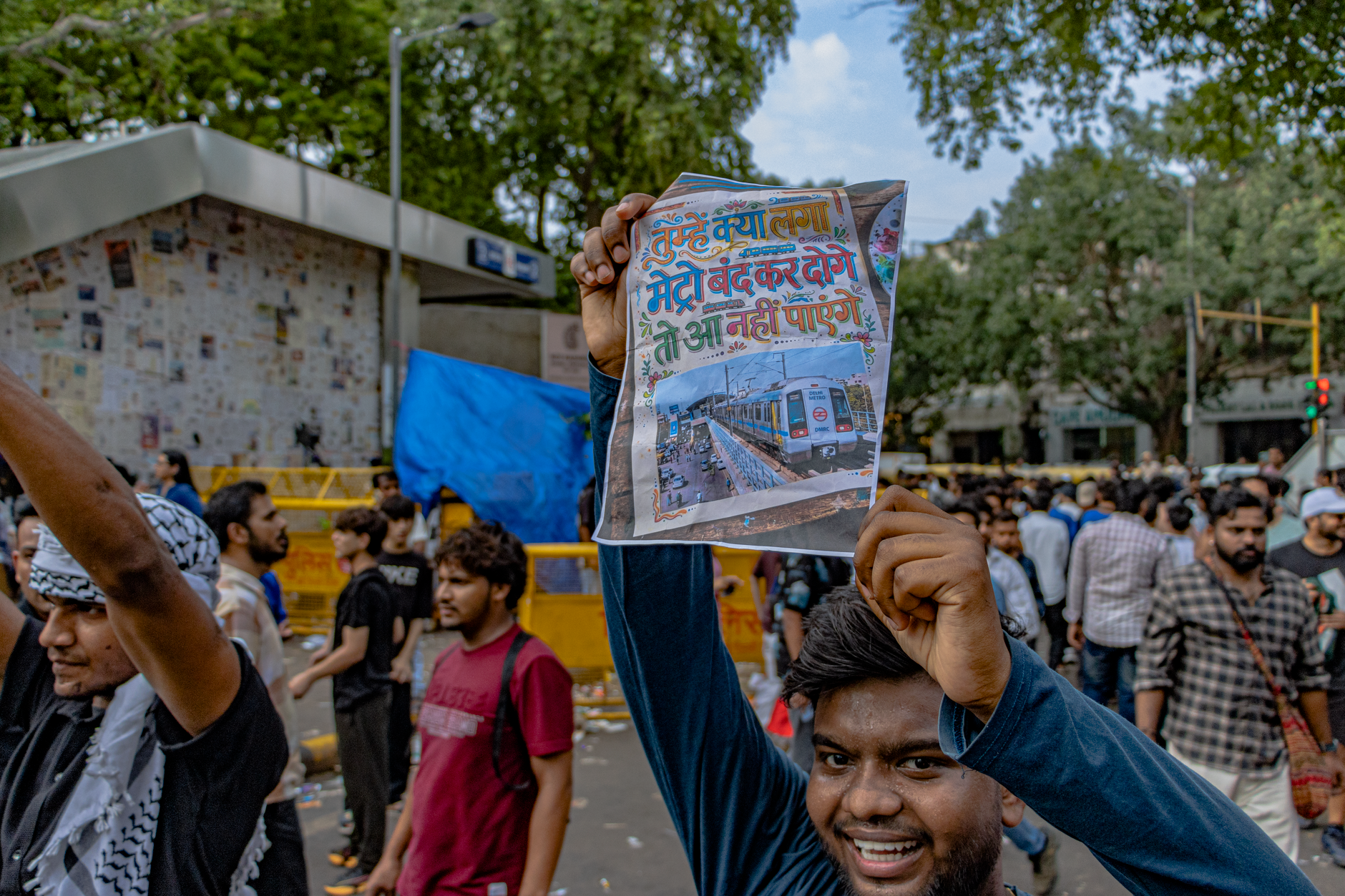
<p>The headlines are filled with images of young voices confronting barricades, <a href="/article/why-jharkhand-students-are-protesting-a-deep-dive-into-education-rights-government-response-and-the-" title="Why Jharkhand Students Are Protesting: A Deep Dive into Education Rights, Government Response, and the Role of Public Figures like Rahul Gandhi" class="internal-link">and the</a> recent <b>Parliament March controversy</b> has reignited debates about how Delhi Police manages campus activism. This article unpacks the historical roots, legal boundaries, operational protocols, and public sentiment surrounding student protests in the capital. By the end, you’ll have a clear picture of the forces at play and why balanced policing is not just desirable—it’s essential.</p>
<h2>Historical Overview of Delhi Police</h2>
<h3>Founding and Early Years</h3>
<p>Delhi Police traces its origins to the <b>1861 <a href="/article/mastering-time-management-a-self-help-guide-for-indian-professionals" title="Mastering Time Management: A Self-Help Guide for Indian Professionals" class="internal-link">Indian</a> Police Act</b>, which introduced a structured, colonial-era force. Initially tasked with maintaining law and order in a sprawling metropolis, the department evolved through the British Raj, Independence, and the formation of the modern Indian Republic.</p>
<p>Key milestones include the <b>1950s modernization drive</b>, the establishment of the Special Branch for intelligence, and the creation of the Delhi Police Commissionerate in <b>1970</b>. Each phase brought new approaches to crowd management, shifting from blunt force to more nuanced tactics.</p>
<h3>Evolution of Crowd‑Control Tactics</h3>
<p>From lathi‑charges in the 1970s to the adoption of <b>water cannons and tear‑gas</b> in the 1990s, Delhi Police’s toolkit has expanded. The 2000s saw the introduction of <b>plastic bullet</b> prototypes and advanced communication systems, while the last decade emphasized <b>de‑escalation training</b> and community engagement.</p>
<p>These developments set the stage for today’s sophisticated, multi‑layered response to student protests, where <b>pre‑emptive dialogue</b> often precedes any physical intervention.</p>
Advertisement
Loading partner content...
<h2>Student Protests in Delhi</h2>
<h3>Major Movements of the Last Two Decades</h3>
<p>Since the early 2000s, Delhi’s campuses have been hotbeds of activism. Notable movements include:</p>
<ul>
<li>The <b>2008 Nirbhaya‑inspired gender‑rights rallies</b>, which forced policy revisions on campus safety.</li>
<li>The <b>2016 University of Delhi fee‑hike protests</b>, which highlighted economic barriers for marginalized students.</li>
<li>The <b>2020 CAA‑related sit‑ins</b>, where thousands gathered to voice constitutional concerns.</li>
</ul>
<p>Each movement left a distinct imprint on police policy, prompting revisions in <b>permit issuance</b>, <b>venue allocation</b>, and <b>communication channels</b>.</p>
<h3>Impact on Policy</h3>
<p>Student protests have driven the adoption of <b>standard operating procedures (SOPs)</b> that prioritize <b>notice‑based dispersal</b> and <b>mediated negotiations</b>. The police now routinely engage with student unions before any enforcement action, a shift that reflects <b>learned lessons from past confrontations</b>.</p>
<h2>Legal Framework Governing Police Action</h2>
<h3>Statutes and Court Rulings</h3>
<p>Delhi Police operates under a dense legal matrix that includes the <b>Indian Penal Code (IPC)</b>, the <b>Code of Criminal Procedure (CrPC)</b>, and the <b>Police Act of 2005</b>. Crucially, the <b>Supreme Court’s 2018 judgment in “Dennett v. Commissioner of Police”</b> established that any use of force must be <b>proportionate, necessary, and the least intrusive</b> option available.</p>
<p>This precedent is cited in every subsequent order, ensuring that <b>excessive force</b> is not merely discouraged—it is legally proscribed.</p>
Advertisement
Loading partner content...
<h3>Dennett’s “Excessive Force” Standard</h3>
<p>Legal scholars interpret Dennett’s standard as a <b>reasonable‑person test</b>: would a typical officer, faced with the same circumstances, resort to the same level of force? This benchmark guides officers in deciding when a <b>mild warning</b> suffices versus when <b>controlled dispersal</b> is justified.</p>
<h2>Delhi Police’s Crowd‑Control Policies</h2>
<h3>Official Protocols</h3>
<p>Delhi Police’s crowd‑control manual outlines a <b>four‑step escalation model</b>:</p>
<ol>
<li>Pre‑event engagement with organizers.</li>
<li>Issuing clear, written warnings.</li>
<li>Deploying minimal‑force tools (e.g., batons, shields).</li>
<li>Reserving high‑intensity measures (e.g., water cannons) for imminent threats.</li>
</ol>
<p>Each step is documented, and officers receive <b>mandatory refresher courses</b> on de‑escalation and human‑rights compliance.</p>
<h3>Training and Equipment</h3>
<p>Modern training emphasizes <b>communication skills</b>, cultural sensitivity, and <b>psychological resilience</b>. Officers are equipped with <b>non‑lethal</b></p>